Urban Tree Removal Services with Minimal Disruption
Cities ask trees to do difficult things. They soften hard edges, shade sidewalks, slow stormwater, and lift spirits on long commutes. They also grow into power lines, crack sidewalks, and sometimes fail without warning. When a tree must come down in a tight urban space, the difference between a quiet, efficient operation and a neighborhood headache comes down to preparation, judgment, and the right tools in steady hands.
Why removals feel different in the city
A tree in a backyard that shares fences with three neighbors, a narrow side gate, overhead service drops, and a busy street out front presents a puzzle. There is often no straight path for equipment. Access is limited to 36 inches through a side yard. Soil is compacted by years of foot traffic. There may be a deck beneath the canopy, a dog that is stressed by strangers, and a neighbor who works night shifts and sleeps during the day. Multiply that by the density of utilities below ground and wires above, and you can see why urban Tree Removal Services call for surgical precision.
In my first year running a crew, I learned that disruption has more to do with choices made before the first cut than anything that happens in the tree. A rushed permit, a poorly timed start, or a lack of outreach can turn a routine removal into a friction point for an entire block.
Planning that prevents chaos
Minimal disruption begins with a map and a conversation. We build a site plan that includes access points, utility marks, staging areas for brush and logs, and a route for chip trucks that avoids tight turns and low clearances. We verify utilities with 811 locates and, on older properties, with a plumber’s camera for private drains if excavation or stump grinding could intersect service laterals.
Permits matter more in dense neighborhoods. Work hours, lane closures, and noise limits vary by jurisdiction. Coordinating with a traffic control company can shave an hour off set up and avoid a ticket. We notify neighbors if work will temporarily impact parking or involve crane placement. A simple printed notice with a phone number reduces surprise and builds goodwill.
Before anything is scheduled, a Certified Arborist Consultation sets the tone. Not every tree that worries a property owner needs removal. A crown reduction, Tree Pruning & Crown Shaping, or Tree Cable and Bracing might meet the risk tolerance and preserve canopy. When removal is necessary, the consult identifies nesting activity, protected species, and seasonal constraints. In many regions, active bird nests pause work until fledging. That small delay prevents harm and avoids fines.
How arborists decide a tree is dangerous
Dangerous Tree Assessment and Removal is more than a glance at a lean. We look at four elements: the part of the tree that could fail, the likelihood of failure, the target beneath, and the consequences if it fails. Formal frameworks such as ISA TRAQ standardize this evaluation, but lived experience adds nuance. A tulip poplar with advanced root decay next to a daycare carries a different profile than the same tree in a rear woodlot.
Tools back up judgment. A resistograph can quantify internal decay in a trunk without removing a core. Sonic tomography maps cavities that are invisible from the bark. Air spading around the buttress roots reveals girdling or root plate failure. Drones help view upper canopies where climbing is unsafe, and a simple rubber mallet can tell you where wood goes hollow. When the data says removal, we explain why, show measurements, and outline alternatives so the client understands the trade-offs.
When pruning, cables, or braces make more sense
Urban trees often live with asymmetric canopies due to light competition and past pruning. Tree Cable and Bracing can reduce the chance of co-dominant stems splitting, particularly in species like silver maple or Bradford pear. The intervention is not a guarantee, and it adds an inspection and maintenance schedule. A well placed crown reduction cut can drop the sail area by 15 to 25 percent without disfiguring the tree. If the site can tolerate minor risk and the tree brings value in shade and energy savings, these options deserve a clear explanation.
Still, there are lines. A tree with advanced basal decay, fruiting bodies from Ganoderma at the root flare, or an active crack above a main union trending through more than a third of the diameter is not a candidate for preservation in a target rich environment. Those call for removal with a plan that protects everything around it.
Techniques that keep peace with the neighborhood
Sectional dismantling is the bread and butter of urban work. Climbers or a compact lift will work the tree from the top down, tying, lowering, and sometimes redirecting loads through a rigging system so nothing free falls. In a postage stamp yard with fragile plantings, we often set up a zip line between two solid anchors and slide brush to a landing zone without raking branches across flower beds. Friction devices at ground level, like bollards or portawraps, control descent with minimal load on the anchor points.
Cranes change the equation for large removals. A properly planned crane day can compress a two day takedown into six hours, with less cutting aloft and fewer rigging forces on the tree. The trade-off is street impact and set up. Outrigger pads must sit level on firm bearing capacity, which we verify in the plan. Crews coordinate with utility providers when booms approach energized lines. A good signal person keeps eyes on the load path while the climber makes the final cut.
For tight access, spider lifts that fit through a 36 inch gate and track laid ground protection mats reduce lawn damage. We stack mats like shingles to spread point loads, especially on irrigated turf or after rain. When a driveway must carry weight beyond its design, we discuss risk and, if needed, source aluminum track or cribbing to distribute the load.
Noise is inevitable, but it can be managed. We stage chipping in bursts rather than a constant drone, and we sequence the noisiest work for late morning to respect sleep schedules. In sensitive settings like clinics or schools, electric saws handle a surprising amount of work up to mid diameter, and battery powered top handles paired with rigging make a noticeable difference. Dust control matters on stump grinding. A light mist from a hose tames fines, and a simple wind check before starting keeps the neighbor’s laundry clean.
Debris containment is part planning, part discipline. We tarp beds beneath critical cuts and use cambium savers to avoid strap https://marcozltg108.trexgame.net/spotless-finish-stump-removal-grinding-and-backfill damage to bark on sound anchors. When space allows, we stage brush into clean stacks before feeding the chipper so the street stays open. If sidewalks must close briefly, cones and a spotter move pedestrians safely. Most removals in small yards generate 10 to 20 cubic yards of chips. We haul all material unless the client wants a chip drop for mulch.
Stump Removal & Grinding without collateral damage
A stump left high is a tripping hazard and a mowing headache. Stump Removal & Grinding puts the last piece of the job below grade, but it has its own risks. Many urban services run shallow. Gas risers, irrigation, and low voltage lighting are common near trunks. Flagging and probing the first foot around the stump reduces surprises. We typically grind 8 to 12 inches below final grade unless replanting demands deeper. Grindings mix wood and soil, which decompose and settle. If the area will be lawn, we advise removing grindings, backfilling with clean topsoil, and planning for a light top off after the first winter.
Root removal near foundations is delicate. Large anchor roots that butt against concrete are often left intact to avoid undermining slabs. If roots have heaved a sidewalk, a targeted saw cut and root shaving can reset a panel. Where pruning neighboring trees is needed to make room for equipment, we fold Tree Pruning & Crown Shaping into the scope and secure a single permit so the work is coordinated and documented.
Emergency Tree Services with a cool head
After a wind event or heavy ice, phones ring all at once. Emergency Tree Services prioritize life safety and property protection. The goal is to stabilize the scene, not win beauty points. A hung up leader over a front door at midnight needs a controlled release or temporary support, followed by a daylight removal. We watch for energized lines, gasoline leaks from crushed cars, and compromised structures. It is common to stage a bucket truck for ground lighting and position a spotter whose only job is to scan for movement or creaks that signal shifting loads.
Insurance carriers appreciate clear documentation. We take photos that show pre existing conditions, sketch the load path, and keep a simple log of times and crew assignments. The homeowner appreciates a quiet recap of what was done and what remains, with a timeline for final cleanup. A small generator and a few shop lights have saved more than one family from sitting in the dark while we cut.
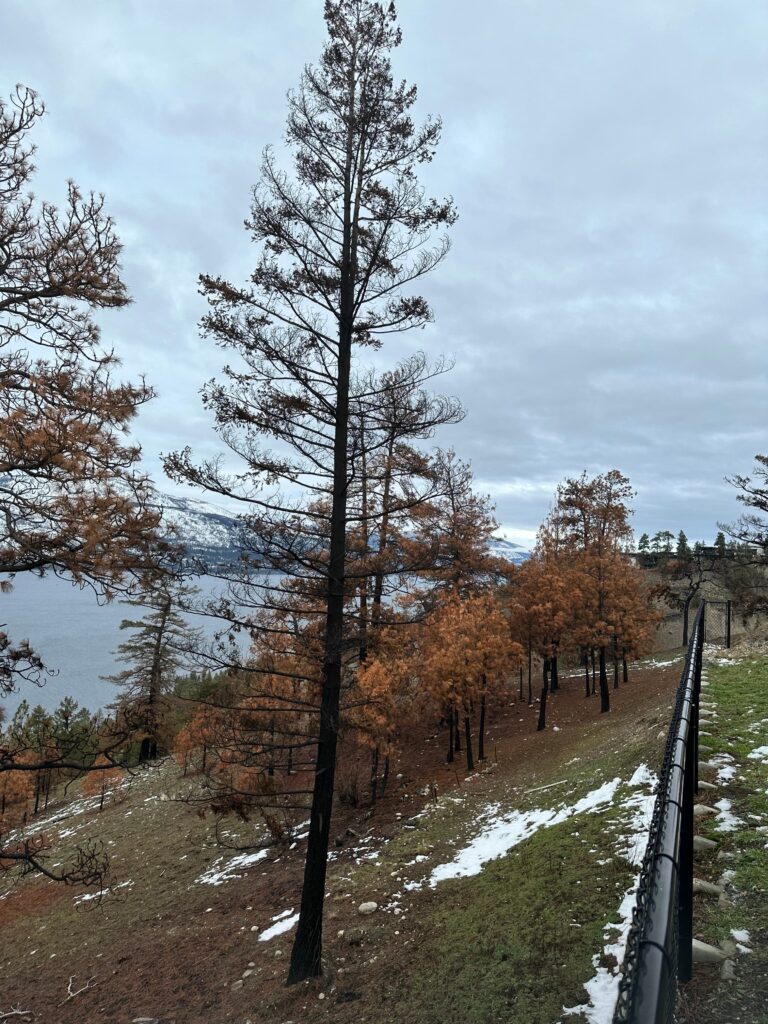
FireSmart Tree Services at the city edge
Urban wildland interfaces, where homes meet natural vegetation, are not just a rural issue. Dry summers push risk into suburbs and city fringes. FireSmart Tree Services focus on creating defensible space without scalping the landscape. We remove ladder fuels within the first 1.5 to 3 meters of structures, thin crowded stands to reduce crown spacing, and favor species with higher moisture content or less resin. Pruning lower branches to 2 to 3 meters on mature conifers reduces flame lift. A shared alley filled with stored lumber and brush can defeat all other efforts, so we coach neighbors on coordinated cleanup days. Permits for vegetation management are often simpler than removals, but they still exist and should be respected.
Case files from real streets
On a narrow lot near a hospital, a declining silver maple leaned over both a garage and a power drop. The city limited noise before 9 a.m., and the client asked that work finish before a visiting nurse shift change at 3 p.m. We used a compact lift through the side gate and rigged sections into a single staging zone near the curb. Electric saws handled the early canopy work, with gas saws used after 9. A ground crew pre cut brush in silence while waiting for chip hours. By sequencing cuts and chip runs, we kept noise peaks short and the driveway open between 1 and 3. Neighbors later said they were surprised how quickly the yard returned to normal.
Another job involved a red oak with a large cavity visible at chest height. Resistograph readings showed strength loss greater than 70 percent at the cavity margins. The target area included a daycare playground. We offered cabling only as background, then recommended removal. A crane parked legally with a no parking permit lifted six picks, each carefully slung to avoid crushing perimeter beds. Total street closure time was two hours, less than the four we had estimated, because staging and communication with the operator were tight.
We also preserved a heritage beech that had developed a long crack in one lead after an ice storm. Instead of removal, we installed a static cable and a pair of through bolts with a low profile nut assembly, then reduced the leveraged limb by about 20 percent. We scheduled follow ups every two years. Three seasons later, the union had laid down new wood and the client still enjoyed the full shade of that tree without sleepless nights during wind.
What drives price and schedule
Urban removals vary widely in cost because they combine risk, time, and logistics. A small ornamental tree over lawn with easy access might take two to three crew hours. A large oak over a deck with tight access, multiple tie in points required, and a stump grind could take a full day with a four person crew, plus a second day if weather restricts crane use. Crane days add mobilization fees but can net out by compressing labor hours. Permits, traffic control, and utility coordination add predictable costs. Night or weekend premiums apply to Emergency Tree Services, but we work to limit after hours to only what is necessary to stabilize the situation, with the bulk of cleanup done at standard rates.
Expect scheduling to stretch during storm seasons. We triage based on safety, not on who called first. A tree on a home or blocking a primary egress jumps the line. For planned removals, we can often hold a date within two to three weeks. A Certified Arborist Consultation early in the process helps lock in scope and avoid rework that pushes dates.
How you can help the day run smoothly
- Secure pets, unlock gates, and clear access paths of furniture or planters so crews move safely and quickly.
- Identify underground utilities like irrigation and lighting. Mark valve boxes and controller wires if known.
- Talk to neighbors about parking needs, especially near the curb where a chipper or crane may stage.
- Share any past issues such as soft spots in lawns, recently installed hardscape, or chronic drainage.
- Decide in advance whether you want chips or firewood left on site, and where.
The day-of playbook, without surprises
- Expect a brief safety huddle. The crew will walk the site, review hazards, and confirm the plan with you.
- You will hear normal work noise during cutting and chipping, then quiet as crews rig or reset.
- Crews will check in before any change that affects access, like closing a driveway momentarily.
- At the end, a lead will walk you through the work, verify stump grind depth if included, and confirm cleanup.
- Invoices and permit close outs follow within a day, along with any aftercare notes.
Aftercare and site restoration
Once a tree is gone, the site often needs a small reset. Compacted soils under the canopy can benefit from aeration with an air spade and a topdress of compost. Remaining trees sometimes respond to the new light by pushing fast, weak shoots. A targeted round of Tree Pruning & Crown Shaping in the following season will train that growth and keep structure sound. If you plan to replant, match species to site. Utility conflicts and narrow strips call for smaller rooted choices and a clear separation from hardscape. If you want canopy back quickly, plant two or three staggered smaller trees rather than one large caliper. They establish faster and provide more resilience over time.
Mulch the grind area lightly, then pull it back from new trunks. Water consistently through the first two summers for any new planting. We leave a simple watering schedule and, when asked, return for a one year check on structure and health.
What to look for in a provider
A company that promises speed without a plan often leaves ruts, broken fences, or strained neighbor relations. Look for ISA Certified Arborists on staff. Ask for evidence of insurance that covers both liability and workers compensation. Ask how they approach Dangerous Tree Assessment and Removal, and listen for details that go beyond buzzwords. Equipment matters, but how a company uses it matters more. Well maintained rigging, ground protection mats, and a willingness to say no to a rushed crane set are good signs.
References are worth your time. Call one who had a removal similar to yours. Did the company keep the street clear enough, protect plantings, and leave the site neat? If your property sits in the wildland urban interface, ask how FireSmart Tree Services are integrated into broader maintenance, not treated as a one time event. A good tree care partner will also be comfortable telling you when Tree Cable and Bracing or pruning could defer removal and when it is time to act.
Putting it all together
Minimal disruption is the sum of careful assessment, clear communication, and practiced technique. The checklist may look simple on paper, but the real work is in execution. The best urban Tree Removal Services feel uneventful from the homeowner’s perspective. The crew arrives on time, equipment fits through the gate because someone measured, rigging keeps brush from sweeping beds, chips disappear into a truck without covering the street, and the last rake pass makes it hard to tell a 70 foot tree stood there that morning.
When a job needs urgency, Emergency Tree Services step in with the same discipline, only faster. When preservation is possible, a Certified Arborist Consultation points toward Tree Pruning & Crown Shaping or Tree Cable and Bracing with honest discussion of trade-offs. When it is time to finish the job to the roots, Stump Removal & Grinding wraps it cleanly. And if wildfire risk is part of your setting, FireSmart Tree Services extend protection beyond property lines with sensible fuel management.
Urban trees make cities livable. When one has to come out, thoughtful planning and professional skill keep the benefits of the urban forest in focus while the work stays nearly invisible to everyone not wearing a helmet.
Ace Tree Services Ltd.
Name: Ace Tree Services Ltd.Address: 4656 Wallace Hill Road, Kelowna, BC
Postal code: V1W 4C2
Phone: 250-212-9593
Website: https://acetree.ca/
Hours:
Monday: 7:00 AM - 5:00 PM
Tuesday: 7:00 AM - 5:00 PM
Wednesday: 7:00 AM - 5:00 PM
Thursday: 7:00 AM - 5:00 PM
Friday: 7:00 AM - 5:00 PM
Saturday: 7:00 AM - 5:00 PM
Sunday: Closed
Open-location code (plus code): RHF8+8G Kelowna, British Columbia, Canada
Map/listing URL: https://www.google.com/maps/place/Ace+Tree+Services+Ltd./@49.8232606,-119.4337283,659m/data=!3m2!1e3!4b1!4m6!3m5!1s0x537d8b1d074815c5:0x450b88afa7a41435!8m2!3d49.8232606!4d-119.4337283!16s%2Fg%2F11ydkpnh22
Embed iframe:
"@context": "https://schema.org", "@type": "HomeAndConstructionBusiness", "name": "Ace Tree Services Ltd.", "url": "https://acetree.ca/", "telephone": "250-212-9593", "address": "@type": "PostalAddress", "streetAddress": "4656 Wallace Hill Road", "addressLocality": "Kelowna", "addressRegion": "BC", "addressCountry": "CA" , "openingHoursSpecification": [ "@type": "OpeningHoursSpecification", "dayOfWeek": "https://schema.org/Monday", "opens": "07:00", "closes": "17:00" , "@type": "OpeningHoursSpecification", "dayOfWeek": "https://schema.org/Tuesday", "opens": "07:00", "closes": "17:00" , "@type": "OpeningHoursSpecification", "dayOfWeek": "https://schema.org/Wednesday", "opens": "07:00", "closes": "17:00" , "@type": "OpeningHoursSpecification", "dayOfWeek": "https://schema.org/Thursday", "opens": "07:00", "closes": "17:00" , "@type": "OpeningHoursSpecification", "dayOfWeek": "https://schema.org/Friday", "opens": "07:00", "closes": "17:00" ], "geo": "@type": "GeoCoordinates", "latitude": 49.8232606, "longitude": -119.4337283 , "hasMap": "https://www.google.com/maps/place/Ace+Tree+Services+Ltd./@49.8232606,-119.4337283,659m/data=!3m2!1e3!4b1!4m6!3m5!1s0x537d8b1d074815c5:0x450b88afa7a41435!8m2!3d49.8232606!4d-119.4337283!16s%2Fg%2F11ydkpnh22"
Ace Tree Services Ltd. provides professional tree removal, pruning, stump grinding, emergency response, and arborist consultations for properties in Kelowna and across the Okanagan Valley.
The company works with homes, commercial properties, and municipal settings where tree work needs to be planned carefully around buildings, fences, driveways, landscaping, and other site constraints.
Based in Kelowna, the team is positioned to help nearby neighbourhoods and surrounding Okanagan communities with routine tree care and time-sensitive storm cleanup.
Customers looking for careful tree work often want a crew with certified arborist training, insurance, and a methodical approach to higher-risk removals.
Services also include dangerous tree assessment, cabling and bracing, and wildfire risk reduction tree work for properties that need longer-term planning.
To request a quote or discuss tree care options, call 250-212-9593 or visit https://acetree.ca/.
A public map listing is available to help customers confirm the business location and get directions before a site visit or estimate.
For Kelowna property owners who need pruning, removals, or emergency tree help, a local tree service can make it easier to schedule site-specific recommendations and cleanup.
Popular Questions About Ace Tree Services Ltd.
What services does Ace Tree Services Ltd. provide?Ace Tree Services Ltd. lists tree removal, stump removal and grinding, tree pruning and crown shaping, emergency tree service, arborist consultation, dangerous tree assessment and removal, cabling and bracing, and wildfire risk reduction tree work.
Who does Ace Tree Services Ltd. serve?
The company describes its work as serving homes, businesses, and municipalities in Kelowna and across the Okanagan Valley.
Is emergency tree help available?
Yes. Emergency service is listed for downed or uprooted trees, dangerous tree assessment, stabilization work, and branch cleanup. If a tree is near power lines, the safest first step is to stay clear and contact the utility provider before any tree work begins.
Do I always need a permit to remove a tree?
Not always. Permit requirements can depend on where the tree is located and whether it is near a creek, lake, steep slope, or another protected area. It is best to check local rules for the specific property before removal work starts.
How deep does stump grinding usually go?
Standard stump grinding is typically described as going about 6 to 12 inches below ground level, which is often enough for grass or surface landscaping. Deeper grinding may be possible when site plans call for it.
How much of a tree can be safely removed at one time?
That depends on the species, age, health, and structure of the tree. In practice, good pruning is usually about removing the right limbs for health, clearance, and structure rather than chasing a fixed percentage.
What are common signs that a tree may be dangerous?
Large dead limbs, visible cracks, a new lean, root damage, canopy dieback, or storm-related damage can all be warning signs. Trees near structures deserve extra attention when any of those issues appear.
What is cabling and bracing in tree care?
Cabling and bracing are support systems used to reduce the risk of failure in trees with structural weaknesses that may still be worth preserving. They are generally used to add support, not to replace good assessment and ongoing maintenance.
How do I contact Ace Tree Services Ltd.?
Call 250-212-9593.Website: https://acetree.ca/.
Landmarks Near Kelowna, BC
Downtown KelownaThe downtown core is a practical reference point for lakefront neighbourhoods, mixed-use streets, and central residential properties. If your property is near downtown, tree pruning, removals, and cleanup can be planned around tighter access and nearby structures.
Knox Mountain Park
This well-known park north of downtown is a recognizable landmark for nearby homes and hillside properties. If you are close to this area, ask about tree assessment, trimming, or removal work suited to sloped sites.
Mission Creek Greenway
The greenway runs through several parts of Kelowna and is a useful landmark for nearby residential areas. If your property borders or sits near this corridor, site-specific tree planning is especially important.
Pandosy Village
Pandosy is one of Kelowna’s most recognizable neighbourhoods and a common reference point for south-central properties. If you are nearby, request help for pruning, removals, or storm cleanup around homes and small commercial sites.
Rutland
Rutland is a major east Kelowna neighbourhood with a mix of residential and local commercial properties. If you are located in or near Rutland, tree work can be scheduled for both routine maintenance and urgent situations.
Landmark District
This central business-focused area is a practical landmark for offices, service properties, and nearby residential streets. If your site is near the district, ask about careful tree work around parking, access lanes, and built-up lots.
Kelowna’s North End
The North End sits on the edge of downtown and is a useful reference for nearby homes, industrial sites, and commercial properties. If you are in this part of the city, request tree care based on the layout and constraints of the lot.
Airport District
The Airport District is a recognizable north Kelowna reference point for surrounding properties and access routes. If you are in this area, ask about tree services for residential acreage, commercial sites, or roadside cleanup needs.
Glenmore & Dilworth
These established Kelowna neighbourhoods are useful landmarks for central and north-central service calls. If your property is nearby, pruning and removal work can be tailored to mature trees and established landscapes.
Highway 97 Corridor
Highway 97 is one of the city’s main travel routes and a common way to describe location within Kelowna. If your home or property is just off the corridor, a clear landmark reference can help speed up quote scheduling and site planning.