Tree Cable and Bracing for Historic and Heritage Trees
Some trees stand as much for memory as for shade. A copper beech that has shaded three generations of family photographs, a Garry oak that defines a schoolyard, a boundary elm that threads through a town’s founding stories. When these trees develop structural flaws, we weigh any intervention against their cultural weight. Cable and bracing systems let us reduce the probability of failure without carving away the character that made the tree worth saving in the first place. Done well, they feel invisible to casual eyes and obvious only to those who know where to look.
This work sits at the intersection of arboriculture, engineering, and stewardship. The methods are straightforward, the judgment is not. I have refused to cable trees when the wood told a story of advanced decay, and I have cabled others where a few stainless washers and a brace rod have bought decades of safe, dignified life. The difference lies in precise assessment, careful material selection, and a plan that respects both biology and physics.
What cabling and bracing actually do
Cabling redistributes load. By tying one leader to another, a cable reduces bending stress in a weak union and limits the amplitude of sway in high winds. A correctly installed system shares loads along paths of strong wood, not through a single vulnerable seam.
Bracing stiffens a union from the inside. Steel rods cross a seam, stitch a crack, or pin codominant stems together so the fibers cannot separate further under tension. Where a union shows internal cracks or included bark, brace rods paired with an upper canopy cable can prevent a failure that otherwise feels inevitable.
Neither method heals a defect. Trees do not knit like bone. Instead, they lay new wood that can surround defects if the mechanical environment stays predictable. Our goal with Tree Cable and Bracing is to create that predictability, then pair it with smart Tree Pruning & Crown Shaping, good soil care, and routine inspection.
When support systems make sense, and when they do not
The most persuasive cases involve high value, moderate defects, and clear load paths. Think codominant leaders in mature oaks with a shallow seam, a long heavy limb over a heritage house, or a maple with a history of routine storm damage but an otherwise sound stem and root plate. If an older split has begun to open but still contains solid wood on at least two thirds of the cross section, the odds favor steel.
Cases that argue against cabling usually fall into one of three categories. First, extensive decay at the target union, measured or inferred, so a bolt would sit in unsound wood. Second, root or soil instability, where windthrow is more likely than a leader split. Third, unacceptable consequences if a failure occurs despite mitigation, for example a major occupancy zone directly below. In these cases, a Dangerous Tree Assessment and Removal may be the more honest path.
I often bring a client through a Certified Arborist Consultation before we commit. We talk about intended use under the canopy, public exposure, budget for inspection over time, and the emotional value of the tree. If the client needs certainty at any cost, steel alone cannot provide it.
Understanding the weak points
Historic trees carry the scars of their environment and past care. Recurrent defects look familiar:
- Codominant stems with included bark. Fibers in the union run parallel rather than interlocking, so they separate under tension. A small seam often hides a larger internal crack.
- Long lever arms. An overextended limb that reaches for light over a driveway can impose enormous bending stress at its base. Length often matters more than diameter for risk.
- Previous improper pruning. Old topping cuts create decay columns that can propagate down a leader. I have traced rot with a drill and felt no resistance for eight or ten inches in maples that were topped twenty years prior.
- Compromised roots. Historic urban trees often sit above old utility trenches or compacted soils. A perfectly sound canopy will not save a tree with half a root plate severed.
These conditions are not disqualifiers by themselves. They simply inform which system to use, how many attachment points to install, and where to reduce weight through selective pruning.
Choosing the right system
Steel static cables. For most heritage work I use extra high strength galvanized 1 by 7 strand cable paired with through eye bolts, thimbles, and dead end grips. Static systems limit movement and do not rely on elastomeric cores, so they have predictable behavior over decades. They require drilled anchor points, which means careful planning and a clear understanding of where sound wood lives.
Dynamic synthetic systems. In younger trees or where some sway is desirable to stimulate reaction wood, noninvasive slings and shock absorbing lines have merit. I find them less suited to very old trees with pronounced defects that need firm restraint. They avoid drilling, which can be appealing in conservation contexts, but they demand more frequent tension checks and may abrade bark if not installed with proper cambium protection.
Brace rods. Where a seam is visible or a union shows signs of shear, rods are essential. I prefer through rods rather than lag hardware in heritage trees, especially when decay pockets or included bark reduce holding power. Washers should be large enough to spread load but not so large they crush cambium. On a grand old cedar, a pair of 5/8 inch rods, set to capture solid wood on either side of a seam and paired with two upper static cables, transformed a high risk union into a manageable one.
Guys and props. For long laterals with poor attachment but clear targets below, temporary guying from higher leaders or discreet props can buy time while we reduce weight. These are accepted stopgaps, not permanent solutions, and they must be installed so they do not rub or constrict as the tree grows.
Lightning protection is sometimes part of the conversation for tall historic specimens. If the site sees frequent strikes, integrating a down conductor into the crown while installing cables can protect both the tree and the support hardware.
Placing hardware without harming the tree
Attachment points matter as much as material. Most canopy cables sit roughly two thirds of the distance from the defective union to the leader tips. This placement balances leverage and sway reduction without concentrating stress near the union itself. In forks where three or more leaders share a union, each leader often needs its own cable connection to a central hub leader or a triangular configuration so loads share gracefully.
Drilling requires a calm hand and a plan. We avoid drilling through visible decay columns because hardware will not hold in punky wood. When decay is suspected but not obvious, a resistograph, a narrow drill, or sonic tomography can map sound wood. If we must pass through a small region of less dense tissue, longer sleeves and plates can distribute stress to surrounding solid wood. Pilot holes prevent splitting, and careful deburring avoids internal bark damage.
Pre tension is light. Cables should sit taut enough to take slack out of the system but not so tight they load the union in still air. On hot days steel expands, on cold days it contracts. I advise clients that the line need not be a guitar string year round, only firm under typical conditions, and that seasonal adjustments are sometimes part of maintenance.
Hardware should meet the tree where it is. On thick bark species like Douglas fir, a shallow countersink may be needed so washers sit on wood, not spongey bark. On thin bark species like beech, broad washers with beveled edges reduce point loading and protect cambium. Always cap cut ends and protect exposed threads so nothing snags a climber or a curious child.
The role of pruning and weight reduction
Support systems do not work in isolation. Selective Tree Pruning & Crown Shaping reduces lever arms and sail area so the cables and rods are not asked to do more than they should. In practice this means end weight reduction on long laterals, careful thinning of dense interior growth that acts like a wind sail, and removal or reduction of competing leaders that pull a union apart.
I rarely remove more than 20 to 25 percent of live crown in a single visit on a mature tree, often less on older specimens. Heavy cuts can trigger epicormic sprouting that increases, rather than decreases, long term load. I would rather stage work over two or three seasons and watch how the tree responds. In heritage settings, the shape matters. Crown shaping should preserve the tree’s silhouette, not impose a topiary view of safety.
A field example, the old beech by the chapel
A hundred twenty year old copper beech outside a stone chapel had two main leaders with a narrow V and deep included bark. The interior seam ran about four feet down from the fork, open enough to wedge a coin. The tree overhung a walkway used for weddings, and the church board wanted preservation without closing the path.
We installed two 5/8 inch through rods, offset vertically by eighteen inches to stitch the seam. We set static cables at two thirds height, one linking the leaders and a second linking the weaker leader to a robust lateral that stood slightly back from the path. We reduced end weight on three extended limbs, kept cuts under three inches diameter where possible, and thinned light interior growth to lower wind resistance.
Five years on, the seam shows woundwood lips enclosing the washers, not a cure but a sign of stable biomechanics. The church kept the walkway open, and we inspect after major storms. Could the beech still fail in a record wind? Yes. Does the risk now fit the site and the board’s tolerance? Also yes.
Heritage constraints, permits, and aesthetics
Working on protected or designated heritage trees often requires coordination with municipal heritage officers or landowners bound by covenants. That can add weeks to planning, especially if the site sits within a historical district. Provide drawings that show cable locations, hardware sizes, and pruning targets. Bring photographs and, if needed, simple load path diagrams, so non specialists can see that the work respects the tree’s form.
Visual impact matters as much as mechanical effect. Place hardware in the high crown where possible. Use hardware finishes that blend with bark rather than shiny finishes that catch the eye. Where the public will see the work up close, discuss the look with the client before you drill a first hole. A small concession, like moving a washer six inches to sit behind a limb, can keep the system all but invisible.
Inspection, maintenance, and service life
Any support system ties the future of a tree to a maintenance plan. A one time installation without follow up is a promise the wind will eventually test.
- Inspect visually once a year and after any wind event that brings down branches in the neighborhood.
- Check for hardware movement, washer embedment, cable chafe, and cracks that have propagated beyond rods.
- Re tension if slack develops, but resist overtightening, especially on hot or cold extremes.
- Re evaluate after five to seven years. Growth can bury washers and alter angles, and added wood may allow hardware upgrades or relocation.
- Plan for eventual replacement at 10 to 15 year intervals for steel components in average conditions, sooner in coastal or industrial environments.
Use binoculars to spot issues before you climb. Document each visit with photos so small shifts show up across seasons. If a cable starts to bite into bark, add cambium protection or relocate the attachment. When a tree grows around a brace rod plate, do not excavate aggressively. A small clearance cut can prevent girdling without turning a maintenance visit into surgery.
Safety, access, and impact on living tissue
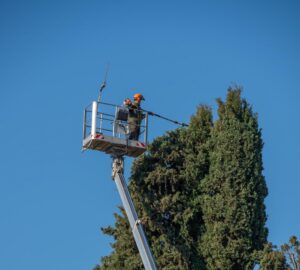
Historic trees often stand above delicate ground or near structures that rule out heavy equipment. Climbing with spurs is out unless the tree is being removed. For living trees, work from rope and saddle, or use a narrow track lift where the site allows it. Rigging for limb reductions must avoid shock loading on compromised unions. Where access is tight, stage smaller leaders to reduce dynamic forces. A careful lowering system saves the tree and the building below.
Drilling creates wounds. Trees compartmentalize, they do not heal. Place holes where the tree can wall off the injury with new wood. Avoid drilling through the same longitudinal plane on multiple rods if a single plane would concentrate future decay. Sealants are generally unnecessary. Clean cuts, smooth bore holes, and correct hardware sizing do more to protect living tissue than any paint.
Fire, drought, and the wildland urban edge
In fire prone regions, FireSmart Tree Services dovetail with structural support. A cabled heritage pine may still carry ladder fuels at its base or deadwood in the interior. Removing flammable debris within the home ignition zone, pruning to maintain vertical separation between surface fuels and low limbs, and spacing shrubs around the trunk reduce risk from embers. In a severe event, these changes can decide whether a cabled tree survives to justify the investment.
Drought compounds structural risk. Thirsty wood grows brittle, and roots lose hold in parched, shrinking soils. Deep watering in dry months, aerated mulch rings, and protection from soil compaction help a support system perform. Fertilizers rarely solve structural problems and can provoke fast, weak growth. Aim for steady vitality, not a green flush.
Integrating support with broader tree care
Cable and bracing plans live inside larger management plans. Soil decompaction with air tools on historic lawns can restore infiltration. Mycorrhizal inoculation has mixed evidence, but mulch and reduced mower damage show consistent benefits. Where heavy foot traffic runs under a heritage crown, consider rerouting paths or adding a light fence to shift compaction away from the dripline. Good roots make better anchors than any steel we can add.
When the worst happens despite planning, Emergency Tree Services pick up the pieces. A failed leader on a heritage tree does not always end the story. Storm cleanup can be followed by new support strategies that stabilize what remains. If a tree crosses the line from manageable risk to immediate hazard, bring in Dangerous Tree Assessment and Removal expertise that treats the site with the same respect we showed while trying to save the tree. When removal is the right call, finishing with Stump Removal & Grinding can reset the space for a successor tree, perhaps a descendant grown from the original’s seed.
Costs, timelines, and expectations
Clients ask what to budget, and the honest answer is it depends on height, access, the number of leaders, and the type of hardware. A straightforward two leader cable and a single brace rod in a medium canopy, with good access, might fall in the low thousands. Complex multi leader systems with three or more cables, multiple rods, and crown reduction, especially with lift rental or lane closures, climb from there. Plan weeks for permitting in heritage zones. The work itself often fits into a day or two for a seasoned crew.
Set expectations early. A cabled tree is not fail proof. We lower risk, we do not erase it. Share a plain language summary of the system, the inspection schedule, and the signs that should trigger a call, like a widening seam, new bark bulges near hardware, or fresh cracks after a storm. Many owners appreciate a yearly Certified Arborist Consultation even when nothing obvious has changed. Peace of mind is part of the service.
Avoiding common mistakes
There are patterns I see too often. Lag bolts in decayed unions that pulled out like corks. Cables set too low, so leaders still whip apart in wind while the cable watches from below. Hardware sized for a young maple, installed in an old oak. Over pruning that solves nothing and triggers years of water sprouts.
Good practice looks like this: through bolts and rods seated in mapped sound wood, cable heights that capture leverage, reductions that respect the tree’s energy balance, and documentation that future crews can read. If you inherit an old system, do not assume it was right. Old steel is not a guarantee of old wisdom.
A note on species and local context
Every region has its list of usual suspects. In the Pacific Northwest, big leaf maple often forms broad angle forks that seem stable until decay follows a past topping cut. Western redcedar will live with seams for decades if braced thoughtfully, but its soft wood demands broad washers and patient drilling. In the Northeast, silver maple grows long, tired laterals that beg for end weight reduction along with cables. In the South, live oaks carry immense, horizontal limbs that can be retained with discreet props and well placed rods if the union remains solid.
Know your species’ response to wounding and reduction. Beech resents heavy cuts and thin bark tears, so we cut smaller and anchor with care. Oaks lay strong woundwood and can tolerate broader reductions if timed outside peak pathogen seasons. Local knowledge is not a luxury when the tree is a living landmark.
Bringing it all together
Heritage tree care is slower by design. The work asks you to think beyond the next wind and the next contract. Cable and bracing, paired with thoughtful pruning and steady monitoring, can carry a significant tree through another generation of seasons. When you stand back after a day in the crown and the silhouette reads clean and familiar, when the seam is stitched and the long arm no longer threatens the path below, you know the intervention hit the mark.
For property owners, the path often starts with a Certified Arborist Consultation, a frank talk about goals, risk tolerance, and the site’s realities. From there, a plan folds in Tree Cable and Bracing where justified, Tree Pruning & https://waylonsmux274.iamarrows.com/firesmart-tree-services-for-slope-and-woodland-areas Crown Shaping to reduce loads, and ongoing inspections that keep small problems small. If a crisis hits, Emergency Tree Services step in. When a tree cannot be saved, Dangerous Tree Assessment and Removal, followed by Stump Removal & Grinding, returns the space to safety and usefulness, and makes room for the next story to take root.
Trees anchor memory. If we commit to the details, the hardware disappears and the stories remain.
Ace Tree Services Ltd.
Name: Ace Tree Services Ltd.Address: 4656 Wallace Hill Road, Kelowna, BC
Postal code: V1W 4C2
Phone: 250-212-9593
Website: https://acetree.ca/
Hours:
Monday: 7:00 AM - 5:00 PM
Tuesday: 7:00 AM - 5:00 PM
Wednesday: 7:00 AM - 5:00 PM
Thursday: 7:00 AM - 5:00 PM
Friday: 7:00 AM - 5:00 PM
Saturday: 7:00 AM - 5:00 PM
Sunday: Closed
Open-location code (plus code): RHF8+8G Kelowna, British Columbia, Canada
Map/listing URL: https://www.google.com/maps/place/Ace+Tree+Services+Ltd./@49.8232606,-119.4337283,659m/data=!3m2!1e3!4b1!4m6!3m5!1s0x537d8b1d074815c5:0x450b88afa7a41435!8m2!3d49.8232606!4d-119.4337283!16s%2Fg%2F11ydkpnh22
Embed iframe:
Ace Tree Services Ltd. provides professional tree removal, pruning, stump grinding, emergency response, and arborist consultations for properties in Kelowna and across the Okanagan Valley.
The company works with homes, commercial properties, and municipal settings where tree work needs to be planned carefully around buildings, fences, driveways, landscaping, and other site constraints.
Based in Kelowna, the team is positioned to help nearby neighbourhoods and surrounding Okanagan communities with routine tree care and time-sensitive storm cleanup.
Customers looking for careful tree work often want a crew with certified arborist training, insurance, and a methodical approach to higher-risk removals.
Services also include dangerous tree assessment, cabling and bracing, and wildfire risk reduction tree work for properties that need longer-term planning.
To request a quote or discuss tree care options, call 250-212-9593 or visit https://acetree.ca/.
A public map listing is available to help customers confirm the business location and get directions before a site visit or estimate.
For Kelowna property owners who need pruning, removals, or emergency tree help, a local tree service can make it easier to schedule site-specific recommendations and cleanup.
Popular Questions About Ace Tree Services Ltd.
What services does Ace Tree Services Ltd. provide?Ace Tree Services Ltd. lists tree removal, stump removal and grinding, tree pruning and crown shaping, emergency tree service, arborist consultation, dangerous tree assessment and removal, cabling and bracing, and wildfire risk reduction tree work.
Who does Ace Tree Services Ltd. serve?
The company describes its work as serving homes, businesses, and municipalities in Kelowna and across the Okanagan Valley.
Is emergency tree help available?
Yes. Emergency service is listed for downed or uprooted trees, dangerous tree assessment, stabilization work, and branch cleanup. If a tree is near power lines, the safest first step is to stay clear and contact the utility provider before any tree work begins.
Do I always need a permit to remove a tree?
Not always. Permit requirements can depend on where the tree is located and whether it is near a creek, lake, steep slope, or another protected area. It is best to check local rules for the specific property before removal work starts.
How deep does stump grinding usually go?
Standard stump grinding is typically described as going about 6 to 12 inches below ground level, which is often enough for grass or surface landscaping. Deeper grinding may be possible when site plans call for it.
How much of a tree can be safely removed at one time?
That depends on the species, age, health, and structure of the tree. In practice, good pruning is usually about removing the right limbs for health, clearance, and structure rather than chasing a fixed percentage.
What are common signs that a tree may be dangerous?
Large dead limbs, visible cracks, a new lean, root damage, canopy dieback, or storm-related damage can all be warning signs. Trees near structures deserve extra attention when any of those issues appear.
What is cabling and bracing in tree care?
Cabling and bracing are support systems used to reduce the risk of failure in trees with structural weaknesses that may still be worth preserving. They are generally used to add support, not to replace good assessment and ongoing maintenance.
How do I contact Ace Tree Services Ltd.?
Call 250-212-9593.Website: https://acetree.ca/.
Landmarks Near Kelowna, BC
Downtown KelownaThe downtown core is a practical reference point for lakefront neighbourhoods, mixed-use streets, and central residential properties. If your property is near downtown, tree pruning, removals, and cleanup can be planned around tighter access and nearby structures.
Knox Mountain Park
This well-known park north of downtown is a recognizable landmark for nearby homes and hillside properties. If you are close to this area, ask about tree assessment, trimming, or removal work suited to sloped sites.
Mission Creek Greenway
The greenway runs through several parts of Kelowna and is a useful landmark for nearby residential areas. If your property borders or sits near this corridor, site-specific tree planning is especially important.
Pandosy Village
Pandosy is one of Kelowna’s most recognizable neighbourhoods and a common reference point for south-central properties. If you are nearby, request help for pruning, removals, or storm cleanup around homes and small commercial sites.
Rutland
Rutland is a major east Kelowna neighbourhood with a mix of residential and local commercial properties. If you are located in or near Rutland, tree work can be scheduled for both routine maintenance and urgent situations.
Landmark District
This central business-focused area is a practical landmark for offices, service properties, and nearby residential streets. If your site is near the district, ask about careful tree work around parking, access lanes, and built-up lots.
Kelowna’s North End
The North End sits on the edge of downtown and is a useful reference for nearby homes, industrial sites, and commercial properties. If you are in this part of the city, request tree care based on the layout and constraints of the lot.
Airport District
The Airport District is a recognizable north Kelowna reference point for surrounding properties and access routes. If you are in this area, ask about tree services for residential acreage, commercial sites, or roadside cleanup needs.
Glenmore & Dilworth
These established Kelowna neighbourhoods are useful landmarks for central and north-central service calls. If your property is nearby, pruning and removal work can be tailored to mature trees and established landscapes.
Highway 97 Corridor
Highway 97 is one of the city’s main travel routes and a common way to describe location within Kelowna. If your home or property is just off the corridor, a clear landmark reference can help speed up quote scheduling and site planning.