Tight-Access Tree Removal Services for Small Yards
Small yards leave little room for error. Fences crowd the dripline, patios and pergolas sit under the canopy, and a neighbor’s garage often shares the fall zone. Removing a mature tree in that setting is not a matter of pointing a saw at the trunk and hoping for the best. It is a planned dismantle, run with the precision of a stage crew breaking down a set, only with more weight, more friction, and far less tolerance for surprises.
This is the world of tight-access tree work. It rewards careful assessment, specialty gear, disciplined rigging, and an honest conversation with the homeowner about what is possible without tearing up the whole yard. I have put countless hours into jobs where the only way in was a 36 inch gate or a narrow side yard between an A/C condenser and a gas meter. The approach changes, but the standard never does. Protect the property, protect the crew, and leave the site cleaner and safer than we found it.
Why tight access changes the job
On a wide property, we can set a crane, swing large sections, and feed a chipper without a second thought about staging. In a small courtyard or row-house lot, everything becomes constrained. Machines may not fit. Branches have to be cut short and lowered on rope, piece by piece. The tree itself might be leaning over a neighbor’s shed or power service drop. When equipment and movement are limited, the margin for error shrinks.
The physics do not care that the gate is narrow. A 24 inch diameter trunk section can weigh more than a small car when cut at length. Even a 100 pound limb, once it swings or free falls, can generate several times its weight as impact force. Controlled lowering is not optional. It is the job.
A careful site assessment sets the path
Before any saw starts, a competent crew walks the site and sketches the plan. We measure gates and tight turns, note surfaces like pavers that crack under point loads, and probe for shallow utilities. If you see a crew spend as much time with a notepad and tape as with chainsaws, you are likely in good hands.
The compressed nature of a small yard makes the hazards repeatable. Overhead service lines often cross the canopy. Foundations and patios sit within the root zone. Furnaces, A/C units, and water features all demand padding and clearance. We look for anchor trees for rigging, or, if none exist, plan to install temporary ground anchors or bollards. If a crane is viable, we measure street set-back, overhead clearance, and outrigger footprint. That decision may rest on inches.
The health and structure of the tree are equally important. Tight access pushes us toward sectional dismantling, which depends on the tree’s ability to hold a climber and rigging hardware. If decay or crack lines run through key attachment points, we switch to aerial lift work, light crane picks, or a ground-based mechanical advantage system with long reach lines. When a tree is too compromised for standard climbing, it falls under Dangerous Tree Assessment and Removal, a category that requires sober judgment. You only get one try with a failed spar.
Certified Arborist Consultation, not just a walkthrough
A Certified Arborist Consultation puts numbers, options, and trade-offs on the table. We scope the actual work, but we also answer the higher-level question: remove or maintain. Sometimes removal feels like the only path because the tree overwhelms the space. Other times, Tree Pruning & Crown Shaping or weight reduction with Tree Cable and Bracing solves the problem for a fraction of the cost and disruption.
I like to bring calipers and a resistograph on suspect stems, and a soil probe if the tree shows decline. If trunk soundness is good and the risk driver is overextended limbs, crown reduction by 10 to 15 percent, followed by a cable on a union with poor attachment, might extend the tree’s useful life another 5 to 10 years. If basal decay shows more than one third cross sectional loss, or if the lean has accelerated after a storm, we may be past that point. The consultation should explain why, not just what.
Equipment adapted for narrow gates and delicate surfaces
Reduced access does not mean reduced capability. It changes the toolkit. Compact tracked lifts with 30 to 36 inch stowed width can pass through standard gates, then elevate to 50 to 80 feet. Portable capstan winches and GRCS style devices mount to a stout base, giving precise control on lowers. Low ground pressure dollies carry big rounds across lawns without rutting. When the approach path is all flagstone, we lay composite ground protection mats to distribute loads.
Chippers need staging, often at the curb. Crews shuttle brush through side yards with shoulder harnesses and aluminum sleds. In older neighborhoods with narrow alleys, a small chipper, 6 to 9 inch, towed by a compact truck can slip through, but we still measure. A full size 12 inch chipper might not. On high finish patios, I have placed carpet pads under plywood, then topped with ram board to leave zero scuffs. It takes extra minutes. It saves days of repair.
Rigging in a box: controlling mass and movement
The essence of tight-access rigging is predictable movement. We cut short, we tie twice, and we test the system before adding weight. Friction at the bollard or capstan is our friend. A stout lowering line, usually 5/8 inch polyester or similar, runs through a high-strength block set on the trunk. We often redirect lines to keep the load path clear of windows and fences. On subcritical spars, we shift to negative rigging with smaller pieces to avoid shock loading.
Speed lines work beautifully over garages when there is a clear path. In small yards, we more often use short hop lowers, moving a piece 6 to 10 feet to a landing pad. On a recent job over a koi pond, we slung a horizontal branch at two points, set a tagline to swing clear, and lowered to a padded dolly. That single branch took nearly twenty minutes to plan and execute. The payoff was a happy client and happy fish.
If a crane is justified, we favor smaller, agile units that can set up curbside and reach over the property. A half day of crane support can offset two days of rigging and labor, but the neighborhood layout and power line proximity often decide it for us. Cranes do not forgive lazy planning in tight quarters. Every pick weight is estimated conservatively, every piece is cribbed so it cannot roll when set down, and the communication on headsets is crisp.
Property protection starts before the first cut
Preventing damage is cheaper than repairing it. We pad fence tops with moving blankets and canvas sleeves. We shield A/C condensers with plywood and foam corners, never fully covering the unit while it runs. Downspouts and gutters under the work zone get corrugated drain wrap. Hot tubs, glass railings, and skylights get special attention. Haul paths receive ground mats, and we commit to wiping any residual soil before leaving.
Neighbors often share risk and irritation. A quick face-to-face a day before the job helps, especially if we need temporary access through a side gate, or if the chipper will stage near their driveway. People are surprisingly accommodating when they feel included and when the crew shows up on time, in uniform, and with a plan.
Stump Removal & Grinding when space is tight
Stumps near fences, walls, or patios demand finesse. A full-size grinder might need 36 to 48 inches of clearance. If the gate is smaller, we bring a narrow tracked grinder with a 26 to 30 inch profile. The smaller head takes longer to chew a large hardwood stump, but it reaches more places. Expect grinding to extend 6 to 12 inches below grade in turf, deeper near replanting zones or when removing surface roots that lifted pavers.
Underground utilities and irrigation lines complicate matters. Call-before-you-dig locates are standard, but they rarely catch sprinkler laterals or low-voltage lighting. We sweep with a probe rod and mark what we find. Near foundations, we adjust the plan. Grinding too close can undermine footings or damage waterproofing. In that case, we may leave a small portion and cut flush, then apply a root barrier to discourage regrowth. It is not perfect. It is prudent.
Clean grindings expand in volume by 30 to 50 percent. In a confined yard, we often remove grindings to keep grade correct, then backfill with screened topsoil. When a client wants to replant, we amend the hole with a mix that drains well, especially if the prior tree was a thirsty species like silver maple or willow that left a compacted basin.
When removal is not the only answer
Small yards amplify the shade, privacy, and character that a tree provides. I have talked more than one client out of removal when a lighter touch solved the problem. Tree Pruning & Crown Shaping can reduce sail area, lift limbs off roofs, and recenter weight over the trunk. Done correctly, reduction cuts respect branch collars and natural form. Done poorly, it becomes “topping,” a practice that invites decay and ugly regrowth.
Tree Cable and Bracing is another tool. On a twin-trunk birch with a narrow angle union, a properly installed dynamic cable limits separation under wind load. We size hardware to species and span, install at the right height, and schedule periodic inspection. Bracing rods through split crotches can stabilize severe defects, though they are not a cure-all. Support systems buy time and reduce risk. They do not turn a failing tree into a sound one.
FireSmart Tree Services also shape decisions, especially at the urban edge where small lots meet wildland fuels. A tight yard still benefits from fuels reduction. We remove ladder fuels up to 6 to 10 feet, limb trees away from structures by at least 6 feet where possible, and keep mulch depth moderate near the house. Most measures are compatible with a tidy landscape and do not require clear cutting. It is a balance between safety and livability.
Emergencies in confined spaces
Storms do not schedule themselves around access. A snapped leader hung over a courtyard in February, with sleet on the flagstones, is a different game. Emergency Tree Services prioritize immediate hazard reduction and temporary stabilization. Speed matters, but so does restraint. We often take a night call to remove a limb from a roof, then return in daylight for full cleanup. Tarps cover openings. Photos document preexisting damage and our mitigation steps for insurance.
In tight spaces, generators, lights, and heaters add clutter. A disciplined layout keeps cords and hoses to one side. When ice makes footing treacherous, we avoid top-down removals by climbers and pivot to lift work where possible. Safety trumps speed. One slip in a narrow corridor can injure a climber and a ground tech in a single motion.
Methods at a glance, matched to small yards
- Hand dismantle with controlled lowers: best when access is minimal, tree is climbable, and property is close under canopy.
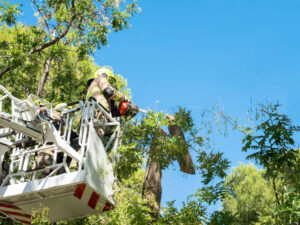
- Spider lift sectional removal: ideal when climbing is unsafe, gate is narrow, and lift can be staged on stable ground.
- Light crane assists: efficient for heavy spars over structures, feasible if street access and clear overhead space exist.
- Speedline rigging: useful when a clear diagonal corridor exists above fragile surfaces, requires careful anchoring.
- Hybrid prune, cable, and monitor: appropriate when removal is avoidable and risk can be reduced to acceptable levels.
Pricing, timing, and what drives cost
Clients often ask for a number before we have seen the site. The range is wide. A basic tight-access removal of a medium ornamental, say a 12 inch diameter Japanese maple near a patio, might take a half day with two techs. A mature 24 inch diameter elm leaning over two fences could take a full day with four techs and advanced rigging. Add a spider lift or crane and the cost climbs, though the job may finish faster.
What drives cost is not size alone. Complexity, hazard, and disposal logistics matter more. If brush must be hand carried through a 100 foot corridor and chipper staging sits around the block, labor hours stack up. If the tree shows decay at anchor points, we bring more equipment and adjust cut sizes, which slows the pace. Stump grinding in a tight corner adds time, especially if grindings must be hauled out by tubs rather than wheelbarrow.
Good Tree Removal Services explain these drivers so you can see the value. A vague lump sum without context makes it hard to compare bids. A detailed scope and plan make better sense, including contingencies if surprises pop out of the cut.
Permits, neighbors, and the calendar
Many municipalities require a permit to remove a tree above a certain diameter, even on private property. Corner lots and historic districts often have additional rules. Permit lead times run from a few days to several weeks. Nesting season for migratory birds can restrict work in spring. We schedule a pre-work wildlife check when the canopy is dense and habitat likely. No one enjoys pausing a job because a brood of chicks was discovered mid-cut.
Neighbors deserve a heads up, especially if the work window adds noise near shared fences. A thoughtful schedule that avoids early mornings and late evenings preserves goodwill. If we need to set cones or signage on the street to stage a chipper or crane, we coordinate temporary parking restrictions. Paperwork is not glamorous. It keeps the day smooth.
Real-world snapshots
A row-house maple with a bad lean: The gate measured 32 inches. The https://charlienbvb913.theburnward.com/insurance-approved-tree-removal-services-and-documentation tree leaned 12 degrees over a neighbor’s new pergola. Climbing tie-in points tested soft. We brought a 30 inch spider lift through the gate by removing one hinge pin and swinging the panel. With pads under the outriggers and plywood on the pavers, we sectionalized the canopy in three hours, then lowered trunk blocks to a landing zone pad. The stump sat 8 inches from a brick wall, too close for standard grinding. We cut flush, treated the surface to prevent sprouting, and installed a root barrier two feet out toward the yard. The client chose a columnar hornbeam to replant in autumn, set 6 feet away from the wall to avoid a repeat.
A cedar over a koi pond and glass railing: A job no one wanted to break. The client loved the tree, but storm damage left two shattered leaders hanging over the pond. Rather than full removal, we proposed strategic reduction and cabling. We used twin slings on each compromised leader, set a tagline to pull clear of the glass, and lowered in short pieces onto padded dollies. We installed a dynamic cable in the upper crown to support the remaining union. The pond never saw a leaf. That combination of pruning and Tree Cable and Bracing extended the life of a favorite tree and avoided a costly rebuild of the deck.
Homeowner prep that helps the day go right
- Clear access along the chosen haul path, including toys, planters, and grills, and unlock gates.
- Move vehicles from curb space requested for staging, including space for chipper or crane if needed.
- Mark irrigation heads, low-voltage wires, and any known underground features, and share controller location.
- Confine pets indoors or off site, and plan for noise during the work window.
- Walk the site with the crew leader to confirm protection for A/C units, ponds, and surfaces you care about most.
Safety and documentation are nonnegotiable
A professional crew treats safety as process, not a poster. Helmets, eye and ear protection, chainsaw pants, and proper footwear are visible signals. More important is the quiet choreography of calls and responses between climber and ground. Before the first cut, the crew sets emergency procedures and confirms first aid and fire extinguisher locations. Power lines within 10 feet of the work path trigger utility coordination. If a tree encroaches on the service drop, we may request a temporary disconnect.
Insurance documentation should be easy to see and verify. Liability and workers compensation are the basics. Ask for certificates. Photos before and after protect both sides. I take shots of fences, pavers, and siding along haul paths before work begins, then again at the end. If something scuffs or shifts, we address it on the spot, not a week later through a game of phone tag.
Disposal, recycling, and what stays on site
Brush often chips on site, then goes to composting or biomass facilities. Hardwood logs may be milled if quality and access allow, but small yards make that rare. In many neighborhoods, clients ask for a share of chips for mulch, roughly five to ten cubic yards per truck load. Fresh chips are great under shrubs and trees, less so against house siding. We are happy to place chips where requested if access allows.
Firewood rounds can stay, cut to length. Be realistic about quantity. A single medium tree can produce a surprising stack. If you prefer a clean slate, we load out all material. Hand carrying rounds through a narrow path is slow and heavy. Compact dollies reduce strain and damage, but time still accrues.

Aftercare and replanting in small spaces
The day after a removal, the yard feels bigger, and sometimes a little empty. Soil compaction along haul paths benefits from light aeration and topdressing. Where heavy sections sat, a shallow dish may form. We backfill and level to grade. If the plan includes replanting, species choice matters. Look for trees with modest mature size and root habits that play well with foundations and shared fences. Columnar forms and multi-stem ornamentals often fit better than broad, heavy crowns.
Watering patterns shift. A thirsty mature tree may have been pulling dozens of gallons per day in summer. Remove that, and irrigation overshoots can create soggy soil where a replacement sapling struggles. Adjust controllers. If the old stump remains in part near a wall, select the new planting location to avoid the densest root mass and make future maintenance straightforward.
How we decide when immediate removal is the right call
There are days when alternatives fade. If a trunk shows open cavity with advanced decay at ground line and fungal conks ring the flare, or if recent soil heaving suggests root plate movement, risk is not theoretical. Dangerous Tree Assessment and Removal prioritizes public and occupant safety over sentiment. In a small yard, the target zone is the whole property, so acceptable risk is lower. We still look for controlled approaches, but the decision leans toward action, not monitoring.
Storm split leaders over bedrooms, dead tops shedding in summer, and high-lean trees after saturated winters fit the same pattern. Here, Emergency Tree Services often begin as partial removals that break the hazard quickly, followed by scheduled completion. I would rather take a call at 10 p.m. And stabilize a site than learn that a piece went through a roof at 2 a.m.
What a good service proposal includes
A clear proposal lists scope, not slogans. Expect to see the removal method in plain language, how debris will leave the site, whether curbside chipping or on-site chipping is planned, and whether Stump Removal & Grinding is included. Protection measures should be named. If Tree Pruning & Crown Shaping or Tree Cable and Bracing are offered as alternatives, they deserve their own line items with maintenance intervals. If FireSmart Tree Services are relevant, the proposal can layer in spacing targets, crown separation, and materials guidance near structures.
Scheduling notes help you plan. Weather delays happen. Permits can slow the start. A good proposal anticipates these and tells you how they will be handled. Payment milestones tied to progress, not vague dates, keep everyone on the same page.
The value of experience in a small space
Tight-access work compresses the craft of arboriculture. The same principles apply as on big estates, but the feedback loop is faster and the cost of carelessness is higher. The crews that excel in small yards tend to be the ones who obsess over details. They walk the route twice. They oil the saws and sweep the walks. They tie backups on backups and never let a limb swing blind across a fence.
Done well, a difficult removal reads like a quiet day. Neighbors look out at lunch and wonder where the tree went, and why their garden looks untouched. That is the standard to look for when you choose among Tree Removal Services. Ask for a Certified Arborist Consultation, weigh the case for and against removal, and if you move ahead, expect a plan that treats your small yard like the intricate space it is.
Ace Tree Services Ltd.
Name: Ace Tree Services Ltd.Address: 4656 Wallace Hill Road, Kelowna, BC
Postal code: V1W 4C2
Phone: 250-212-9593
Website: https://acetree.ca/
Hours:
Monday: 7:00 AM - 5:00 PM
Tuesday: 7:00 AM - 5:00 PM
Wednesday: 7:00 AM - 5:00 PM
Thursday: 7:00 AM - 5:00 PM
Friday: 7:00 AM - 5:00 PM
Saturday: 7:00 AM - 5:00 PM
Sunday: Closed
Open-location code (plus code): RHF8+8G Kelowna, British Columbia, Canada
Map/listing URL: https://www.google.com/maps/place/Ace+Tree+Services+Ltd./@49.8232606,-119.4337283,659m/data=!3m2!1e3!4b1!4m6!3m5!1s0x537d8b1d074815c5:0x450b88afa7a41435!8m2!3d49.8232606!4d-119.4337283!16s%2Fg%2F11ydkpnh22
Embed iframe:
"@context": "https://schema.org", "@type": "HomeAndConstructionBusiness", "name": "Ace Tree Services Ltd.", "url": "https://acetree.ca/", "telephone": "250-212-9593", "address": "@type": "PostalAddress", "streetAddress": "4656 Wallace Hill Road", "addressLocality": "Kelowna", "addressRegion": "BC", "addressCountry": "CA" , "openingHoursSpecification": [ "@type": "OpeningHoursSpecification", "dayOfWeek": "https://schema.org/Monday", "opens": "07:00", "closes": "17:00" , "@type": "OpeningHoursSpecification", "dayOfWeek": "https://schema.org/Tuesday", "opens": "07:00", "closes": "17:00" , "@type": "OpeningHoursSpecification", "dayOfWeek": "https://schema.org/Wednesday", "opens": "07:00", "closes": "17:00" , "@type": "OpeningHoursSpecification", "dayOfWeek": "https://schema.org/Thursday", "opens": "07:00", "closes": "17:00" , "@type": "OpeningHoursSpecification", "dayOfWeek": "https://schema.org/Friday", "opens": "07:00", "closes": "17:00" ], "geo": "@type": "GeoCoordinates", "latitude": 49.8232606, "longitude": -119.4337283 , "hasMap": "https://www.google.com/maps/place/Ace+Tree+Services+Ltd./@49.8232606,-119.4337283,659m/data=!3m2!1e3!4b1!4m6!3m5!1s0x537d8b1d074815c5:0x450b88afa7a41435!8m2!3d49.8232606!4d-119.4337283!16s%2Fg%2F11ydkpnh22"
Ace Tree Services Ltd. provides professional tree removal, pruning, stump grinding, emergency response, and arborist consultations for properties in Kelowna and across the Okanagan Valley.
The company works with homes, commercial properties, and municipal settings where tree work needs to be planned carefully around buildings, fences, driveways, landscaping, and other site constraints.
Based in Kelowna, the team is positioned to help nearby neighbourhoods and surrounding Okanagan communities with routine tree care and time-sensitive storm cleanup.
Customers looking for careful tree work often want a crew with certified arborist training, insurance, and a methodical approach to higher-risk removals.
Services also include dangerous tree assessment, cabling and bracing, and wildfire risk reduction tree work for properties that need longer-term planning.
To request a quote or discuss tree care options, call 250-212-9593 or visit https://acetree.ca/.
A public map listing is available to help customers confirm the business location and get directions before a site visit or estimate.
For Kelowna property owners who need pruning, removals, or emergency tree help, a local tree service can make it easier to schedule site-specific recommendations and cleanup.
Popular Questions About Ace Tree Services Ltd.
What services does Ace Tree Services Ltd. provide?Ace Tree Services Ltd. lists tree removal, stump removal and grinding, tree pruning and crown shaping, emergency tree service, arborist consultation, dangerous tree assessment and removal, cabling and bracing, and wildfire risk reduction tree work.
Who does Ace Tree Services Ltd. serve?
The company describes its work as serving homes, businesses, and municipalities in Kelowna and across the Okanagan Valley.
Is emergency tree help available?
Yes. Emergency service is listed for downed or uprooted trees, dangerous tree assessment, stabilization work, and branch cleanup. If a tree is near power lines, the safest first step is to stay clear and contact the utility provider before any tree work begins.
Do I always need a permit to remove a tree?
Not always. Permit requirements can depend on where the tree is located and whether it is near a creek, lake, steep slope, or another protected area. It is best to check local rules for the specific property before removal work starts.
How deep does stump grinding usually go?
Standard stump grinding is typically described as going about 6 to 12 inches below ground level, which is often enough for grass or surface landscaping. Deeper grinding may be possible when site plans call for it.
How much of a tree can be safely removed at one time?
That depends on the species, age, health, and structure of the tree. In practice, good pruning is usually about removing the right limbs for health, clearance, and structure rather than chasing a fixed percentage.
What are common signs that a tree may be dangerous?
Large dead limbs, visible cracks, a new lean, root damage, canopy dieback, or storm-related damage can all be warning signs. Trees near structures deserve extra attention when any of those issues appear.
What is cabling and bracing in tree care?
Cabling and bracing are support systems used to reduce the risk of failure in trees with structural weaknesses that may still be worth preserving. They are generally used to add support, not to replace good assessment and ongoing maintenance.
How do I contact Ace Tree Services Ltd.?
Call 250-212-9593.Website: https://acetree.ca/.
Landmarks Near Kelowna, BC
Downtown KelownaThe downtown core is a practical reference point for lakefront neighbourhoods, mixed-use streets, and central residential properties. If your property is near downtown, tree pruning, removals, and cleanup can be planned around tighter access and nearby structures.
Knox Mountain Park
This well-known park north of downtown is a recognizable landmark for nearby homes and hillside properties. If you are close to this area, ask about tree assessment, trimming, or removal work suited to sloped sites.
Mission Creek Greenway
The greenway runs through several parts of Kelowna and is a useful landmark for nearby residential areas. If your property borders or sits near this corridor, site-specific tree planning is especially important.
Pandosy Village
Pandosy is one of Kelowna’s most recognizable neighbourhoods and a common reference point for south-central properties. If you are nearby, request help for pruning, removals, or storm cleanup around homes and small commercial sites.
Rutland
Rutland is a major east Kelowna neighbourhood with a mix of residential and local commercial properties. If you are located in or near Rutland, tree work can be scheduled for both routine maintenance and urgent situations.
Landmark District
This central business-focused area is a practical landmark for offices, service properties, and nearby residential streets. If your site is near the district, ask about careful tree work around parking, access lanes, and built-up lots.
Kelowna’s North End
The North End sits on the edge of downtown and is a useful reference for nearby homes, industrial sites, and commercial properties. If you are in this part of the city, request tree care based on the layout and constraints of the lot.
Airport District
The Airport District is a recognizable north Kelowna reference point for surrounding properties and access routes. If you are in this area, ask about tree services for residential acreage, commercial sites, or roadside cleanup needs.
Glenmore & Dilworth
These established Kelowna neighbourhoods are useful landmarks for central and north-central service calls. If your property is nearby, pruning and removal work can be tailored to mature trees and established landscapes.
Highway 97 Corridor
Highway 97 is one of the city’s main travel routes and a common way to describe location within Kelowna. If your home or property is just off the corridor, a clear landmark reference can help speed up quote scheduling and site planning.