Safe and Efficient Tree Removal Services for Homeowners
Tree work looks simple from the sidewalk. A climber moves with purpose, a saw hums, branches float to the ground on rope. What you do not see is the planning thread that runs under every cut, and the quiet math that keeps crews efficient and neighbors safe. I have spent years walking yards with homeowners, reading the wood and the wind, and deciding whether a tree needs pruning, cabling, or removal. When removal is the right call, the difference between a tidy day and a costly mess lies in experience, equipment, and communication.
When removal is the right call
Most homeowners do not want a tree gone. They want shade without risk, privacy without roots in the sewer, a sound canopy that clears the roof and keeps squirrels honest. The first step is a Certified Arborist Consultation, a site visit where an experienced arborist listens to your concerns, inspects the tree, and weighs options. Sometimes Tree Pruning & Crown Shaping can solve the problem. Other times, the risk profile points in just one direction.
A Dangerous Tree Assessment and Removal decision is not a hunch. We look for codominant stems with included bark that split in heavy wind, vertical cracks, cavities that reduce the strength of the trunk, root plate heaving, and fungal fruiting bodies that signal decay. We use a mallet to sound the wood, a probe to measure cavity depth, and, when warranted, a resistograph or sonic tomograph to quantify how much solid fiber remains. If less than about 30 to 35 percent of the trunk’s cross section is sound, the risk of failure climbs steeply. Location also matters. A compromised limb over a patio where kids play has a very different risk tolerance than the same limb over a low-traffic corner of yard.
Homeowners often ask about timing. If a trunk shows fresh cracking, leaning with soil movement at the base, or a hung limb after a storm, that is an emergency. Emergency Tree Services exist for a reason. At other times, removal should be scheduled after nesting season or when ground conditions are dry to protect lawn and hardscape.
Planning for safety and efficiency
Efficient tree removal looks neat because it is safe. A reputable company begins with a site walk. We locate utilities, note brittle rooflines and solar panels, talk through chipper and truck placement, and plan drop zones. If the tree leans over a street, we may secure a permit for lane closure. If power lines are within striking distance, we coordinate with the utility and sometimes bring in a line-certified crew.
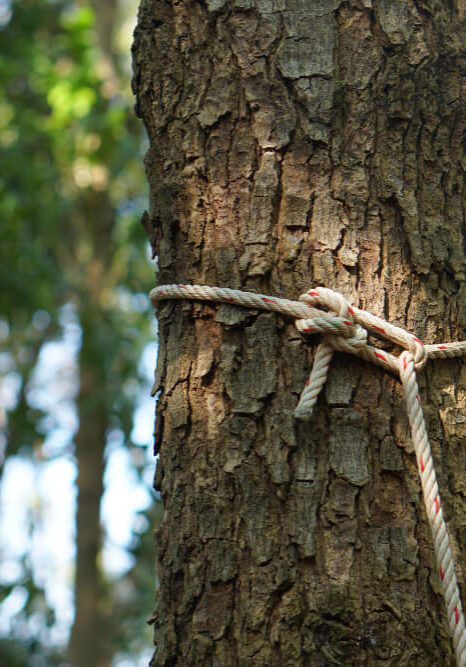
Every cut is backed by systems. Climbers set two tie-in points in suspect wood. Ground crews rig with ropes rated 12,000 to 20,000 pounds, and we install friction devices to control loads. Chainsaw bar lengths match cut depth to reduce kickback risk. A basic residential removal typically runs with three to five people: a climber, a primary ground lead on rigging, a chipper operator, and a second ground hand who keeps the site clean and watches for bystanders. Good crews hardly talk while working, not because they are stoic, but because the plan is clear.
The right equipment saves time and prevents damage. Articulated loaders move brush without tearing turf. Track-mounted lifts fit through 36-inch gates and steady the operator in high, thin wood. Cranes make complex jobs simple when the tree is inaccessible to rig from above, or when decay is so advanced that a climber cannot safely ascend. A 40 to 70 ton crane is typical for large suburban removals, often allowing the crew to remove a mature oak in half a day, where conventional rigging might take two.
Methods of removal that respect your property
Straight felling is rare in neighborhoods, but it remains an option when the tree can be dropped in a clear arc. Even then, we set a pull line high in the canopy and use a mechanical advantage to control the hinge and lay the tree down with precision. More often, we dismantle the canopy in sections. The climber positions above the cut line, cuts the limb, and the ground crew lowers it on a friction device. The goal is zero shock load, no hits on the lawn, and no surprises.
There is an art to deciding the sequence. We remove outer limbs first to reduce weight at the tips, then work back to the trunk, always maintaining a stable center of gravity for the remaining wood. On brittle species like silver maple, we pad rigging points to prevent bark tearing. On pitchy conifers, we expect sap, bring solvent, and protect your stonework.
An anecdote that illustrates the value of planning: a homeowner once asked why we spent 30 minutes pulling fence panels before we cut. The maple stood just inside the yard, and the brush volume would have forced us to lift each piece over the fence, adding at least an hour to the job and more risk to the crew’s backs. That half hour cleared our access and kept the work flowing. Efficiency is not speed for its own sake, it is attention that saves time and prevents damage.
What helps before the crew arrives
A little preparation on the homeowner side makes a real difference.
- Clear the driveway and move vehicles from the drop zone so we can stage the chip truck, chipper, and log truck close to the work.
- Unlock gates and confirm a 36-inch gate opening if we are bringing a tracked lift or stump grinder into the yard.
- Mark irrigation heads and shallow landscape lighting wires near the tree to prevent accidental cuts.
- Secure pets indoors and let nearby neighbors know about noise and street parking, especially on tight cul-de-sacs.
- Share any known underground utilities or septic features. A five-minute conversation can avoid an expensive repair.
Stump Removal & Grinding, the part everyone forgets
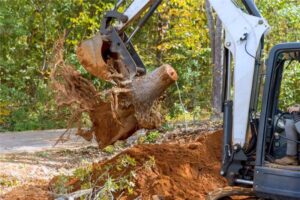
The trunk may be gone by noon, but the stump decides whether your yard looks finished. Stump grinding converts the root crown to mulch, typically to a depth of 6 to 12 inches below grade. Shallow depth works for lawn repair. If you plan to replant a tree nearby or https://messiahuacf675.iamarrows.com/low-impact-tree-removal-services-using-ropes-and-rigging install a fence post, ask for a deeper grind or a larger diameter pass around the stump, since structural roots can extend laterally two to three feet for smaller trees and far more for big ones.
Before any grinding, we call for a utility locate. Cable and gas lines often run along property lines or diagonally across yards, and grinders do not forgive guessing. After grinding, we rake the mulch, add topsoil if needed, and either seed or lay sod. If the stump sat near a garden bed, we check the pH and add amendments because wood chips tie up nitrogen during decomposition. It is also smart to run downspouts or irrigation settings so the new soil does not settle a few inches and leave a shallow, soggy bowl.
Occasionally, we recommend leaving a low wildlife stump if you are in a naturalized corner of the property. It supports insects, woodpeckers, and fungi, and it costs less. In formal landscapes, a full grind and clean fill is the norm.
When pruning avoids removal
Many calls for Tree Removal Services turn into careful Tree Pruning & Crown Shaping once we examine the structure. A Norway maple with heavy end weight over a driveway can often be lightened by 10 to 15 percent in targeted areas to reduce sail and leverage. A white oak with a developing codominant union might accept a reduction cut on the subordinate stem and a companion support system.
Good pruning respects branch collars, uses sharp tools, and avoids flush cuts that invite decay. Timing matters. In the heat of summer, broadleaf trees can handle light structural work without rampant water sprout response. In late winter, cuts are visible and the tree’s energy is poised for spring growth. We follow ANSI A300 standards for pruning and avoid topping, which creates unstable sprouts and an ongoing maintenance headache.
There is a cost trade-off. Removal gives a final answer and a clean slate, while pruning provides risk reduction with ongoing work every three to five years. For cherished trees that anchor the yard or offer shade over a south-facing window, money spent on skilled pruning often returns comfort and property value for decades.
Tree Cable and Bracing, a quiet safety net
Support systems are not a cure-all, but they can extend the life of a valued tree. Tree Cable and Bracing involves installing steel rods through split crotches or high-strength synthetic or steel cables between leaders to limit movement during wind events. We use dynamic cabling higher in the canopy when we want controlled flex rather than rigid restraint, and static cabling or bracing when a crack or defect requires firm support.
Hardware placement is surgical. Cables sit two-thirds of the distance from the defect to the tips to capture the lever arm. Rods penetrate sound wood on both sides of a split, with washers that distribute load without crushing the cambium. Inspection matters. We put support systems on a three to five year review cycle, checking for growth around hardware, tension, and any new defects. In the wrong hands, cables can hide deeper problems. In the right hands, they buy time and safety.
Emergencies bring their own rules
Storm damage demands different tools and different judgment. Emergency Tree Services are built on triage. The first priority is life safety and utility clearance. If a limb is through a roof but stable, and rain is in the forecast, we often tarp and schedule a daylight removal when the crew can see every hazard. Night work is for truly unstable situations, and it proceeds with floodlights, traffic control, and extra spotters.
Insurance work introduces paperwork. Photos from several angles, a written scope that distinguishes between tree work and structural repairs, and line items for crane time help the claim move quickly. Prices during peak storm weeks can jump 20 to 40 percent because crews run long hours and equipment is scarce. Ask about a temporary make-safe rate versus full removal, especially if multiple properties are affected and patience can save resources.
I remember a tulip poplar that speared through a second-story window at 2 a.m. The homeowner wanted the entire tree gone that night. We stabilized the broken section, cleared the room, cut back the intrusion, boarded the window, and came back after sunrise with a crane. The bill was lower, and the outcome was better because we respected the limits of lighting and fatigue.
FireSmart Tree Services for wildfire-prone areas
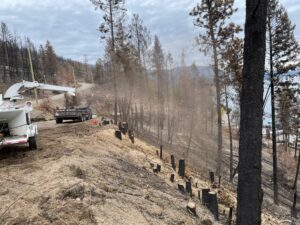
If you live where summers dry out and wind comes hot and steady, removal decisions carry a wildfire context. FireSmart Tree Services reduce ignition pathways around the home. We talk about defensible space in three zones. Within 1.5 meters, keep clear of woody mulch, dense shrubs, and low branches that lick at siding. Within 10 meters, prune conifers up to 2 to 3 meters from the ground to break ladder fuels and space crowns so they do not touch. Out to 30 meters, thin dense stands, favor broadleaf species with higher moisture content, and manage downed wood.
Removal plays a role when a tree leans over the roof, drops resinous cones into gutters, or sits so close to the wall that radiant heat would ignite it even without flame contact. Chips from removals can be spread thinly in low-risk zones or hauled away if fine fuels are already abundant. Spark arrestors on chippers and strict cleanup standards come into play during high fire danger days. A thoughtful plan balances shade, privacy, and fire risk, and it may include selective removals paired with replanting of more fire-resilient species like serviceberry or certain maples.
Wildlife, neighbors, and the neighborhood
Responsible removal notices the life in and around the tree. Before cutting, we scan for nests, bee activity, and bat roosts. Active songbird nests lead to schedule shifts or work limited to areas away from the nest until fledging. If we find a feral honeybee colony, we can often coordinate a beekeeper rescue before demolition. It slows the job a bit, but it respects the larger ecosystem and keeps you out of regulatory trouble.
Neighbors appreciate a heads-up, especially when trucks will line the street or when a chipper will run for hours. A short note in the mailbox or a friendly knock prevents most friction. If a shared fence sits under the canopy, we may ask both property owners to sign the work authorization to avoid disputes after the fact. It takes a few extra minutes and saves headaches later.
Cost, scope, and what drives the number
Homeowners often want a quick number over the phone. The gap between a simple backyard Bradford pear and a complex 100-foot cottonwood over a pool can be a factor of ten. For typical suburban removals in North America, you might see a range from a few hundred dollars for a small ornamental to several thousand for large, technical work. Major crane jobs or tight-access removals can move into the five-figure range, especially when multiple large trees are involved.
Cost drivers are clear once you see them. Height and diameter add time and disposal volume. Proximity to structures increases rigging complexity. Decay that prevents climbing might require a lift or crane. Limited access means more hand carry and turf protection. Stump grinding depth and cleanup standard, from leave mulch to full topsoil and sod, adjusts the total. Ask for a written scope that shows line items for Tree Removal Services, Stump Removal & Grinding, and any extras like log hauling, wood splitting, or turf repair.
A good estimator will also talk through contingencies. Hidden cavities that force a method change, a sudden thunderstorm that halts work, or a fence post that reveals a concrete footer during stump grinding can alter the day. Clear language about how changes are handled builds trust before the first cut.
DIY work and where to draw the line
Many homeowners handle pruning of small ornamentals, and there is pride in that. Chainsaws and ladders invite overconfidence though, and the physics of wood can surprise even seasoned hands. I have seen a 12-inch limb barber chair on a homeowner, splitting upward faster than he could move. He was lucky. A simple cut plan would have prevented it.
- Reasonable DIY: remove small shrubs or branches you can cut at chest height with both feet on the ground, clean gutters, and rake debris after a storm.
- Leave to pros: any chainsaw work above shoulder height, cuts on limbs under tension, trunk sections heavier than you can lift, trees near power lines, and anything that requires rigging or a ladder.
If you are unsure, schedule a short assessment. Many companies will offer a brief walkthrough and advise you on what is safe to handle and what is not. It is better to spend a little on advice than a lot on an avoidable injury.
Choosing the right provider
Credentials do not guarantee character, but they are a good filter. Look for ISA Certified Arborists on staff and ask who will be on site. Verify liability insurance and workers’ compensation; do not just take a verbal yes, request certificates. Ask about training in ANSI Z133 safety standards. Experience with Tree Cable and Bracing, Emergency Tree Services, and FireSmart Tree Services hints at a company that thinks beyond quick removals.
Equipment tells you how they will treat your property. Track mats preserve lawns, and smaller compact loaders fit narrow gates without tearing edges. If the estimator talks about safe anchor points, rigging plans, and how they will manage traffic or protect your roof, you are in good hands. Ask for references, especially for jobs similar to yours. A tidy yard, clean cuts on stumps, and no surprises are not too much to expect.
Clarity in communication matters. A detailed proposal describes the scope from first cut to final rake, disposal of chips and logs, stump grinding depth, and what happens with sawdust and mulch. It should state whether the price includes permits or utility coordination. Set start and finish windows that respect weather and crew availability.
Site protection, cleanup, and what a finished job looks like
On arrival day, we lay out protection for hardscape and turf, swing by the neighbor’s window wells to check for open covers, and mark irrigation lines that you flagged for us. Through the job, a good crew keeps the chipper fed, the driveway swept, and the client in the loop. It is common for the climber to pause halfway through and point out the next steps, especially when rigging over a roof or pool.
Cleanup is not an afterthought. We blow off roofs and gutters if debris fell there. We magnet-sweep the driveway for stray nails from old treehouses that lurk in wood. Where heavy rounds crossed lawn, we rake and roll the turf to relieve pressure. If the lawn is wet, we use plywood walkways rather than track ruts into the soil. A chip truck typically holds 15 to 20 cubic yards; if we are chipping a large conifer, we plan dump runs to avoid overflow and the mess it brings.
A finished job leaves no loose hazards. The stump sits clean and level to soil grade unless you ordered a higher wildlife cut. Sawdust is raked and, if you want a pristine look, hauled away. If you plan to replant, we can suggest species and placement that keep roots clear of foundations and give the new tree room to mature.
Replanting and recovery
Removing a mature tree changes the microclimate. Expect more light, more wind, and sometimes more noise from the street. It is a good time to choose replacements that fit the space and your goals. If a large tree came down near a south-facing window, a medium canopy tree planted 10 to 15 feet from the house can restore shade without crowding the siding. If roots invaded old clay tile sewer lines, ask your plumber about modern materials, then consider species with less aggressive surface rooting.
Soil recovers from the weight of equipment with a little attention. Core aerate compacted areas, topdress with compost, and water deeply to encourage root growth in turf. If stump grinding mulch remains, let it settle for a few weeks, then top it with soil before seeding to avoid nitrogen tie-up at the surface. Think of removal not as an end, but a reset.
A final word on judgment
Good tree work is patient strength. It respects wood fiber and weather, ladders and rope, engines and neighbors. Whether you call for a Certified Arborist Consultation, schedule Tree Pruning & Crown Shaping, or decide on full removal with Stump Removal & Grinding, the right partner will share their reasoning and show their craft. The safest, most efficient days feel calm. That is the best sign you hired well.
Tree care is a long relationship with your landscape. Dangerous Tree Assessment and Removal solves pressing risks, Tree Cable and Bracing preserves structure where it makes sense, and FireSmart Tree Services give you a defensible home when the season turns hot and dry. Ask good questions, expect clear answers, and look for the quiet competence that keeps people, property, and the living parts of your yard in balance.
Ace Tree Services Ltd.
Name: Ace Tree Services Ltd.Address: 4656 Wallace Hill Road, Kelowna, BC
Postal code: V1W 4C2
Phone: 250-212-9593
Website: https://acetree.ca/
Hours:
Monday: 7:00 AM - 5:00 PM
Tuesday: 7:00 AM - 5:00 PM
Wednesday: 7:00 AM - 5:00 PM
Thursday: 7:00 AM - 5:00 PM
Friday: 7:00 AM - 5:00 PM
Saturday: 7:00 AM - 5:00 PM
Sunday: Closed
Open-location code (plus code): RHF8+8G Kelowna, British Columbia, Canada
Map/listing URL: https://www.google.com/maps/place/Ace+Tree+Services+Ltd./@49.8232606,-119.4337283,659m/data=!3m2!1e3!4b1!4m6!3m5!1s0x537d8b1d074815c5:0x450b88afa7a41435!8m2!3d49.8232606!4d-119.4337283!16s%2Fg%2F11ydkpnh22
Embed iframe:
Ace Tree Services Ltd. provides professional tree removal, pruning, stump grinding, emergency response, and arborist consultations for properties in Kelowna and across the Okanagan Valley.
The company works with homes, commercial properties, and municipal settings where tree work needs to be planned carefully around buildings, fences, driveways, landscaping, and other site constraints.
Based in Kelowna, the team is positioned to help nearby neighbourhoods and surrounding Okanagan communities with routine tree care and time-sensitive storm cleanup.
Customers looking for careful tree work often want a crew with certified arborist training, insurance, and a methodical approach to higher-risk removals.
Services also include dangerous tree assessment, cabling and bracing, and wildfire risk reduction tree work for properties that need longer-term planning.
To request a quote or discuss tree care options, call 250-212-9593 or visit https://acetree.ca/.
A public map listing is available to help customers confirm the business location and get directions before a site visit or estimate.
For Kelowna property owners who need pruning, removals, or emergency tree help, a local tree service can make it easier to schedule site-specific recommendations and cleanup.
Popular Questions About Ace Tree Services Ltd.
What services does Ace Tree Services Ltd. provide?Ace Tree Services Ltd. lists tree removal, stump removal and grinding, tree pruning and crown shaping, emergency tree service, arborist consultation, dangerous tree assessment and removal, cabling and bracing, and wildfire risk reduction tree work.
Who does Ace Tree Services Ltd. serve?
The company describes its work as serving homes, businesses, and municipalities in Kelowna and across the Okanagan Valley.
Is emergency tree help available?
Yes. Emergency service is listed for downed or uprooted trees, dangerous tree assessment, stabilization work, and branch cleanup. If a tree is near power lines, the safest first step is to stay clear and contact the utility provider before any tree work begins.
Do I always need a permit to remove a tree?
Not always. Permit requirements can depend on where the tree is located and whether it is near a creek, lake, steep slope, or another protected area. It is best to check local rules for the specific property before removal work starts.
How deep does stump grinding usually go?
Standard stump grinding is typically described as going about 6 to 12 inches below ground level, which is often enough for grass or surface landscaping. Deeper grinding may be possible when site plans call for it.
How much of a tree can be safely removed at one time?
That depends on the species, age, health, and structure of the tree. In practice, good pruning is usually about removing the right limbs for health, clearance, and structure rather than chasing a fixed percentage.
What are common signs that a tree may be dangerous?
Large dead limbs, visible cracks, a new lean, root damage, canopy dieback, or storm-related damage can all be warning signs. Trees near structures deserve extra attention when any of those issues appear.
What is cabling and bracing in tree care?
Cabling and bracing are support systems used to reduce the risk of failure in trees with structural weaknesses that may still be worth preserving. They are generally used to add support, not to replace good assessment and ongoing maintenance.
How do I contact Ace Tree Services Ltd.?
Call 250-212-9593.Website: https://acetree.ca/.
Landmarks Near Kelowna, BC
Downtown KelownaThe downtown core is a practical reference point for lakefront neighbourhoods, mixed-use streets, and central residential properties. If your property is near downtown, tree pruning, removals, and cleanup can be planned around tighter access and nearby structures.
Knox Mountain Park
This well-known park north of downtown is a recognizable landmark for nearby homes and hillside properties. If you are close to this area, ask about tree assessment, trimming, or removal work suited to sloped sites.
Mission Creek Greenway
The greenway runs through several parts of Kelowna and is a useful landmark for nearby residential areas. If your property borders or sits near this corridor, site-specific tree planning is especially important.
Pandosy Village
Pandosy is one of Kelowna’s most recognizable neighbourhoods and a common reference point for south-central properties. If you are nearby, request help for pruning, removals, or storm cleanup around homes and small commercial sites.
Rutland
Rutland is a major east Kelowna neighbourhood with a mix of residential and local commercial properties. If you are located in or near Rutland, tree work can be scheduled for both routine maintenance and urgent situations.
Landmark District
This central business-focused area is a practical landmark for offices, service properties, and nearby residential streets. If your site is near the district, ask about careful tree work around parking, access lanes, and built-up lots.
Kelowna’s North End
The North End sits on the edge of downtown and is a useful reference for nearby homes, industrial sites, and commercial properties. If you are in this part of the city, request tree care based on the layout and constraints of the lot.
Airport District
The Airport District is a recognizable north Kelowna reference point for surrounding properties and access routes. If you are in this area, ask about tree services for residential acreage, commercial sites, or roadside cleanup needs.
Glenmore & Dilworth
These established Kelowna neighbourhoods are useful landmarks for central and north-central service calls. If your property is nearby, pruning and removal work can be tailored to mature trees and established landscapes.
Highway 97 Corridor
Highway 97 is one of the city’s main travel routes and a common way to describe location within Kelowna. If your home or property is just off the corridor, a clear landmark reference can help speed up quote scheduling and site planning.