Residential Tree Removal Services with Careful Crane Work
Removing a mature tree beside a home is part surgery, part choreography. The trunk may be leaning over a roof, limbs could be knitted through service drops, and the root plate might be holding a slope together. In tight residential settings, careful crane work changes the equation. When used by an experienced crew with a certified arborist guiding the plan, a crane lets us dismantle trees in controlled sections, move wood up and away from hazards, and protect landscapes that took years to establish.
Crane assisted removals are not the answer for every yard, but they expand what is safely possible. Good planning, precise rigging, and clear communication with the homeowner are the core of successful outcomes. The following perspective comes from years of setting outriggers on driveways, reading wind over rooftops, and working within inches of skylights and garden walls.
When a crane makes sense
Some trees can be climbed, pieced down with ropes, and walked out through a side yard. Others fight back. If the trunk is structurally compromised, a climber does not belong in the canopy. If branches extend over additions or a glass atrium, negative rigging may load the house in ways that are hard to predict. A crane changes the forces at play, taking weight up and out, and letting us set each section directly into a designated landing zone.
Circumstances that tend to justify a crane include decayed stems with poor tie-in points, heavily overbuilt patios that cannot tolerate rope shock loads, and backyards without equipment access. Add steep slopes, stone walls, or septic fields, and the value of a crane rises further. In many neighborhoods, even a healthy tree becomes a removal candidate when it exceeds setback clearances, threatens power service, or blocks planned solar arrays. A Certified Arborist Consultation can help separate what must come down from what can be stabilized with pruning or cabling.
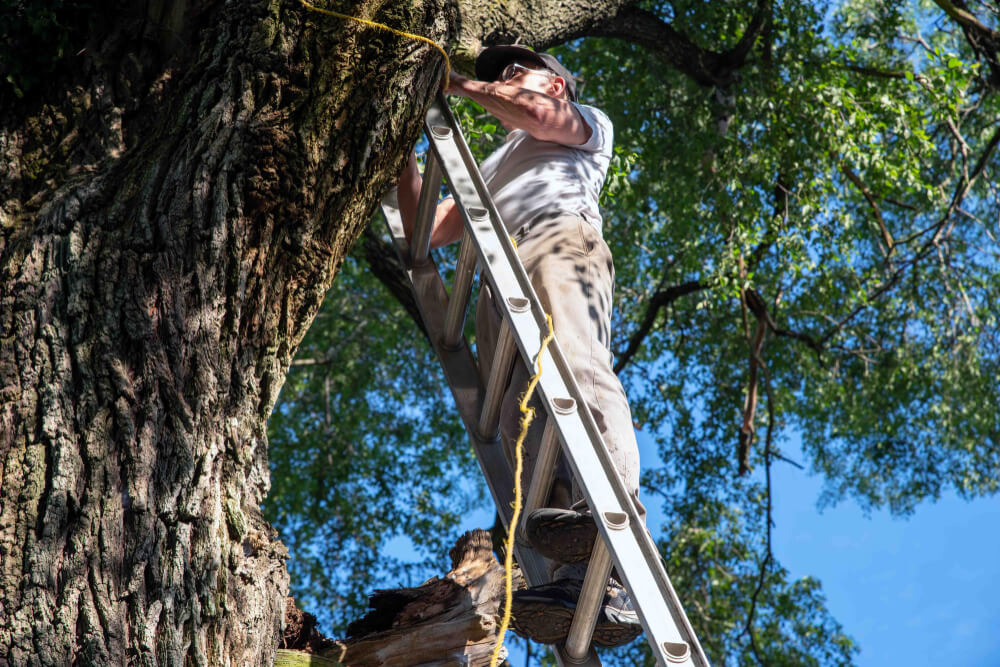
Anatomy of a crane pick
Every successful lift begins long before steel moves. The site is measured, the soil is read, and the crane configuration is matched to the reach. On a typical suburban removal, we are balancing three constraints. First, the tree’s weight by section, which might reach 800 to 1,200 pounds for a 12 foot oak log at 24 inches diameter. Second, the radius of the pick, or how far the crane must reach over the property. Third, ground bearing capacity under the outriggers. Asphalt driveways may hold, but pavers and fill soils near old backfills can trick you. We use outrigger pads that spread load, often 3 by 5 foot composite mats, to keep point pressure within safe ranges.
Once the crane is rigged and certified for the day’s configuration, the climber or aerial lift operator enters the canopy. A rigging plan defines cut order, sling positions, and expected weights. It is not unusual for the crew to call out rough numbers as we go, cross checking the load cell. If a section reads 1,400 pounds instead of the expected 1,000, we adapt. Balance is king, especially on conifers with tapered crowns that hide weight in whorled limbs.
Communication runs on hand signals and radios. The climber sets two or more slings in opposition to stabilize the piece, the saw finishes a bypass cut, then the operator eases tension until the piece floats. No swinging, no surprise twists. The crane drifts the section over the house, clears the ridge cap by a yard or less, and lowers into the work zone. Ground crew with tag lines steer it to a controlled landing, then the chipper and saw teams break it down. Good crews keep the tempo steady, not frantic. With practice, a full removal can be completed in half a day to a full day, with stump grinding scheduled after utilities are marked.
Protecting driveways, lawns, and neighbors
Tree Removal Services for residences are as much about what we do not damage as what we remove. Outrigger mats protect surfaces, but tire tracks and soil compaction can still ruin a yard if not managed. We distribute load with ground protection roads made of 4 by 8 foot mats, lay down plywood where mats do not fit, and plan travel paths that avoid root zones of trees you want to keep. When space is tight, we stage logs on timbers rather than directly on turf, reducing ruts and allowing air under heavy pieces that will sit for an hour or more.
Noise and dust matter to neighbors. We start saws after a courteous knock on adjacent doors when operations are close. If your home is in a community with quiet hours, we time the chipping work accordingly. For homes on narrow streets, we coordinate with parking and sometimes place signage a day ahead to keep the crane’s swing clear. It pays to be a good neighbor. Most conflicts we have seen came from surprise, not from the work itself.
The role of the arborist
A Certified Arborist Consultation sets expectations and tests assumptions. Is removal the right course, or would Tree Pruning & Crown Shaping raise the crown to clear the roofline for another decade? Could Tree Cable and Bracing stabilize a split crotch maple without surgery? Is the lean of that spruce a cosmetic tilt or is the root plate heaving due to rot? These are judgment calls, but there are signs to read. Fungal conks at the base, bark seams, oozing sap, bulging soil, and fresh cracks tell their own stories. When we see advanced decay in the first ten feet of trunk, a crane removal becomes a prime option because the canopy no longer offers safe anchor points.
Arborists also speak permit. Some municipalities require heritage tree approvals or neighbor notifications when removals exceed certain trunk diameters, often 20 inches measured at breast height. Others limit street closures or dictate where a crane can stage. Getting those details right keeps you away from fines and project delays.
Precision matters in rigging
Cranes add capacity, not forgiveness. Sloppy sling placement puts the load off balance, and a rotating butt log can glance off a chimney. We avoid that by chocking with a stub or setting a belly wrap in addition to a choker. On straight spar work, a double wrap above the cut, with the balance point premarked, keeps the section level on lift. When the tree is asymmetrical, we intentionally undercut long limbs and rig shorter picks to avoid torque on the boom. Wet wood can be 20 percent heavier than expected, so numbers are adjusted for species and weather. Fir and spruce carry moisture differently than oak and maple. A ground leader who has cut all four in every season is worth his weight in time saved and trouble avoided.
Where utilities are present, coordination with the power company is essential. A safe crane pick cannot run under energized lines. In many cases the utility will sleeve service drops or de-energize for a scheduled window, often two to four hours. We build our cutting plan around that window so the riskiest moves happen while the wires are protected.
Emergency Tree Services after storms
When a storm drops a trunk through a roof at 2 a.m., the playbook simplifies. Stop the damage from getting worse, then remove weight safely. Emergency Tree Services with a crane often begin before dawn, when streets are clear and wind has calmed. The first moves are tarps, temporary shoring in the attic, and then lightweight debris removal. We cut binders and hangers that threaten immediate collapse, then coordinate with an adjuster if they need photographs or measurements. On a split day, we may stage larger logs off site and return for Stump Removal & Grinding once the property is safe and utilities are restored.
Storm wood pushes crews and equipment. Loads are unpredictable, fibers are twisted, and what looks stable can shift without warning. A dangerous tree assessment and removal strategy under these conditions uses the same tools, but the time pressure is real. Good operators resist being rushed. A slow, clean pick saves hours of repair.
From stump to finished grade
Homeowners often imagine the job is done when the last limb is chipped, but the stump remains. Stump Removal & Grinding is its own craft. We call for utility locates before spinning a wheel, even for small grindings. Cable TV lines sit shallow in many yards and are easy to slice. A typical residential stump, 24 inches diameter, grinds in 45 to 90 minutes depending on species. Surface roots that flare under lawn furniture or patios need passes too. When the homeowner plans to replant, we remove grindings to a depth of 10 to 12 inches, then backfill with clean topsoil. If the plan is hardscape, we go deeper, knowing that settling is the enemy of pavers. In clay soils, a second visit a few weeks later to top off the depression avoids that telltale sunken circle.
Alternatives: pruning, shaping, and structural support
Not every tree near a home must go. Tree Pruning & Crown Shaping can lift a canopy off a roofline, thin wind sail, and reduce end weight that threatens long laterals. The right cuts matter. Reduction cuts back to lateral branches that are at least one third the diameter of the parent preserve health and structure. Heading cuts invite decay and water sprouts, which grow fast, weak, and messy. In many cases, a reduction of 10 to 20 percent buys multiple years of clearance.
For trees with a minor union flaw, Tree Cable and Bracing offers a middle path. A through bolt and dynamic or static cables above the union share load between stems. We size hardware based on species, span, and sail area. Cables are not a promise against failure, but they lower risk, especially when paired with pruning. Annual inspections catch frayed strands or loosened hardware before they matter.
When a tree shows signs that exceed what support can manage, such as progressive bark inclusion with visible separation, Dangerous Tree Assessment and Removal becomes the responsible choice. Here, the recommendation weighs targets as well as defects. A compromised silver maple over an empty field is one thing. The same tree over a playset shifts the calculus.
FireSmart Tree Services and defensible space
For homes near wildland edges, FireSmart Tree Services help create a survivable space. Removals may be part of that plan, but the focus is usually on ladder fuels. We limb conifers up to six to ten feet, thin saplings that connect ground fire to crowns, and clear organic debris from gutters and roofs. In the first five feet from the structure, we favor hardscape or low moisture plantings. In the next 30 feet, we create spacing between crowns, typically 10 feet or more depending on slope and species. These numbers vary by local guidelines, but the intent is steady. Break up fire continuity without sterilizing the landscape.
Crane work sometimes enters this picture where dead or compromised snags lean into a defensible space zone that is otherwise inaccessible. Removing them without scarifying the soil or tearing out erosion control matting keeps the site resilient ahead of the next fire season.
Planning, permits, and timelines
From first call to final rake-out, a residential crane removal follows a predictable path. We start with a site visit, often 30 to 60 minutes, to inspect structure, access, and surrounding assets. A written estimate includes the method, any crane time, traffic control if required, and the scope of cleanup. Permits typically add a week to two weeks in jurisdictions with heritage tree rules. Utility coordination can add another few days. On the calendar, most single tree crane removals schedule one full workday for removal and a separate window for stump grinding. Weather delays happen. Some jobs wait for wind under 15 miles per hour, both for crane stability and for safe rope handling.
Costs vary with reach, species, and complexity. As a rough yardstick, a standard crane assisted removal in a backyard with 80 to 100 foot reach can run in the low four figures to mid four figures, with stump grinding in the low hundreds to near one thousand depending on diameter and root flare. Multi tree projects, limited access, or extensive traffic control push higher. We set expectations plainly to avoid surprises.
Crane vs traditional removal, choosing the right method
Not every tree needs a crane, and not every crane can solve a structural issue. The choice comes from risk, access, cost, and the value of surrounding assets. Here are concise contrasts that help frame the decision.
- Crane removal excels where the tree is compromised, over targets, or inaccessible by climber, because loads can be lifted away without shock.
- Traditional climbing and rigging work well on healthy, sound trees with good tie-in points, especially when access is straightforward and landing zones are ample.
- Crane removals reduce wear on landscapes by limiting rope drops and ground dragging, but they require space and ground that can carry outrigger loads.
- Traditional removals can be more cost effective for smaller trees, or where crane set-up would dominate the day.
- When weather is marginal, traditional work may proceed safely longer than crane operations that are sensitive to wind and ground conditions.
These are guides, not rules. A site visit settles the method after we test assumptions against the real tree, the real yard, and the real goals.
Preparing your property for crane day
Homeowners often ask what they can do to help. A little preparation goes a long way and keeps the day moving smoothly.
- Clear driveway and street parking where the crane will set up, ideally the evening before.
- Mark irrigation heads and low voltage lighting near access paths so we can place ground protection precisely.
- Move patio furniture, grills, and fragile pots out of the work zone, or let us know if you prefer we handle them.
- Unlock gates and ensure pets stay safely inside during operations.
- Point out any known underground features like septic lids, drain lines, or recent trenching.
If you cannot be home, a quick note with gate codes, preferred staging areas, and contact info helps more than you might think.
Safety culture you can see
Professional crews leave clues. They hold a tailgate talk before start, walk lines, and test communications. The climber or lift operator inspects harness and lanyards, the ground crew checks slings, chokers, and tag lines. The crane operator reviews load charts and confirms outrigger cribbing. Anyone can call a stop. These are not empty rituals. Years of incident-free days come from habits formed when the clock is not running hot.
When we train new hands, we teach boredom before bravado. Wait for the signal. Watch the load. Keep your feet. The tree is large enough to hurt you even after it hits the ground. That attitude, expressed in simple routines, keeps crews sharp and homeowners safe.
Aftercare once the tree is gone
Removing a canopy changes sun and wind patterns. Expect more light on windows, warmer rooms on winter afternoons, and new hot spots in summer. Lawns under dense shade can scorch during the first season. We recommend overseeding with a shade tolerant blend before spring, then shifting to a more sun friendly mix the following fall if the site bakes. For beds, add mulch to buffer soil temperature and retain moisture. If the removed tree helped block west winds, consider a hedge or a trellis to restore comfort on patios.
Roots from the removed tree will decay over years, not weeks. As they decompose, soils may settle. Light top-ups are normal. If drainage changes, especially near foundations, we can review grading and gutter flow to keep water moving away from structures.
Integrating removals with long term tree care
A mature tree that needed removal often shares a yard with others that can thrive for decades. The best Tree Removal Services blend seamlessly into a broader plan. We schedule follow-up pruning on neighboring trees that were previously shielded, adjust cable tension where winds now hit harder, and refine FireSmart Tree Services for the new exposure. Planting plans matter, too. If you plan to replant, match species to space. A redbud under a 20 foot eave beats a new maple that will be a headache in twelve years.
For homeowners who enjoy trees but worry about hazards, periodic Certified Arborist Consultation is a practical habit. A 30 minute walk every one to three years catches small problems before they turn into removals. Fruit trees benefit from winter pruning that keeps scaffold angles strong and reduces breakage under crop weight. Ornamental cherries that sucker along fence lines can be managed with careful timing and the right cuts. Small moves, well timed, prevent crises.
Edge cases and lessons learned
Some jobs linger in memory because they taught something. We once lifted a 28 inch diameter cottonwood that leaned over a glass solarium. The homeowner feared every gust. The ground near the house had been backfilled decades ago, now low and spongy. https://dallasriav650.yousher.com/certified-arborist-consultation-for-construction-impact-mitigation The crane could not set on that side without risking settlement, so we staged on the street, added four layers of cribbing under pads, and pushed reach to the safe limit. Wind rocked the crown enough that we peeled it faster than usual, in smaller picks, keeping loads around 500 to 700 pounds. The work took an extra hour compared to calm conditions, but the glass never saw stress. Cottonwood holds water, and our weights ran 15 percent above book estimates. The load cell kept us honest.
On another site, a homeowner wanted the stump cut flush without grinding. The stump sat beside a driveway that ponded after every hard rain. We cut low, as asked, but warned that water would pool. It did. Two months later, we returned to grind and amend soil to fix the drainage. The lesson reinforced itself. Stump Removal & Grinding is more than aesthetics. It often solves practical problems that show up only after the saws go quiet.
Choosing a provider
Credentials, equipment, and references align to form trust. Look for a company that can speak across services, not just removals. If they offer Tree Pruning & Crown Shaping, Emergency Tree Services, Dangerous Tree Assessment and Removal, Tree Cable and Bracing, and FireSmart Tree Services, they have a fuller picture of how your landscape works. Verify insurance and ask how they protect surfaces, utilities, and neighboring properties. A walkthrough that mentions specific constraints on your site is a positive sign. If the estimate is vague, press for detail on crane size, reach, staging, and contingency plans for weather or surprises in the wood.
Ask about clean up. A tidy job includes fine raking, magnet sweeps for stray nails if cribbing was used, and touch ups where turf saw traffic. Ground protection should leave marks that fade, not ruts that demand a landscaper.
Bringing it all together
Careful crane work extends the reach of safe, efficient residential tree removal. Done well, it preserves roofs, gardens, and relationships with neighbors. It supports the broader goals of a property, whether that is light for a new garden, clearance for solar, or a defensible space ahead of a hot summer. The technique demands planning and humility. We measure twice, cut once, and listen to the tree as much as the homeowner. Good outcomes are quiet, almost boring at street level. Inside the ropes, there is skill and judgment at work, earned in years and proven in seconds when a heavy piece floats clean and steady over your home.
Ace Tree Services Ltd.
Name: Ace Tree Services Ltd.Address: 4656 Wallace Hill Road, Kelowna, BC
Postal code: V1W 4C2
Phone: 250-212-9593
Website: https://acetree.ca/
Hours:
Monday: 7:00 AM - 5:00 PM
Tuesday: 7:00 AM - 5:00 PM
Wednesday: 7:00 AM - 5:00 PM
Thursday: 7:00 AM - 5:00 PM
Friday: 7:00 AM - 5:00 PM
Saturday: 7:00 AM - 5:00 PM
Sunday: Closed
Open-location code (plus code): RHF8+8G Kelowna, British Columbia, Canada
Map/listing URL: https://www.google.com/maps/place/Ace+Tree+Services+Ltd./@49.8232606,-119.4337283,659m/data=!3m2!1e3!4b1!4m6!3m5!1s0x537d8b1d074815c5:0x450b88afa7a41435!8m2!3d49.8232606!4d-119.4337283!16s%2Fg%2F11ydkpnh22
Embed iframe:
"@context": "https://schema.org", "@type": "HomeAndConstructionBusiness", "name": "Ace Tree Services Ltd.", "url": "https://acetree.ca/", "telephone": "250-212-9593", "address": "@type": "PostalAddress", "streetAddress": "4656 Wallace Hill Road", "addressLocality": "Kelowna", "addressRegion": "BC", "addressCountry": "CA" , "openingHoursSpecification": [ "@type": "OpeningHoursSpecification", "dayOfWeek": "https://schema.org/Monday", "opens": "07:00", "closes": "17:00" , "@type": "OpeningHoursSpecification", "dayOfWeek": "https://schema.org/Tuesday", "opens": "07:00", "closes": "17:00" , "@type": "OpeningHoursSpecification", "dayOfWeek": "https://schema.org/Wednesday", "opens": "07:00", "closes": "17:00" , "@type": "OpeningHoursSpecification", "dayOfWeek": "https://schema.org/Thursday", "opens": "07:00", "closes": "17:00" , "@type": "OpeningHoursSpecification", "dayOfWeek": "https://schema.org/Friday", "opens": "07:00", "closes": "17:00" ], "geo": "@type": "GeoCoordinates", "latitude": 49.8232606, "longitude": -119.4337283 , "hasMap": "https://www.google.com/maps/place/Ace+Tree+Services+Ltd./@49.8232606,-119.4337283,659m/data=!3m2!1e3!4b1!4m6!3m5!1s0x537d8b1d074815c5:0x450b88afa7a41435!8m2!3d49.8232606!4d-119.4337283!16s%2Fg%2F11ydkpnh22"
Ace Tree Services Ltd. provides professional tree removal, pruning, stump grinding, emergency response, and arborist consultations for properties in Kelowna and across the Okanagan Valley.
The company works with homes, commercial properties, and municipal settings where tree work needs to be planned carefully around buildings, fences, driveways, landscaping, and other site constraints.
Based in Kelowna, the team is positioned to help nearby neighbourhoods and surrounding Okanagan communities with routine tree care and time-sensitive storm cleanup.
Customers looking for careful tree work often want a crew with certified arborist training, insurance, and a methodical approach to higher-risk removals.
Services also include dangerous tree assessment, cabling and bracing, and wildfire risk reduction tree work for properties that need longer-term planning.
To request a quote or discuss tree care options, call 250-212-9593 or visit https://acetree.ca/.
A public map listing is available to help customers confirm the business location and get directions before a site visit or estimate.
For Kelowna property owners who need pruning, removals, or emergency tree help, a local tree service can make it easier to schedule site-specific recommendations and cleanup.
Popular Questions About Ace Tree Services Ltd.
What services does Ace Tree Services Ltd. provide?Ace Tree Services Ltd. lists tree removal, stump removal and grinding, tree pruning and crown shaping, emergency tree service, arborist consultation, dangerous tree assessment and removal, cabling and bracing, and wildfire risk reduction tree work.
Who does Ace Tree Services Ltd. serve?
The company describes its work as serving homes, businesses, and municipalities in Kelowna and across the Okanagan Valley.
Is emergency tree help available?
Yes. Emergency service is listed for downed or uprooted trees, dangerous tree assessment, stabilization work, and branch cleanup. If a tree is near power lines, the safest first step is to stay clear and contact the utility provider before any tree work begins.
Do I always need a permit to remove a tree?
Not always. Permit requirements can depend on where the tree is located and whether it is near a creek, lake, steep slope, or another protected area. It is best to check local rules for the specific property before removal work starts.
How deep does stump grinding usually go?
Standard stump grinding is typically described as going about 6 to 12 inches below ground level, which is often enough for grass or surface landscaping. Deeper grinding may be possible when site plans call for it.
How much of a tree can be safely removed at one time?
That depends on the species, age, health, and structure of the tree. In practice, good pruning is usually about removing the right limbs for health, clearance, and structure rather than chasing a fixed percentage.
What are common signs that a tree may be dangerous?
Large dead limbs, visible cracks, a new lean, root damage, canopy dieback, or storm-related damage can all be warning signs. Trees near structures deserve extra attention when any of those issues appear.
What is cabling and bracing in tree care?
Cabling and bracing are support systems used to reduce the risk of failure in trees with structural weaknesses that may still be worth preserving. They are generally used to add support, not to replace good assessment and ongoing maintenance.
How do I contact Ace Tree Services Ltd.?
Call 250-212-9593.Website: https://acetree.ca/.
Landmarks Near Kelowna, BC
Downtown KelownaThe downtown core is a practical reference point for lakefront neighbourhoods, mixed-use streets, and central residential properties. If your property is near downtown, tree pruning, removals, and cleanup can be planned around tighter access and nearby structures.
Knox Mountain Park
This well-known park north of downtown is a recognizable landmark for nearby homes and hillside properties. If you are close to this area, ask about tree assessment, trimming, or removal work suited to sloped sites.
Mission Creek Greenway
The greenway runs through several parts of Kelowna and is a useful landmark for nearby residential areas. If your property borders or sits near this corridor, site-specific tree planning is especially important.
Pandosy Village
Pandosy is one of Kelowna’s most recognizable neighbourhoods and a common reference point for south-central properties. If you are nearby, request help for pruning, removals, or storm cleanup around homes and small commercial sites.
Rutland
Rutland is a major east Kelowna neighbourhood with a mix of residential and local commercial properties. If you are located in or near Rutland, tree work can be scheduled for both routine maintenance and urgent situations.
Landmark District
This central business-focused area is a practical landmark for offices, service properties, and nearby residential streets. If your site is near the district, ask about careful tree work around parking, access lanes, and built-up lots.
Kelowna’s North End
The North End sits on the edge of downtown and is a useful reference for nearby homes, industrial sites, and commercial properties. If you are in this part of the city, request tree care based on the layout and constraints of the lot.
Airport District
The Airport District is a recognizable north Kelowna reference point for surrounding properties and access routes. If you are in this area, ask about tree services for residential acreage, commercial sites, or roadside cleanup needs.
Glenmore & Dilworth
These established Kelowna neighbourhoods are useful landmarks for central and north-central service calls. If your property is nearby, pruning and removal work can be tailored to mature trees and established landscapes.
Highway 97 Corridor
Highway 97 is one of the city’s main travel routes and a common way to describe location within Kelowna. If your home or property is just off the corridor, a clear landmark reference can help speed up quote scheduling and site planning.