Proactive Dangerous Tree Assessment and Removal Programs
Trees fail quietly. Decay moves inside a trunk for years before the first crack appears, roots weaken under driveways after a utility trench, and a windstorm simply finishes what time began. When a limb drops or a whole tree lets go, the costs are measured in roofs punctured, lines down, injuries, and long outages. I have walked properties the morning after a storm where the cleanup bill was ten times what a steady maintenance program would have cost over five years. Proactive Dangerous Tree Assessment and Removal pays for itself in avoided emergencies, lower liability, and healthier canopies that stand up better when the weather turns rough.
This is not about indiscriminately taking down big trees. A good program keeps as many trees as possible, but it does so with eyes open. It blends formal risk assessment with practical field judgment, then applies the right remedy at the right time, whether that is Tree Pruning & Crown Shaping, Tree Cable and Bracing, or scheduling removal followed by Stump Removal & Grinding. When decisions are consistent and documented, municipalities reduce claims, commercial sites cut unscheduled outages, and homeowners sleep better when the wind starts pushing.
What risk really means in tree work
Risk is the combination of likelihood and consequence. In tree terms, that translates to the probability a tree or part of a tree will fail within a defined period, and the severity of the impact if it does. Likelihood depends on biological condition, structure, and site factors. Consequence depends on what stands in the drop zone, called the target. A dying poplar leaning over an unused meadow carries little risk. The same tree over a daycare parking area is a different calculus.
Certified assessors evaluate three things. First, defects and vitality in the tree itself, such as decay columns, fungal conks, included bark, cracks, deadwood, and the tree’s overall energy reserves. Second, the site, including soil saturation, drainage, exposure to prevailing winds, and recent grading or compaction. Third, the target, from traffic counts to building use to the presence of lines and glass. Weighting those factors takes experience. I have flagged small ornamental pears as high risk where constant pedestrian traffic made their brittle wood and included unions unacceptable, and I have left massive oaks in place after confirming strong root plates and sound wood despite old lightning scars.
Why proactive beats reactive every time
Reactive tree work is always done on the clock of risk, not your schedule. Crews are booked, equipment is limited, and weather can stack failures. When a property owner waits until a branch breaks to call for Tree Removal Services, the outcome often includes a crane that was not in the budget, street closures, and a damaged structure. A proactive program spreads work across the year, lines up traffic control and permits, and performs removals under controlled conditions. It also catches problems that cannot be fixed after the fact. A small cavity in a root flare might become a critical root failure the next wet, windy night. Addressing it early with selective pruning, load reduction, or support systems protects the canopy and saves money.
Proactive work also supports canopy goals. Cities often have a target canopy percentage for heat mitigation and stormwater management. Losing large established https://charlienbvb913.theburnward.com/stump-removal-grinding-reclaim-your-yard-fast trees to avoidable failures ends up costing residents in hotter summers and overwhelmed drains. A systematic approach, where removals target nonrecoverable hazards and the rest of the canopy receives structural pruning, builds resilience that shows up on storm maps as fewer downed trees and shorter power outages.
What a thorough assessment looks like in the field
A proper assessment is not a drive by scan out a truck window. It begins at the base of the tree, where the most critical failures develop. An arborist will clear duff from the root crown, probe for soft tissue, and look for buttress asymmetry. I have found soil mounded on one side of a trunk after a storm, a classic sign the plate has begun to lift. From there, we circle the tree, noting fungal bodies, seams, sap flow, and mechanical wounds. We check old pruning cuts, especially those too close to the trunk that created stubs and decay pockets. At height, binoculars reveal split unions and dead laterals that only show from the right angle.
Sounding the trunk with a mallet is still a useful technique. A change in tone can indicate internal cavities. When the stakes are higher, we deploy instruments. A resistance drill traces density through the wood to profile decay without removing significant tissue. Sonic tomography maps hidden hollows. Even with technology, the most useful tools are still a good eye and context from prior inspections. An experienced arborist remembers the elm on the southwest fence line that lost 20 percent of its crown in a wind event two summers ago, and reinspects with that history in mind.
Documentation and grading you can act on
Proactive programs rise or fall on how well they translate observations into decisions. A documented risk rating system keeps everyone aligned. Many firms use a modified three tier scale that aligns with industry guidance. High risk calls for near term action, either immediate mitigation or removal within a set window, often 2 to 4 weeks. Moderate risk bears watching with corrective work like pruning, cabling, or watering adjustments, and reinspection within 6 to 12 months. Low risk goes into the regular maintenance cycle with an inspection interval based on species, age, and exposure, generally 2 to 3 years.
Reports should include photos of defects, target descriptions, and a map reference. I like QR tags on high priority trees that link to their record in the field. That makes it simple for a follow up crew to confirm they have the right tree and the right scope of work. When property managers present budgets, those records back up the line items with specific recommendations and timeframes, not vague concerns.
Choosing between pruning, support, and removal
Removal is one tool, not the whole kit. The decision to remove should be justified by either a defect that cannot be mitigated at acceptable cost or by a risk profile that remains too high even after mitigation. A few examples from recent years show the range.
An old silver maple with heavy end weight over a driveway had co dominant stems with deep included bark. Reduction pruning to lighten the tips, plus Tree Cable and Bracing installed in the upper canopy, dropped the likelihood of failure significantly. The owner kept the tree, and we scheduled a reinspection every two years.
A large cottonwood along a riverbank had progressive root decay and lean toward a pedestrian trail. No amount of pruning could move the weight enough, and support systems would not address the compromised root plate. We recommended removal, and the city scheduled it for early winter when trail use dropped, reducing disruption.
A parking lot ash with canopy dieback tested positive for emerald ash borer. We compared treatment costs to its location and value. Given its size and minimal shade benefit in that configuration, removal followed by planting a diverse species mix made more sense than multi year injections.
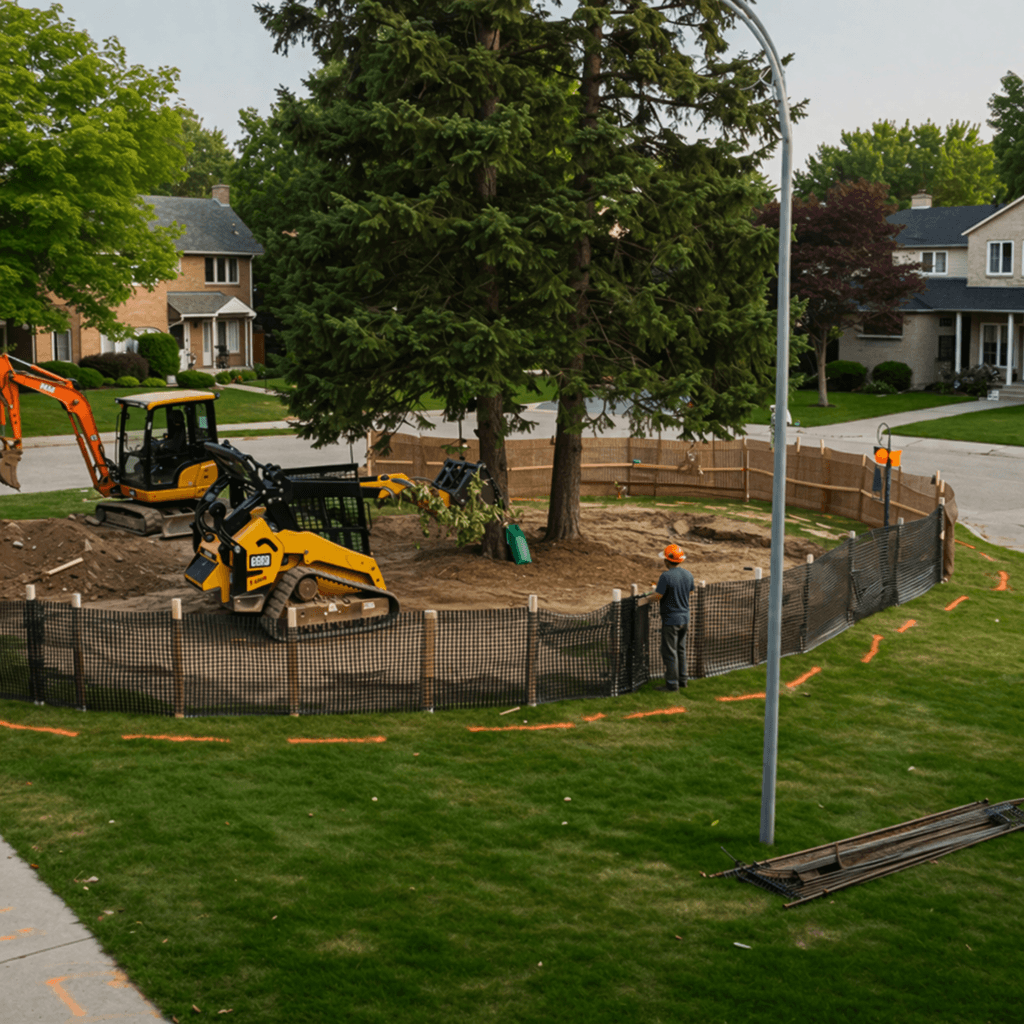
When removal is indicated, Stump Removal & Grinding should be planned right away, not as an afterthought. Grinding roots clear of utilities and to appropriate depth avoids trip hazards and allows replanting. Clients who skip this step end up with mower damage and resprouting suckers that create a maintenance headache.
Where Certified Arborist Consultation fits
Not every site needs an in house arborist, but every serious program benefits from Certified Arborist Consultation at key points. Certification signals that the assessor understands tree biology, industry standards, and safe work practices. On complex decisions, such as heritage trees near structures, we bring in a board certified master arborist to review and confirm the plan. The consultation phase also builds public trust. Homeowners and tenants are more comfortable when they hear a certified professional explain why a tree needs to come down, or what will be done to save it safely.
Integrating Emergency Tree Services into a calm plan
Even the best program will face surprise events. The difference is how you absorb the shock. Proactive clients already have a vendor on call for Emergency Tree Services, with access routes and staging areas pre identified. We pre assign priorities, like hospital feeders, main egress routes, or school bus corridors. Crews know which properties allow night work and where noise restrictions require morning starts.
Here is a compact emergency playbook we give to property managers before storm season:
- Verify safety first, keep people away from downed lines and suspect trees, then call utilities as needed.
- Activate your tree vendor, share site maps and known priorities, and text photos to speed triage.
- Preserve the scene for assessment whenever possible, quick cleanup can erase clues about failure points.
- Document damage with dates and times for insurers, then authorize temporary stabilization before full repairs.
The biggest time saver in emergencies is current tree data. A geotagged inventory lets dispatch route the right bucket truck to the right spot without guessing. Crews can locate the pin and see notes from the last inspection, including any special hazards like yard drains or septic fields.
FireSmart thinking for properties in wildfire zones
If your site is in a wildland urban interface, or even within a kilometer or two of brushlands, FireSmart Tree Services belong inside your proactive program. The objective is to reduce the chance a crown fire moves into your trees and to limit ember ignition around structures. Start with clearance. Ladder fuels, the smaller branches that allow flames to climb from ground level into the canopy, should be pruned up to a height appropriate to the tree size and local regulations. Thinning crowns to reduce continuous contact between trees makes it harder for fire to pass from tree to tree. Ground fuels near structures need constant attention. Mulch that works in a suburban front yard can be a liability in August on the edge of a ravine.
I have seen dramatic differences in outcomes along the same street. Properties with annual FireSmart work stood with scorch marks and some cracked windows, while neighbors who let junipers run wild lost porches and eaves. Proactive does not mean harsh. You can still have attractive screening and shade. The work simply places species choice, spacing, and maintenance duty in a fire aware context.
Building the program, step by step
The first cycle of a proactive program does the heavy lifting, then each subsequent year becomes maintenance and refinement. We usually begin by walking the entire property and recording a baseline inventory. On a medium sized commercial campus, that might be 300 to 700 trees, variety depending on how aggressively prior owners planted. Species, diameter at breast height, condition, and notable site factors go into a simple database or GIS layer. We rate each tree for risk and prescribe initial work.
Permitting rules matter. Some jurisdictions require permits to remove or significantly prune trees over a certain diameter or for protected species. Skipping this slows everything later. We build permit timelines into the schedule from day one. Neighbor relations matter too. On shared boundaries, root and limb conflicts become easier when both sides have a plan in writing. A friendly conversation backed by a Certified Arborist Consultation report avoids arguments over the fence when a limb hangs over a garage.
Budgeting follows the inventory. We group work by type and priority. High risk removals and critical structural pruning land in year one. Moderate risk mitigation and plant health care follow. We reserve a portion of the budget for unplanned needs, typically 10 to 20 percent depending on exposure. Over time, the emergency portion shrinks as the canopy stabilizes.
If you are launching a program for the first time, a short internal checklist helps maintain momentum:
- Assign a single point of contact who can approve work within defined thresholds to avoid delays.
- Compile site constraints in one packet, including utility maps, access gates, noise windows, and permit requirements.
- Choose a vendor that can deliver Tree Removal Services, Tree Pruning & Crown Shaping, Tree Cable and Bracing, and Stump Removal & Grinding under one roof, or assemble a reliable team if not.
- Set inspection intervals by zone, higher for play areas, entries, and high wind corridors, lower for low target areas.
- Establish a simple naming and tagging convention so crews, managers, and consultants speak the same language.
The role of pruning in risk reduction
Thoughtful pruning does more than make a tree look tidy. It shapes structure for decades. On young trees, training a single dominant leader and well spaced scaffold branches prevents the kind of weak unions that split under load later. Reducing end weight on long laterals lowers leverage at the union, the exact spot we often find cracks. Removing deadwood keeps it from becoming airborne in a storm.
Crown shaping is not topping. Topping creates vigorous, poorly attached shoots that fail readily and invites decay. Crown reduction, in contrast, follows accepted pruning cuts back to laterals that can assume terminal growth. It respects the tree’s biology and distributes stress safely. We see the results in live oaks and maples that weather storms with only minor debris while unpruned peers lose major branches.
Timing matters. In heavy sap species, late winter cuts can reduce bleeding. In hot, dry climates, late summer pruning relieves weight before autumn winds, but avoids the peak heat that stresses trees. When birds are nesting, certain jurisdictions restrict pruning in canopy layers. A good plan adapts to those windows.
Support systems that work, and those that do not
Tree Cable and Bracing is often misunderstood. Installed correctly, cabling reduces the risk of codominant stems splitting by sharing load higher in the canopy. It does not keep a failing trunk from collapsing, and it is not a substitute for removing end weight. Cables need correct placement, size, and inspection. Over the years, I have inherited trees with slack cables that never engaged, and others where bolts were driven through decayed wood. Both give a false sense of security.
Bracing rods stabilize cracked unions at the point of weakness. We use them in combination with pruning and cabling to extend the service life of trees with high value and manageable defects. Homeowners should understand that support systems introduce hardware that ages. They require periodic checks, and sometimes replacement. When the reinspection commitment is not realistic, removal becomes the safer call.
Health, soil, and water, the quiet foundations
Structural defects attract attention, but a large share of failures begin in the root zone. Soil compaction after a construction project can reduce root growth for years. Grade changes that bury the root flare suffocate tissue, invite decay, and destabilize the tree. Irrigation that throws water against the trunk fosters fungal infection. A proactive program pairs structural work with plant health care. We aerate where compaction is heavy, correct grade at the base, adjust irrigation heads, and mulch appropriately. Two to three inches of mulch out to the dripline, kept back from the trunk, works as a slow release moisture and temperature buffer.
Species selection for replacements shapes risk for decades. Fast growing, weak wood species like some poplars and willows have their place, but not near targets where breakage is unacceptable. Mixing species buffers against pests that can remove a single species from the landscape almost overnight. Diversify plantings so no single species exceeds 10 to 20 percent of the canopy by count.
Safety and logistics during removal
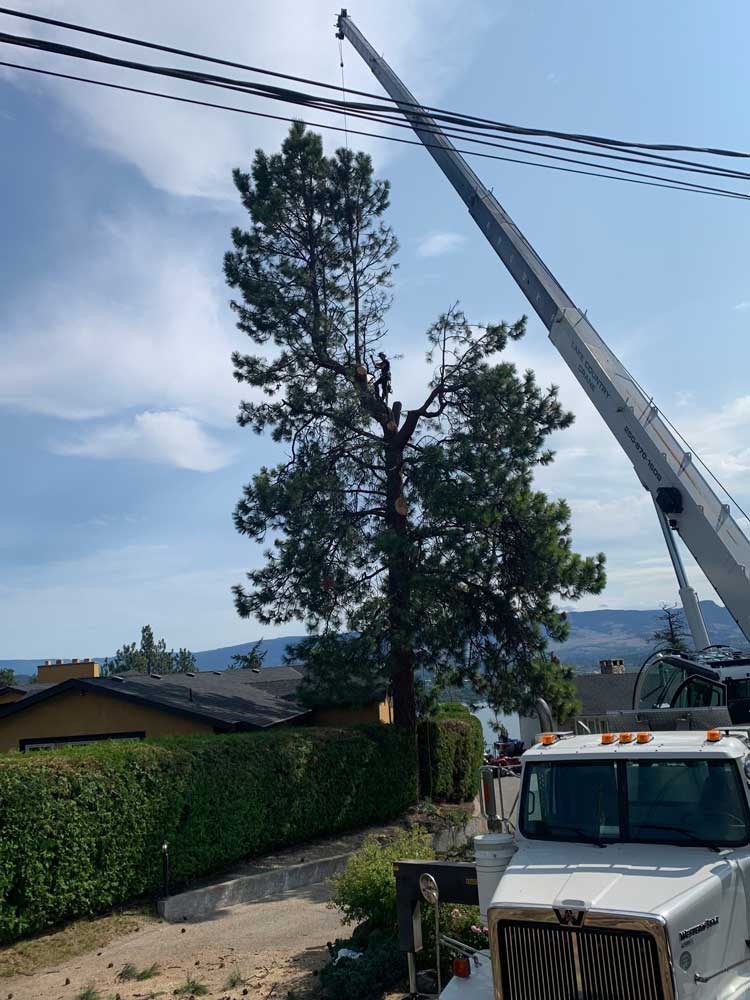
When removal is necessary, safety turns on planning. We begin with a job hazard analysis that accounts for traffic, lines, ground stability, and escape routes. In tight urban spaces, rigging minimizes collateral damage. A controlled negative rig off a stout anchor reduces shock loads. Cranes allow for efficient dismantling where access permits. On one downtown site, we lifted 14 picks from a courtyard sycamore in four hours between morning rush and a scheduled delivery window, with sidewalks reopened by lunch.
Coordinating with utilities is critical. A competent firm will call locates before stump grinding and respect minimum approach distances around energized lines. When outage schedules are involved, tree crews and line crews synchronize to compress the window that customers spend without power.
Communicating with stakeholders
Trees invite emotion. They shade family gatherings, mark property lines, and frame favorite views. When a proactive program removes a tree, resentment can flare if people feel blindsided. Clear, respectful communication smooths the process. Post notices with dates and reasons, hold a short Q and A for tenants if multiple removals are planned, and offer replanting options when appropriate. Photos of defects help. I have watched a room nod in understanding after seeing a close up of a hollow nearly spanning the trunk.
On commercial sites, signage during work builds trust. Let people know why crews are there, how long the lane will be down, and where to report concerns. After major projects, a one page summary with before and after photos and a line about long term benefits closes the loop.
Measuring success and refining the program
Programs mature when they are measured. Track metrics that matter, not vanity stats. We look at the number of emergency calls per storm event, average response times, insurance claims related to tree failures, and canopy condition ratings over time. Budget variance tells its own story. If emergency spend is trending down while planned maintenance holds steady, the program is working. If removals spike in a zone, that may indicate a site factor like wind exposure or soil issues that needs attention.
Technology helps but keep it simple enough so crews use it. A shared map with tags and photos, a standard form for assessments, and a calendar for inspections beats a fancy platform nobody updates. We sometimes include a brief annual walk through with the client to identify changes on the ground, like new construction, altered drainage, or shifts in use patterns that change targets.
Case notes from the field
On a coastal campus, steady winter winds pushed salt inland. Pines on the windward edge showed browning and thinning crowns. Early on, four pines failed at the hinge where salt burn weakened needles and concentrated weight on one side. We adjusted the program to reduce end weight on remaining pines, installed windward guying where appropriate, and increased inspections before the stormy months. Failures dropped to zero in the next two winters.
A hospital complex had suffered three separate power line strikes from mature tulip poplars with long lateral overhang. None caused fires, but all required patient relocations. The risk assessment flagged those trees as moderate to high due to target value and structure. Removal was politically unpopular. We brought in a Certified Arborist Consultation team to present options, including reduction pruning and partial canopy retrenchment. After reviewing the risk and the critical nature of the target, the hospital opted for removal of the highest risk trees, reduction on the rest, and a staged replanting plan. Over three years, there were no further outages from trees.
A hillside HOA struggled with slides and shallow rooted species on fill. Several trees leaned over townhomes. We worked with a geotech to evaluate soil stability, then removed a subset of hazard trees, installed drains to reduce saturation, and replanted with deeper rooting species. The HOA now inspects after heavy rain and tracks soil moisture in two test pits. They shifted from a string of near misses to a steady state with known risks under observation.
Where professional services fit in a full life cycle
A strong program uses the full spectrum of services with timing and intent. Dangerous Tree Assessment and Removal is the core, but it is surrounded by maintenance and support. Tree Pruning & Crown Shaping keeps form and reduces leverage before storms. Tree Cable and Bracing extends the useful life of valuable trees with manageable defects. Stump Removal & Grinding finishes the job safely and readies the site for replanting. Certified Arborist Consultation anchors decision quality. FireSmart Tree Services reduce catastrophic loss potential in high risk zones. Emergency Tree Services tie it all together when nature tests the system.
Vendors that can deliver across that range simplify coordination. If you prefer to assemble a team of specialists, choose firms that communicate well with each other. Shared terminology, prompt reporting, and a clear primary contact prevent lost time between phases.
The bottom line
Risk will never be zero, but you can make it predictable and manageable. A proactive program chooses where to spend attention and money, not the next windstorm. It protects people and property, preserves the canopy you care about, and turns tree work into planned maintenance instead of a string of near disasters. I have seen neighborhoods that feared every weather alert grow surprisingly calm once their trees were assessed, pruned to good structure, and supported where needed. When a branch falls after that, it is an outlier, not a pattern, and you already know who to call and what happens next.
Ace Tree Services Ltd.
Name: Ace Tree Services Ltd.Address: 4656 Wallace Hill Road, Kelowna, BC
Postal code: V1W 4C2
Phone: 250-212-9593
Website: https://acetree.ca/
Hours:
Monday: 7:00 AM - 5:00 PM
Tuesday: 7:00 AM - 5:00 PM
Wednesday: 7:00 AM - 5:00 PM
Thursday: 7:00 AM - 5:00 PM
Friday: 7:00 AM - 5:00 PM
Saturday: 7:00 AM - 5:00 PM
Sunday: Closed
Open-location code (plus code): RHF8+8G Kelowna, British Columbia, Canada
Map/listing URL: https://www.google.com/maps/place/Ace+Tree+Services+Ltd./@49.8232606,-119.4337283,659m/data=!3m2!1e3!4b1!4m6!3m5!1s0x537d8b1d074815c5:0x450b88afa7a41435!8m2!3d49.8232606!4d-119.4337283!16s%2Fg%2F11ydkpnh22
Embed iframe:
"@context": "https://schema.org", "@type": "HomeAndConstructionBusiness", "name": "Ace Tree Services Ltd.", "url": "https://acetree.ca/", "telephone": "250-212-9593", "address": "@type": "PostalAddress", "streetAddress": "4656 Wallace Hill Road", "addressLocality": "Kelowna", "addressRegion": "BC", "addressCountry": "CA" , "openingHoursSpecification": [ "@type": "OpeningHoursSpecification", "dayOfWeek": "https://schema.org/Monday", "opens": "07:00", "closes": "17:00" , "@type": "OpeningHoursSpecification", "dayOfWeek": "https://schema.org/Tuesday", "opens": "07:00", "closes": "17:00" , "@type": "OpeningHoursSpecification", "dayOfWeek": "https://schema.org/Wednesday", "opens": "07:00", "closes": "17:00" , "@type": "OpeningHoursSpecification", "dayOfWeek": "https://schema.org/Thursday", "opens": "07:00", "closes": "17:00" , "@type": "OpeningHoursSpecification", "dayOfWeek": "https://schema.org/Friday", "opens": "07:00", "closes": "17:00" ], "geo": "@type": "GeoCoordinates", "latitude": 49.8232606, "longitude": -119.4337283 , "hasMap": "https://www.google.com/maps/place/Ace+Tree+Services+Ltd./@49.8232606,-119.4337283,659m/data=!3m2!1e3!4b1!4m6!3m5!1s0x537d8b1d074815c5:0x450b88afa7a41435!8m2!3d49.8232606!4d-119.4337283!16s%2Fg%2F11ydkpnh22"
Ace Tree Services Ltd. provides professional tree removal, pruning, stump grinding, emergency response, and arborist consultations for properties in Kelowna and across the Okanagan Valley.
The company works with homes, commercial properties, and municipal settings where tree work needs to be planned carefully around buildings, fences, driveways, landscaping, and other site constraints.
Based in Kelowna, the team is positioned to help nearby neighbourhoods and surrounding Okanagan communities with routine tree care and time-sensitive storm cleanup.
Customers looking for careful tree work often want a crew with certified arborist training, insurance, and a methodical approach to higher-risk removals.
Services also include dangerous tree assessment, cabling and bracing, and wildfire risk reduction tree work for properties that need longer-term planning.
To request a quote or discuss tree care options, call 250-212-9593 or visit https://acetree.ca/.
A public map listing is available to help customers confirm the business location and get directions before a site visit or estimate.
For Kelowna property owners who need pruning, removals, or emergency tree help, a local tree service can make it easier to schedule site-specific recommendations and cleanup.
Popular Questions About Ace Tree Services Ltd.
What services does Ace Tree Services Ltd. provide?Ace Tree Services Ltd. lists tree removal, stump removal and grinding, tree pruning and crown shaping, emergency tree service, arborist consultation, dangerous tree assessment and removal, cabling and bracing, and wildfire risk reduction tree work.
Who does Ace Tree Services Ltd. serve?
The company describes its work as serving homes, businesses, and municipalities in Kelowna and across the Okanagan Valley.
Is emergency tree help available?
Yes. Emergency service is listed for downed or uprooted trees, dangerous tree assessment, stabilization work, and branch cleanup. If a tree is near power lines, the safest first step is to stay clear and contact the utility provider before any tree work begins.
Do I always need a permit to remove a tree?
Not always. Permit requirements can depend on where the tree is located and whether it is near a creek, lake, steep slope, or another protected area. It is best to check local rules for the specific property before removal work starts.
How deep does stump grinding usually go?
Standard stump grinding is typically described as going about 6 to 12 inches below ground level, which is often enough for grass or surface landscaping. Deeper grinding may be possible when site plans call for it.
How much of a tree can be safely removed at one time?
That depends on the species, age, health, and structure of the tree. In practice, good pruning is usually about removing the right limbs for health, clearance, and structure rather than chasing a fixed percentage.
What are common signs that a tree may be dangerous?
Large dead limbs, visible cracks, a new lean, root damage, canopy dieback, or storm-related damage can all be warning signs. Trees near structures deserve extra attention when any of those issues appear.
What is cabling and bracing in tree care?
Cabling and bracing are support systems used to reduce the risk of failure in trees with structural weaknesses that may still be worth preserving. They are generally used to add support, not to replace good assessment and ongoing maintenance.
How do I contact Ace Tree Services Ltd.?
Call 250-212-9593.Website: https://acetree.ca/.
Landmarks Near Kelowna, BC
Downtown KelownaThe downtown core is a practical reference point for lakefront neighbourhoods, mixed-use streets, and central residential properties. If your property is near downtown, tree pruning, removals, and cleanup can be planned around tighter access and nearby structures.
Knox Mountain Park
This well-known park north of downtown is a recognizable landmark for nearby homes and hillside properties. If you are close to this area, ask about tree assessment, trimming, or removal work suited to sloped sites.
Mission Creek Greenway
The greenway runs through several parts of Kelowna and is a useful landmark for nearby residential areas. If your property borders or sits near this corridor, site-specific tree planning is especially important.
Pandosy Village
Pandosy is one of Kelowna’s most recognizable neighbourhoods and a common reference point for south-central properties. If you are nearby, request help for pruning, removals, or storm cleanup around homes and small commercial sites.
Rutland
Rutland is a major east Kelowna neighbourhood with a mix of residential and local commercial properties. If you are located in or near Rutland, tree work can be scheduled for both routine maintenance and urgent situations.
Landmark District
This central business-focused area is a practical landmark for offices, service properties, and nearby residential streets. If your site is near the district, ask about careful tree work around parking, access lanes, and built-up lots.
Kelowna’s North End
The North End sits on the edge of downtown and is a useful reference for nearby homes, industrial sites, and commercial properties. If you are in this part of the city, request tree care based on the layout and constraints of the lot.
Airport District
The Airport District is a recognizable north Kelowna reference point for surrounding properties and access routes. If you are in this area, ask about tree services for residential acreage, commercial sites, or roadside cleanup needs.
Glenmore & Dilworth
These established Kelowna neighbourhoods are useful landmarks for central and north-central service calls. If your property is nearby, pruning and removal work can be tailored to mature trees and established landscapes.
Highway 97 Corridor
Highway 97 is one of the city’s main travel routes and a common way to describe location within Kelowna. If your home or property is just off the corridor, a clear landmark reference can help speed up quote scheduling and site planning.