Precision Tree Removal Services Around Utilities
Trees and utilities share tight quarters in most towns. Power lines thread along curb strips where maples once had room to stretch. Water and gas mains live beneath root zones. On private property, service drops often bisect canopies. When a tree has to come out in these conditions, success is measured in inches, not feet. I have spent many dawns with crews standing under a tangle of wires, reading wind and wood, and choosing the one cut that keeps power flowing, streets open, and properties intact.
Why work near utilities is a different craft
Standard removals reward efficiency. You can rope down big blocks or free-fall brush with wide safety zones. Around utilities, nothing is routine. Every movement has to respect minimum approach distances, line sag, and fault potential. Underground hazards demand as much attention as overhead lines. A four-inch fiber conduit that no one marked will ruin a day faster than a thunderstorm.
Utility-adjacent removals rely on preparation more than horsepower. You plan cuts that avoid side-loads on poles. You take half the day setting lines before you start the saw. And you have to hold two agendas in balance, the tree’s anatomy and the utility’s infrastructure. That is where certified training, calm communication, and disciplined technique earn their keep.
The first call: Certified Arborist Consultation
A Certified Arborist Consultation is not a formality. It is the foundation for whether removal is even the right answer. Many homeowners ask for Tree Removal Services at the sight of deadwood or a leaning trunk near conductors. An experienced arborist will measure lean with a plumb line, test shell thickness with a mallet and probe, and inspect root flare and buttress roots for signs of shear. Resistograph or sonic tomography may be appropriate on large, high-value specimens. If pruning or structural support can mitigate risk without escalating utility conflicts, that path should be discussed candidly.
Examining the utility side matters too. Primary distribution lines carry far more hazard than insulated service drops, yet both can arc. The arborist should confirm which lines are communication, which are secondary, and which are primary. That classification shapes approach distances and whether coordination with the utility is mandatory.
Hazard recognition beyond the obvious
Dangerous Tree Assessment and Removal begins with recognizing less visible failures. A trunk with a longitudinal crack hidden in ivy, a union with included bark that releases under light side-load, or root plate heave masked by dense mulch can change a safe plan into a scramble. Trees that grew under chronic directional pruning for line clearance often develop top-heavy crowns with long, leveraged laterals. In gusty conditions, those laterals can spring once counterweighted pieces are removed.
Species predictability helps. Cottonwoods and willows tear unpredictably and do not like long holds on a rope. Douglas firs usually hinge cleanly but can barber-chair if the lift forces exceed fiber strength. Oaks hold on well if sound, but a white oak with advanced root decay can behave like styrofoam. In neighborhoods, decay often tracks along old pruning wounds made for clearance, then travels down leaders. The cutter on the spar must be ready for hinge fibers that separate early.
Utility coordination and clearances
No tree crew should work within the minimum approach distance for energized lines without proper qualifications. Standards differ by jurisdiction, but as a practical rule, residential line-clearance arborists maintain clearances measured in feet, not inches, and plan so the climber and tools cannot encroach even if wind shifts. Communication with the utility, ideally days ahead, is the cleanest path. Options include scheduling a temporary line drop for a https://israelfhmy140.trexgame.net/certified-arborist-consultation-soil-water-and-mulch-advice service lead, requesting rubber cover (line hose or blankets) on secondary lines, or arranging a planned outage if the removal cannot be executed safely while energized.
Some utilities will not blanket primary conductors for contractor work. On those sites, we set rigging that moves pieces away from lines rather than sliding along them. Frictions savers, speed lines with stoppers, and double redirects keep the work out of the danger zone. On the ground, a spotter watches conductor movement for signs of induced oscillation or unexpected sag.
Underground utilities get the same attention. A locate ticket is step one, but do not stop there. Use an air spade or hand tools to verify the path of service laterals before stump extraction or root cuts. I have exposed gas services 8 to 12 inches shallower than records claimed, and storm laterals that drifted off plan under mature root systems. A moment’s probing can prevent a yellow-flag day.
Planning the dismantle, piece by piece
Good removal around wires starts on paper. Draw the canopy broadside, sketch the wire path, and decide which quadrant comes off first to create a safe drop zone. The plan should list roping points, redirect anchors, and backup lines. When a trunk leans over conductors, the temptation is to remove weight against the lean first. Often the smarter move is the opposite, to reduce away from the line to lower bending stress, then shorten the leaning leaders in smaller blocks controlled from below.
On tight streets, a small knuckle-boom or backyard spider lift may keep the climber away from the hazard, but lifts create their own risks with reach and swing near conductors. If the choice is between a climber on rope with clean redirect angles and a lift jockeying inches from a primary, I usually favor the climber. Where ground allows and outreach matters, a 30 to 60 ton crane brings predictable control, but the rigger has to watch the load path so a failed piece cannot pendulum into the line.
Wind and line clearance are not friends. A gust can turn a two-foot gap into contact. If flagging moves, we pause.
Rigging without drama
The most elegant rigging setup is often the simplest. A basal lowering device mounted away from the utility controls descent and gives the ground crew leverage. Static anchors in healthy leaders keep the work line off the conductor corridor. We rarely use friction wraps over limbs near wires. Redirects pull the rope path to the safe side, then a short tagline on each piece pulls it clear under tension.
Two-rope techniques add redundancy on questionable wood or when swinging a piece could put it near energized equipment. A climber’s lanyard must never be the primary rigging line. If we need to lift pieces off the stump to clear a fence under the line, we rig high and pre-tension so the piece never drops into free fall.
Hardware choices matter. Non-conductive pole pruners and fiberglass poles keep distance from energized lines, but ropes can conduct if wet and contaminated. Keep gear clean and dry on line-adjacent jobs. When thunderstorms approach, we down tools.
When removal is not the only answer
Tree Removal Services solve immediate conflicts, but removal is final. In some cases, Tree Cable and Bracing can reduce risk while preserving canopy and avoiding aggressive clearance cuts around utilities. For example, a mature beech with a V-shaped union leaning toward a service drop can often be stabilized with a through-bolt and a high static cable, coupled with Tree Pruning & Crown Shaping to reduce sail. That is not a blanket fix, and decayed unions do not hold hardware well. Still, structural support buys time and may keep roots in the ground where they protect soils around shallow utilities.
Where pruning is the better path, quality matters. Line-clearance style lops that leave stubs invite decay and erratic regrowth. A certified crew will make reduction cuts back to lateral branches, establish a stable form, and map a maintenance cycle that stays ahead of regrowth before it reaches the conductors. Thoughtful crown shaping around service drops can guide future growth away from the hot zone without turning the tree into a hat rack.
FireSmart thinking around power corridors
In wildfire-prone regions, FireSmart Tree Services add another layer of judgment. Vegetation touching lines can spark, yet moonscaping a property is not the answer. The practical path blends selective removals with spacing and species choice. I encourage clients to create vertical separation between ground fuels and low branches, maintain horizontal gaps between large crowns near lines, and favor species with higher moisture content and slower flame spread. When removals happen, we use chippers with spark arrestors and stage hot work early in the day, with extinguishers and water on site. Grinding stumps promptly removes a potential smolder source if embers ever land.
Stump Removal & Grinding without collateral damage
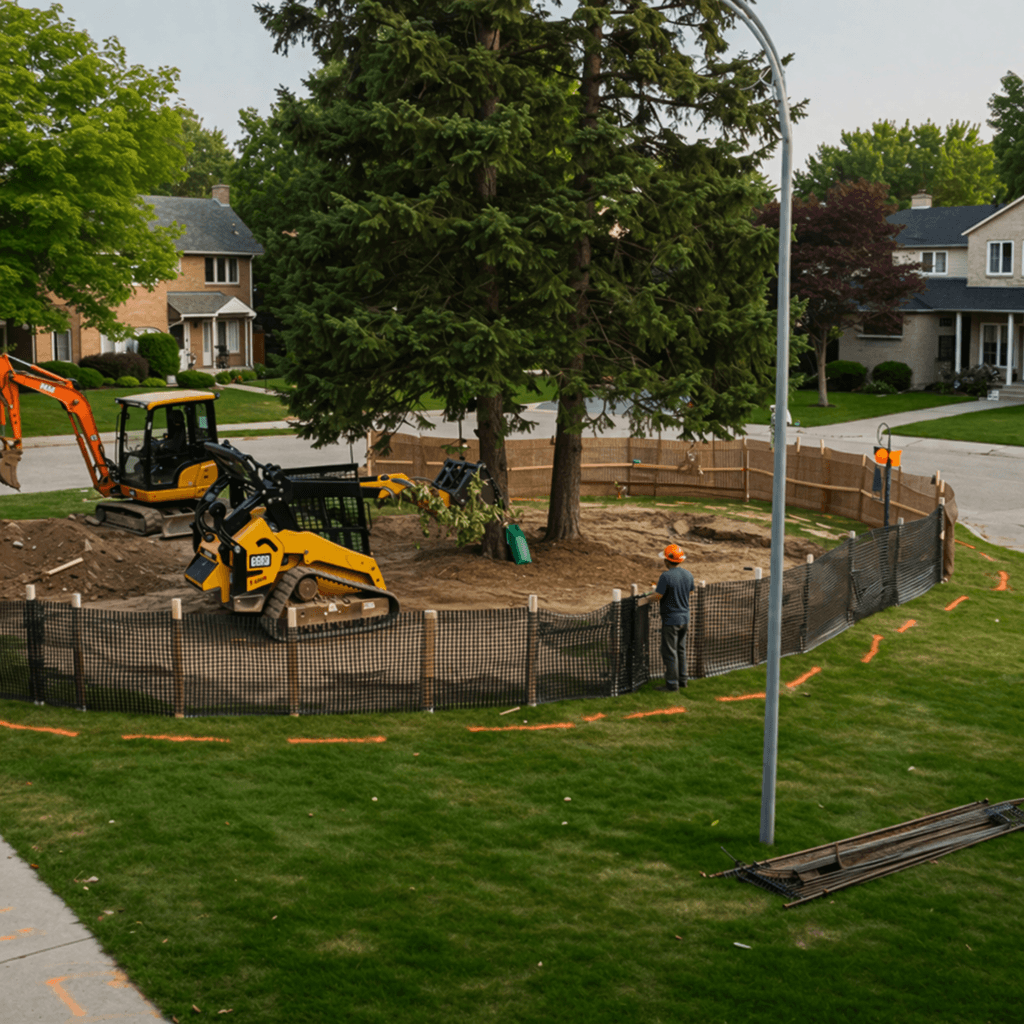
Once the canopy is gone, the work is only half done. Stump Removal & Grinding near utilities requires the same care as the dismantle. Imagine a fiber bundle running 18 inches off the trunk, shallow in the soil. Aggressive grinding can clip it in minutes. Before we grind, we expose and mark any services within the grinding radius. On shallow gas laterals, I prefer to hand-dig a small trench to create a visible barrier and set a depth stop on the grinder. If the stump sits directly over an unmovable service, we may leave it high, cut it flush, and treat to prevent suckering. The aesthetics are not perfect, but that beats an outage.
Backfilling with clean soil is not enough. If the grinder created a void near a service, we compact in lifts to avoid later settling that can stress lines. Where roots have heaved sidewalks around utility vaults, we coordinate with the city or utility to replace panels after the grind. No one wants to win the removal and lose the trip hazard battle.
Emergency Tree Services when timing is not a choice
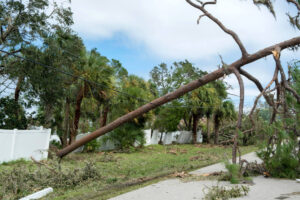
Storms throw the neat plan out the window. Limbs end up draped over conductors or pinned against poles. Emergency Tree Services still follow the same safety principles, they just move faster with more triage. The first call is to the utility if there is any contact with energized hardware. Crews secure the scene, keep bystanders back, and stabilize what they can. I have cut in the rain under flashing lights with a lineman on the radio confirming a feeder was de-energized. You still test with a detector and keep distance, because error stacks under stress.
When trees fall over roads that carry emergency response, we sometimes clear a single lane quickly with careful cuts and a skid steer, then return for full cleanup after the utility finishes its part. Communication among the arborist, utility crew, and public works keeps priorities aligned.
Homeowner preparation that makes a real difference
A little prep from the property side can save time, money, and headaches on utility-adjacent jobs. Here is a short checklist we send before arrival.
- Clear access to gates, driveways, and work zones, including parking for a chipper and truck.
- Identify irrigation lines, lighting cables, septic lids, and any private utilities not covered by public locates.
- Secure pets and discuss any noise-sensitive neighbors or time restrictions.
- Share the home’s service layout if known, especially unusual drops or conduits.
- Photograph pre-existing property conditions you care about, such as pavers or delicate plantings, so expectations are clear.
Pricing, timeframes, and how professionals scope the job
People often ask why a removal by wires costs so much more than the same tree in a field. The answer sits in risk, labor, and time. A two-person crew might handle an open-space takedown in half a day with minimal rigging. Put that same tree next to a three-phase primary, and you are looking at a four to six person team, a dedicated safety watch, and several hours of line work before a saw even starts. Add the possibility of utility coordination or a crane, and the cost climbs accordingly.
For ballpark ranges, modest residential removals near secondary lines with basic rigging might land between a few thousand and the mid four figures. Complex removals near primary conductors, over structures, or involving crane picks can run higher, sometimes doubling those numbers. Tree size, wood condition, access for equipment, and debris disposal choices all influence the final number. Reputable firms itemize, so you see how much goes to crew hours, equipment, disposal, and specialty services.
Timeframes depend on utility cooperation. A simple service drop shutoff may be scheduled within days. A planned primary outage can take weeks. When timing is critical, your arborist can often redesign the plan to avoid outages, but that sometimes means smaller, slower cuts.
Restoration and neighbor relations
Good removals leave more than a stump grind and tire tracks. We use ground protection mats to preserve lawns over shallow irrigation or utilities. Rakes and blowers tidy the site, but we aim beyond tidy. If a shrub had to come out to make room for a rigging path, we discuss replacements ahead of time. If a fence panel came off, it goes back straight. Where wood chips are left by agreement, we explain compaction and settling so clients can plan to top up or spread after rains.
Neighbors watch and worry when power is involved. A calm briefing at the start reduces calls to the utility or the city. We share when engines will fire, which side of the street we will occupy, and how long the lane will be narrowed. It is a small kindness that pays off when a truck needs two extra feet to make the swing.
Training and standards that keep everyone upright
Safety language gets dull until the day it does not. Competent crews train to ANSI Z133 and relevant local regulations, and line-clearance arborists receive special instruction for energized environments. Beyond certificates, crews practice. We run aerial rescues with clocks running. We rehearse tagging a piece off a tip tie when the butt bind surprises us. We talk through near misses. The shop whiteboard often holds the most valuable lesson of the week in ten messy words.
Tool discipline matters. Insulated poles are inspected and kept dry. Chains are sharp to reduce time aloft and prevent forcing cuts that can snap a hinge. Radios carry clearly on agreed channels. A dedicated observer who is not running a rope or saw keeps eyes on the conductor. On big days, we assign one person to hydration and heat watch, because a woozy climber is a hazard no plan can account for.
Case snapshots from the field
On a cul-de-sac last summer, a red oak leaned over a service drop that fed three homes. The utility would not blanket the line, and outage scheduling ran three weeks out. We pruned to lighten two opposing leaders, then set a high rigging point on a healthy limb opposite the service. Each cut piece took a stopper knot and a short tagline, and we redirected the main lowering line twice to pull the arc away from the drop. It took six hours with a four person crew to dismantle what looked like a straightforward tree. No contact, no outages, and the homeowners had power for dinner.
Another job involved a cottonwood snag beside a primary. The wood was punky from ten feet up. Climbing was out. We brought in a 40 ton crane, set a man basket clear of the conductor’s swing, and worked top down with a saw and battery pole pruner, cribbing each piece into the basket. The utility stood by. The snag came down in eleven picks. Stump grinding waited until we pothole-located a suspected shallow telecom duct, which turned out to be three inches higher than marked.
Environmental and community responsibility
Removing a tree does not have to mean removing habitat. Where safe, we leave wildlife snags cut to a safe height away from lines, especially on larger lots. If removals are frequent on a street because of species that clash with wires, we advocate with cities for replanting plans that choose narrow, slower-growing trees whose mature height stays below conductors. Crews can help plant, and clients appreciate that removal companies build the canopy as well as take it down.
Wood disposal choices can also reduce footprint. Urban logs from removals near utilities are often small, but crafters and urban sawmills can use certain species. Chips used on site save hauling emissions and suppress weeds. For clients concerned about pests such as emerald ash borer, we explain treatment or quarantine practices so material does not spread problems down the road.
How to choose the right partner
When you screen providers for work near utilities, ask about line-clearance qualifications, their relationship with the local utility, and recent jobs of similar complexity. Look for documentation of insurance that covers utility-adjacent operations. Have them walk you through their plan. A professional will discuss Tree Pruning & Crown Shaping if removal is not mandatory, Tree Cable and Bracing if structure can be improved, and Dangerous Tree Assessment and Removal if conditions are beyond remediation. They will speak plainly about risk, including what they cannot guarantee.
If your property sits in a wildfire interface, confirm their experience with FireSmart Tree Services and how they sequence work to reduce ignition risk. For finish work, ask how they handle Stump Removal & Grinding near buried services and what restoration looks like.
A short comparison of removal methods near lines
- Climber-based dismantle, ideal where canopies allow safe rope paths and access is tight, minimal heavy equipment footprint, slower but precise.
- Lift-assisted work, helpful for keeping people out of compromised wood and away from conductors, demands space and careful positioning, sometimes limited by reach.
- Crane removals, fastest for large hazardous trees, pieces leave the wire corridor directly, requires experienced operators and clear load paths.
- Mechanical assist with skid steers and winches, useful on ground-level pieces and pulling, avoid if traction risks underground services.
- Utility-coordinated outages or line drops, highest safety margin when feasible, scheduling can delay work and may add cost.
Respect for the inches
The best days on utility-adjacent removals are unremarkable. Power stays on. The chipper hums. The crew loads the last log as neighbors wave and go back inside. Getting there takes more than sawdust and bravado. It takes the humility to measure again, to wait for the wind to ease, to call the utility one more time, to re-tie the knot that does not look right. When inches decide outcomes, professional judgment is the most valuable tool on site.
Tree Removal Services done with that mindset deliver peace of mind in complicated spaces. Sometimes that means a careful dismantle. Sometimes it means saving a tree through pruning, bracing, and a smart maintenance cycle. Either way, a thoughtful plan, skilled hands, and steady communication keep utilities safe and properties cared for.
Ace Tree Services Ltd.
Name: Ace Tree Services Ltd.Address: 4656 Wallace Hill Road, Kelowna, BC
Postal code: V1W 4C2
Phone: 250-212-9593
Website: https://acetree.ca/
Hours:
Monday: 7:00 AM - 5:00 PM
Tuesday: 7:00 AM - 5:00 PM
Wednesday: 7:00 AM - 5:00 PM
Thursday: 7:00 AM - 5:00 PM
Friday: 7:00 AM - 5:00 PM
Saturday: 7:00 AM - 5:00 PM
Sunday: Closed
Open-location code (plus code): RHF8+8G Kelowna, British Columbia, Canada
Map/listing URL: https://www.google.com/maps/place/Ace+Tree+Services+Ltd./@49.8232606,-119.4337283,659m/data=!3m2!1e3!4b1!4m6!3m5!1s0x537d8b1d074815c5:0x450b88afa7a41435!8m2!3d49.8232606!4d-119.4337283!16s%2Fg%2F11ydkpnh22
Embed iframe:
"@context": "https://schema.org", "@type": "HomeAndConstructionBusiness", "name": "Ace Tree Services Ltd.", "url": "https://acetree.ca/", "telephone": "250-212-9593", "address": "@type": "PostalAddress", "streetAddress": "4656 Wallace Hill Road", "addressLocality": "Kelowna", "addressRegion": "BC", "addressCountry": "CA" , "openingHoursSpecification": [ "@type": "OpeningHoursSpecification", "dayOfWeek": "https://schema.org/Monday", "opens": "07:00", "closes": "17:00" , "@type": "OpeningHoursSpecification", "dayOfWeek": "https://schema.org/Tuesday", "opens": "07:00", "closes": "17:00" , "@type": "OpeningHoursSpecification", "dayOfWeek": "https://schema.org/Wednesday", "opens": "07:00", "closes": "17:00" , "@type": "OpeningHoursSpecification", "dayOfWeek": "https://schema.org/Thursday", "opens": "07:00", "closes": "17:00" , "@type": "OpeningHoursSpecification", "dayOfWeek": "https://schema.org/Friday", "opens": "07:00", "closes": "17:00" ], "geo": "@type": "GeoCoordinates", "latitude": 49.8232606, "longitude": -119.4337283 , "hasMap": "https://www.google.com/maps/place/Ace+Tree+Services+Ltd./@49.8232606,-119.4337283,659m/data=!3m2!1e3!4b1!4m6!3m5!1s0x537d8b1d074815c5:0x450b88afa7a41435!8m2!3d49.8232606!4d-119.4337283!16s%2Fg%2F11ydkpnh22"
Ace Tree Services Ltd. provides professional tree removal, pruning, stump grinding, emergency response, and arborist consultations for properties in Kelowna and across the Okanagan Valley.
The company works with homes, commercial properties, and municipal settings where tree work needs to be planned carefully around buildings, fences, driveways, landscaping, and other site constraints.
Based in Kelowna, the team is positioned to help nearby neighbourhoods and surrounding Okanagan communities with routine tree care and time-sensitive storm cleanup.
Customers looking for careful tree work often want a crew with certified arborist training, insurance, and a methodical approach to higher-risk removals.
Services also include dangerous tree assessment, cabling and bracing, and wildfire risk reduction tree work for properties that need longer-term planning.
To request a quote or discuss tree care options, call 250-212-9593 or visit https://acetree.ca/.
A public map listing is available to help customers confirm the business location and get directions before a site visit or estimate.
For Kelowna property owners who need pruning, removals, or emergency tree help, a local tree service can make it easier to schedule site-specific recommendations and cleanup.
Popular Questions About Ace Tree Services Ltd.
What services does Ace Tree Services Ltd. provide?Ace Tree Services Ltd. lists tree removal, stump removal and grinding, tree pruning and crown shaping, emergency tree service, arborist consultation, dangerous tree assessment and removal, cabling and bracing, and wildfire risk reduction tree work.
Who does Ace Tree Services Ltd. serve?
The company describes its work as serving homes, businesses, and municipalities in Kelowna and across the Okanagan Valley.
Is emergency tree help available?
Yes. Emergency service is listed for downed or uprooted trees, dangerous tree assessment, stabilization work, and branch cleanup. If a tree is near power lines, the safest first step is to stay clear and contact the utility provider before any tree work begins.
Do I always need a permit to remove a tree?
Not always. Permit requirements can depend on where the tree is located and whether it is near a creek, lake, steep slope, or another protected area. It is best to check local rules for the specific property before removal work starts.
How deep does stump grinding usually go?
Standard stump grinding is typically described as going about 6 to 12 inches below ground level, which is often enough for grass or surface landscaping. Deeper grinding may be possible when site plans call for it.
How much of a tree can be safely removed at one time?
That depends on the species, age, health, and structure of the tree. In practice, good pruning is usually about removing the right limbs for health, clearance, and structure rather than chasing a fixed percentage.
What are common signs that a tree may be dangerous?
Large dead limbs, visible cracks, a new lean, root damage, canopy dieback, or storm-related damage can all be warning signs. Trees near structures deserve extra attention when any of those issues appear.
What is cabling and bracing in tree care?
Cabling and bracing are support systems used to reduce the risk of failure in trees with structural weaknesses that may still be worth preserving. They are generally used to add support, not to replace good assessment and ongoing maintenance.
How do I contact Ace Tree Services Ltd.?
Call 250-212-9593.Website: https://acetree.ca/.
Landmarks Near Kelowna, BC
Downtown KelownaThe downtown core is a practical reference point for lakefront neighbourhoods, mixed-use streets, and central residential properties. If your property is near downtown, tree pruning, removals, and cleanup can be planned around tighter access and nearby structures.
Knox Mountain Park
This well-known park north of downtown is a recognizable landmark for nearby homes and hillside properties. If you are close to this area, ask about tree assessment, trimming, or removal work suited to sloped sites.
Mission Creek Greenway
The greenway runs through several parts of Kelowna and is a useful landmark for nearby residential areas. If your property borders or sits near this corridor, site-specific tree planning is especially important.
Pandosy Village
Pandosy is one of Kelowna’s most recognizable neighbourhoods and a common reference point for south-central properties. If you are nearby, request help for pruning, removals, or storm cleanup around homes and small commercial sites.
Rutland
Rutland is a major east Kelowna neighbourhood with a mix of residential and local commercial properties. If you are located in or near Rutland, tree work can be scheduled for both routine maintenance and urgent situations.
Landmark District
This central business-focused area is a practical landmark for offices, service properties, and nearby residential streets. If your site is near the district, ask about careful tree work around parking, access lanes, and built-up lots.
Kelowna’s North End
The North End sits on the edge of downtown and is a useful reference for nearby homes, industrial sites, and commercial properties. If you are in this part of the city, request tree care based on the layout and constraints of the lot.
Airport District
The Airport District is a recognizable north Kelowna reference point for surrounding properties and access routes. If you are in this area, ask about tree services for residential acreage, commercial sites, or roadside cleanup needs.
Glenmore & Dilworth
These established Kelowna neighbourhoods are useful landmarks for central and north-central service calls. If your property is nearby, pruning and removal work can be tailored to mature trees and established landscapes.
Highway 97 Corridor
Highway 97 is one of the city’s main travel routes and a common way to describe location within Kelowna. If your home or property is just off the corridor, a clear landmark reference can help speed up quote scheduling and site planning.