Emergency Tree Services for Broken Tops and Cracks
Storms do not ask for permission. A sudden wind event, early snow, or an unnoticed cavity can turn a quiet oak or spruce into a hazard in minutes. Broken tops and trunk cracks are the two failures that keep emergency crews busiest, and they often look deceptively simple from the ground. In reality, the physics of a partially failed tree are unforgiving. Wood fibers loaded beyond their capacity store energy. A twisted leader or a split trunk can release that energy without warning. The job in those first hours is to stabilize risk, then decide whether to prune, reinforce, or remove.
I have spent many nights under headlamps and sirens setting rigging in sleet, talking to shaken homeowners while we work a plan around downed lines and glass. Certain patterns repeat. The tree’s species and architecture dictate failure modes. The site often has invisible constraints like shallow services, compacted soil, or a neighbor’s newly built fence with no room to swing a branch. Good Emergency Tree Services build decisions from that reality, not a menu of canned options.
Why broken tops and cracks demand immediate attention
Crown failures and trunk cracks affect structural integrity far beyond the damaged area. A top snapped at 30 feet changes the leverage on the remaining stem. That altered load path can pull open hidden cracks as wind gusts return. Similarly, a vertical crack along the trunk, even if it looks hairline, can run through the heartwood and separate the stem under moderate wind.
The risks are specific and measurable. A 12 inch diameter maple leader at 30 feet can exert hundreds of foot pounds on a compromised union. A single lateral twist can jerk a climbing line, a gutter, or a bystander into the line of fire. Homeowners often focus on visible debris while the real hazard is the hung up top or a crack that has cut a third of the circumference. That is why fast triage by a qualified person matters. Certified Arborist Consultation and Dangerous Tree Assessment and Removal are not marketing phrases here. They describe a cadence of inspection, measurement, and controlled dismantling learned through hard experience.
What to do in the first hour
When a top breaks or the trunk shows a fresh crack, small choices make a big difference in safety and cost. Keep this short list taped near your electrical panel or saved on your phone.
- Keep people, pets, and vehicles out of the fall zone. If in doubt, add a buffer of one and a half times the height of the nearest compromised stem.
- Photograph the damage from safe angles for your insurer, then leave the site undisturbed. Do not cut, pull, or climb.
- If lines are down or tangled in the canopy, call the utility before anyone else. Assume all lines are energized.
- Note critical details when you call for Emergency Tree Services: access width for trucks, gate codes, slope, septic tanks, and whether the tree leans over structures.
- If the tree shifts or you hear cracking, back away. Text the arborist photos and wait from a safe spot.
How an arborist reads a broken top or a crack
Every assessment starts with load path and defects. We are not just looking at the wound. We are reading how that tree carries weight and how that path has changed.
Tree species set the baseline. Spruce and fir with tapered stems behave differently than sugar maple with dense, stiff wood. Poplars and willows can hold large internal cavities with few exterior signs. Oaks resist bending but fail suddenly once compromised. We check for wood fiber crush at unions, rolled bark in codominant leads, and buckling on the compression side of a crack.
The crack itself tells a story. A clean transverse break near the top suggests a fast bending failure, often from wind gusts. A longitudinal split down the trunk indicates separation along the grain, usually from torsion or from unequal loading after a previous pruning cut. A helical crack adds complexity, as fibers have already twisted and the remaining holding wood can be unreliable.
Tools help, but they do not replace trained eyes. A sounding hammer reveals voids by tone change. A probe can map decay columns. Where the stakes justify it, we use resistograph readings or sonic tomography to quantify remaining wall thickness. A simple rule of thumb that holds up well in practice is the t over D ratio for hollow stems. If the remaining sound wall thickness, t, is less than 30 percent of the diameter, D, at the defect, risk escalates rapidly, especially near the base.
Site conditions can amplify minor defects into emergencies. Saturated soils reduce root plate strength. New construction within the last three to five years often means root loss on one side. Wind exposure up a valley or a recent thinning of neighboring trees changes how gusts hit the crown. Snow and ice load create a different pattern of stress, with compression on the upper side of limbs and tension below.
Decision paths that balance safety, tree value, and cost
There is no single right answer for every broken top or cracked trunk. The job is to align safety with the tree’s current and future value. Sometimes that means immediate removal. Other times a mix of Tree Pruning & Crown Shaping and Tree Cable and Bracing buys a decade of safe service.
I often frame the decision around three questions. Can the tree be stabilized to a tolerable risk level for the occupancy under it. Can it regain reasonable structure with pruning and support. Will aftercare and monitoring be practical for the owner. A mature beech with a broken leader over a quiet meadow invites a different threshold than a similar beech over a playground.
Here is how those paths usually sort.
If a crack extends into the root flare, especially with soil heaving or a lean that changed in the last 24 to 48 hours, removal moves to the front. No amount of supplemental support will restore ground anchorage.
If a codominant union splits after a storm but the stem bases remain sound, we can frequently restore acceptable risk by removing weight, shaping the remaining crown, and installing static bracing rods with dynamic cabling higher in the canopy.
If a conifer top snaps below the live crown, we evaluate how low the break is. Certain species will form a new leader. Others will throw multiple sprouts and become top heavy. A careful reduction to a single strong sprout, plus periodic pruning for three to five years, can return a reasonable profile.
Techniques that reduce risk today and build structure for tomorrow
Stabilization is immediate, then we use the right combination of pruning, support, and removal. The technique choices matter because they set the tree’s future.
Controlled dismantling is the bread and butter of Emergency Tree Services. A broken top hung in a neighbor’s oak calls for creative rigging, not brute force. We set a primary anchor in sound wood, then use a secondary control line to steer the broken piece away from glass, wires, and patios. In tight backyards we deploy compact cranes or spider lifts. These machines fit through 36 inch gates and can reach 70 to 90 feet, reducing climber exposure and yard damage. Good operators take time to pad fences and lay down mats. Jobs finish faster and cleaner, and insurance adjusters tend to smile more when they see careful site protection.
Tree Pruning & Crown Shaping does more than make a canopy look tidy. After a top breaks, we reduce long lever arms to rebalance wind load. Quick, deep cuts are tempting, but large pruning wounds create decay pathways that haunt you ten years later. I favor a series of reductions over two to three seasons. The first visit removes the worst overextensions and any broken stubs back to proper laterals. The follow ups refine the form and increase internal stiffness without shocking the tree.
Tree Cable and Bracing is a system, not a one off hardware install. Static bracing rods across a split union bind the crack. Above that, dynamic cables placed near two thirds of the height limit how far heavy leaders can move apart in wind, while allowing normal sway. Put the holes outside the branch bark ridge and collar, size the hardware to load, and document locations for future inspections. We inspect annually, with a full check after major wind events. Cable life runs 7 to 15 years depending on materials and exposure.
Temporary supports have their place. If weather keeps roaring through or ground access fails, we sometimes install guy lines to ground anchors and pad them where they contact bark. These buys 24 to 72 hours to wait out a storm or coordinate with utilities. Temporary means temporary. They are not a substitute for proper remediation.
Working near utilities, roofs, and busy spaces
Many broken tops and cracked trunks involve structures or lines. The coordination piece often decides how safely and quickly the job proceeds. If we are within ten feet of energized conductors, utility clearance crews need to de energize or create safe space. More than once, we have waited on site with homeowners while a line crew re set a pole down the street so we could swing a piece clear.
On roofs, we stage to avoid further damage. Crews carry foam pads and sheets of plywood to disperse point loads. We rig pieces small when roof sheathing already flexes. In winter, we sometimes clear ice dams first so meltwater does not flood interior drywall as we work.
Insurance and permits vary by municipality, but certain patterns hold. Emergency Tree Services are often covered when a tree strikes a covered structure. Documentation matters. Clear photos, a written Dangerous Tree Assessment and Removal summary, and invoices that separate tree work, crane time, and property protection help claims go smoothly. In protected districts, even emergency removals may require an after the fact permit, and mitigation planting may be part of the terms. A provider who knows local rules is worth their fee.
Seasonal realities
Storm type dictates failure patterns. Heavy, wet snow in the shoulder seasons tends to snap conifer tops and weigh down long laterals of broadleaf species that still hold leaves. Ice events push even strong unions to their limits and turn sidewalks into skating rinks for crews. Summer convective storms hit with short, violent gusts that find weak crotches and poorly attached watersprouts.
Scheduling shifts accordingly. After a region wide event, triage lists stretch. We prioritize trees that threaten life safety first, then structures, then access routes. Owners who accept temporary stabilization to secure the site often see final work done sooner because crews can return when the weather and equipment align.
FireSmart thinking after a failure
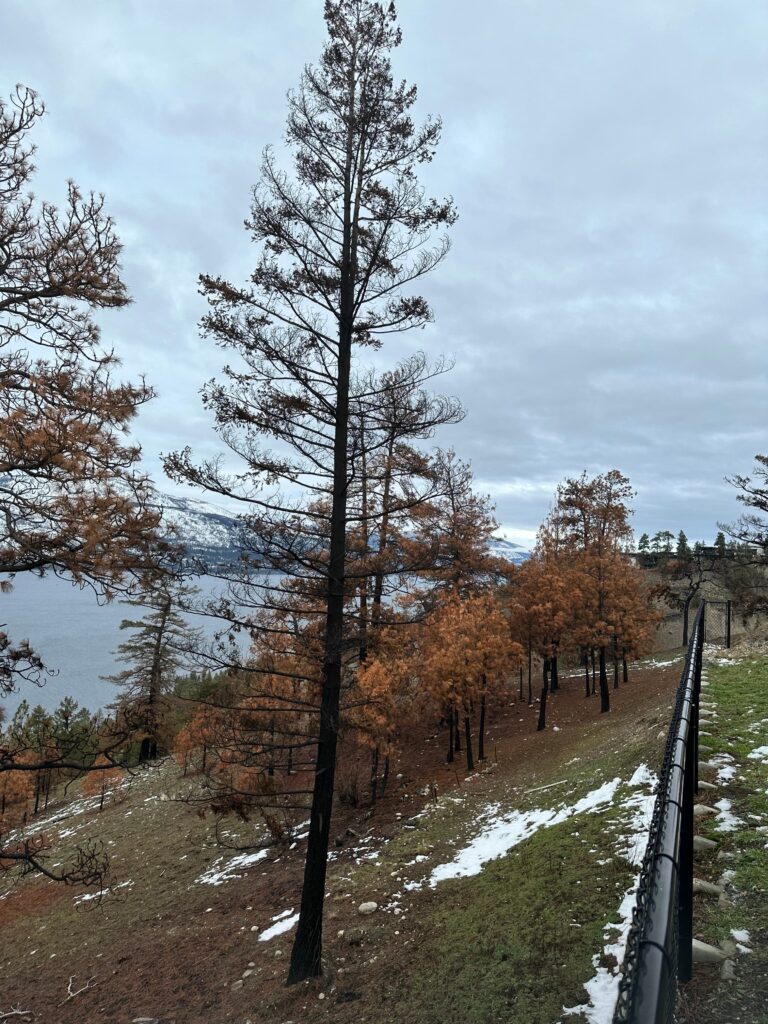
A broken top sheds a surprising volume of small wood. Left in piles under eaves or along fences, that debris raises fire risk in dry months. FireSmart Tree Services treat cleanup as part of risk reduction. We chip fine fuels, remove ladder fuels near structures, and suggest spacing adjustments for surviving trees. Where a cracked trunk demanded removal along a forest edge, the newly opened light can trigger a flush of brush. Plan to manage that regrowth in the first two seasons to keep defensible space intact.
Stumps, roots, and the ground you will live with afterward
Once a removal is complete, the stump becomes the leftover decision. Stump Removal & Grinding sounds simple until you hit reality. Roots tangle with irrigation lines. Old metal hides in the flare from a childhood swing set. A good operator will call locates, probe around the base, and set grinding depth to your future plan. For lawn, 6 to 8 inches below grade usually suffices. For replanting in the same spot, going 12 to 18 inches and sweeping a wider radius helps, but do not expect a large caliper tree to thrive right on top of a ground out stump. Wood chips decompose and rob nitrogen. Shift the planting hole a few feet if possible and bring in mineral soil.
Where a crack did not require removal, we still address root and soil issues. Compaction from equipment or years of foot traffic weakens anchorage. Vertical mulching, judicious soil decompaction with air tools, and a thoughtful mulch ring change the root environment over time. Fertilizer rarely fixes structural risk, but better rooting does.
Choosing the right provider makes the difference
It is tempting to call the first number that answers on a windy night. Speed matters, but competence matters more. Look for a company that offers Certified Arborist Consultation with ISA certified professionals who can show numbers on their insurance, not just words. Ask specific questions. Will they provide a written risk assessment with photos. What is their plan if weather worsens mid job. Do they own or have access to the equipment they propose, such as a compact crane or spider lift. Can they handle Tree Cable and Bracing with inspection schedules, or will they leave hardware you will never see again.
A well rounded firm does not push removal as a default. They should be fluent in Tree Pruning & Crown Shaping to rebuild structure when feasible and honest about limits when it is not. When removal is the safe path, they should have Tree Removal Services that scale from tight urban courtyards to large rural takedowns with minimal site damage.
Costs, timelines, and what drives them
Emergency work carries premiums. Crews mobilize after hours, cranes roll, and the margin of error narrows. For a straightforward hung up top over open yard, you might see a quote between a few hundred and a couple of thousand dollars depending on height and complexity. Add structures, wires, or crane time, and numbers climb. I have seen complex multi tree emergencies with utility coordination reach the tens of thousands, especially when roof protection, temporary shoring, and multiple trades come into play.
What drives cost is not bravado but physics and logistics. Access that requires hand carrying gear through a townhouse, steep slopes wet from recent rain, and brittle woods that shatter unpredictably each add time and risk. The best way to keep costs sensible is to act early. Small cracks addressed before they run, corrective pruning that reduces lever arms, and a cable installed in year five rather than a frantic brace in year ten often cut lifetime expense in half.
A few field notes from real jobs
On a January night, a Norway spruce lost its top into a narrow side yard, scraping a stucco wall. The leader hung from a single strap of bark forty feet up. Lines ran down the alley. We staged a spider lift in the driveway, set a control line in a sound upper limb with a throwline, then took the hung top in three short cuts, each guided past a satellite dish. The homeowner had already called the utility, so the fifty year old service drop was de energized before we started. No broken glass, one cracked stucco patch that a mason fixed the next day.
Another job involved a red oak with a 4 foot long crack down a codominant union after a derecho. The base was sound. We reduced two heavy laterals by 15 to 20 percent of length, retained foliage to maintain vigor, installed two 5 eighths inch steel rods through the union set just outside the branch bark ridge, and added a pair of 3 quarter inch synthetic dynamic cables at roughly 65 percent of crown height. We scheduled inspections annually. Eight years later, with two light structural pruning visits, that tree still stands, the crack calloused, and the owner never missed a night of sleep over it.
Not every story ends with a save. A mature cottonwood split down to the root flare over a bike path. Soil heaving showed the root plate shifting. We closed the path with the city’s help and removed the tree that afternoon. The stump told the truth. A long standing decay column left only an inch or two of holding wood on one side. No cable would have changed that outcome.
How to prep your property before the crew arrives
Small steps on your end speed up work and reduce damage. Crews notice and appreciate it.
- Clear driveway and access paths of vehicles and planters to allow equipment in and chips out.
- Unlock gates and secure pets indoors. Note any alarms or cameras that might be triggered.
- Mark shallow utilities you know about, like irrigation and lighting. Share septic and drain locations.
- Move fragile items on patios and decks. We bring pads, but your ceramics and grills are safer inside.
- If possible, keep neighbors informed. A friendly heads up avoids surprises when a crane arrives.
Aftercare and monitoring
When we repair a crack or reshape a storm damaged crown, aftercare keeps that work honest. Water during drought, especially in the first two years after heavy pruning, matters more than fertilizer. Mulch to the dripline if you can manage it, or at least a three to four foot ring, two to three inches deep, pulled back from the https://medium.com/@ternenushp/aesthetic-tree-pruning-crown-shaping-for-shade-and-light-53258ae4eaaf trunk. Schedule follow up inspections. For cabled trees, we check tension and hardware annually and after severe storms. For reductions, we return in 18 to 36 months to refine structure. A short visit today prevents a long one with a crane later.
If you had to remove a tree, think ahead about replacement. Choose species and cultivars with strong structure suited to your site. Plant away from roof edges and clear of wires. Train young trees with smart cuts in years one through five to avoid codominant leaders that become tomorrow’s cracks. That is Tree Pruning & Crown Shaping at its most cost effective.
The steady value of professional judgment
Books and standards give us frameworks. Fieldwork gives us judgment. A broken top or a fresh crack forces choices under pressure. The right provider weighs species traits, defect geometry, site exposure, and your tolerance for residual risk. They can articulate why a cable makes sense here and why removal is the honest answer there. They coordinate with utilities, manage insurance documentation, protect your home during the work, and leave the site safer than they found it.
If you are staring up at a torn canopy or running your hand along a new split, take a breath. Call for a Certified Arborist Consultation. Let a calm, experienced eye map the risks and options. Whether the path is careful pruning, well designed Tree Cable and Bracing, comprehensive Tree Removal Services, or a mix followed by Stump Removal & Grinding, there is a professional way through the mess. The sooner that conversation starts, the better the outcome for your trees, your home, and your nerves.
Ace Tree Services Ltd.
Name: Ace Tree Services Ltd.Address: 4656 Wallace Hill Road, Kelowna, BC
Postal code: V1W 4C2
Phone: 250-212-9593
Website: https://acetree.ca/
Hours:
Monday: 7:00 AM - 5:00 PM
Tuesday: 7:00 AM - 5:00 PM
Wednesday: 7:00 AM - 5:00 PM
Thursday: 7:00 AM - 5:00 PM
Friday: 7:00 AM - 5:00 PM
Saturday: 7:00 AM - 5:00 PM
Sunday: Closed
Open-location code (plus code): RHF8+8G Kelowna, British Columbia, Canada
Map/listing URL: https://www.google.com/maps/place/Ace+Tree+Services+Ltd./@49.8232606,-119.4337283,659m/data=!3m2!1e3!4b1!4m6!3m5!1s0x537d8b1d074815c5:0x450b88afa7a41435!8m2!3d49.8232606!4d-119.4337283!16s%2Fg%2F11ydkpnh22
Embed iframe:
"@context": "https://schema.org", "@type": "HomeAndConstructionBusiness", "name": "Ace Tree Services Ltd.", "url": "https://acetree.ca/", "telephone": "250-212-9593", "address": "@type": "PostalAddress", "streetAddress": "4656 Wallace Hill Road", "addressLocality": "Kelowna", "addressRegion": "BC", "addressCountry": "CA" , "openingHoursSpecification": [ "@type": "OpeningHoursSpecification", "dayOfWeek": "https://schema.org/Monday", "opens": "07:00", "closes": "17:00" , "@type": "OpeningHoursSpecification", "dayOfWeek": "https://schema.org/Tuesday", "opens": "07:00", "closes": "17:00" , "@type": "OpeningHoursSpecification", "dayOfWeek": "https://schema.org/Wednesday", "opens": "07:00", "closes": "17:00" , "@type": "OpeningHoursSpecification", "dayOfWeek": "https://schema.org/Thursday", "opens": "07:00", "closes": "17:00" , "@type": "OpeningHoursSpecification", "dayOfWeek": "https://schema.org/Friday", "opens": "07:00", "closes": "17:00" ], "geo": "@type": "GeoCoordinates", "latitude": 49.8232606, "longitude": -119.4337283 , "hasMap": "https://www.google.com/maps/place/Ace+Tree+Services+Ltd./@49.8232606,-119.4337283,659m/data=!3m2!1e3!4b1!4m6!3m5!1s0x537d8b1d074815c5:0x450b88afa7a41435!8m2!3d49.8232606!4d-119.4337283!16s%2Fg%2F11ydkpnh22"
Ace Tree Services Ltd. provides professional tree removal, pruning, stump grinding, emergency response, and arborist consultations for properties in Kelowna and across the Okanagan Valley.
The company works with homes, commercial properties, and municipal settings where tree work needs to be planned carefully around buildings, fences, driveways, landscaping, and other site constraints.
Based in Kelowna, the team is positioned to help nearby neighbourhoods and surrounding Okanagan communities with routine tree care and time-sensitive storm cleanup.
Customers looking for careful tree work often want a crew with certified arborist training, insurance, and a methodical approach to higher-risk removals.
Services also include dangerous tree assessment, cabling and bracing, and wildfire risk reduction tree work for properties that need longer-term planning.
To request a quote or discuss tree care options, call 250-212-9593 or visit https://acetree.ca/.
A public map listing is available to help customers confirm the business location and get directions before a site visit or estimate.
For Kelowna property owners who need pruning, removals, or emergency tree help, a local tree service can make it easier to schedule site-specific recommendations and cleanup.
Popular Questions About Ace Tree Services Ltd.
What services does Ace Tree Services Ltd. provide?Ace Tree Services Ltd. lists tree removal, stump removal and grinding, tree pruning and crown shaping, emergency tree service, arborist consultation, dangerous tree assessment and removal, cabling and bracing, and wildfire risk reduction tree work.
Who does Ace Tree Services Ltd. serve?
The company describes its work as serving homes, businesses, and municipalities in Kelowna and across the Okanagan Valley.
Is emergency tree help available?
Yes. Emergency service is listed for downed or uprooted trees, dangerous tree assessment, stabilization work, and branch cleanup. If a tree is near power lines, the safest first step is to stay clear and contact the utility provider before any tree work begins.
Do I always need a permit to remove a tree?
Not always. Permit requirements can depend on where the tree is located and whether it is near a creek, lake, steep slope, or another protected area. It is best to check local rules for the specific property before removal work starts.
How deep does stump grinding usually go?
Standard stump grinding is typically described as going about 6 to 12 inches below ground level, which is often enough for grass or surface landscaping. Deeper grinding may be possible when site plans call for it.
How much of a tree can be safely removed at one time?
That depends on the species, age, health, and structure of the tree. In practice, good pruning is usually about removing the right limbs for health, clearance, and structure rather than chasing a fixed percentage.
What are common signs that a tree may be dangerous?
Large dead limbs, visible cracks, a new lean, root damage, canopy dieback, or storm-related damage can all be warning signs. Trees near structures deserve extra attention when any of those issues appear.
What is cabling and bracing in tree care?
Cabling and bracing are support systems used to reduce the risk of failure in trees with structural weaknesses that may still be worth preserving. They are generally used to add support, not to replace good assessment and ongoing maintenance.
How do I contact Ace Tree Services Ltd.?
Call 250-212-9593.Website: https://acetree.ca/.
Landmarks Near Kelowna, BC
Downtown KelownaThe downtown core is a practical reference point for lakefront neighbourhoods, mixed-use streets, and central residential properties. If your property is near downtown, tree pruning, removals, and cleanup can be planned around tighter access and nearby structures.
Knox Mountain Park
This well-known park north of downtown is a recognizable landmark for nearby homes and hillside properties. If you are close to this area, ask about tree assessment, trimming, or removal work suited to sloped sites.
Mission Creek Greenway
The greenway runs through several parts of Kelowna and is a useful landmark for nearby residential areas. If your property borders or sits near this corridor, site-specific tree planning is especially important.
Pandosy Village
Pandosy is one of Kelowna’s most recognizable neighbourhoods and a common reference point for south-central properties. If you are nearby, request help for pruning, removals, or storm cleanup around homes and small commercial sites.
Rutland
Rutland is a major east Kelowna neighbourhood with a mix of residential and local commercial properties. If you are located in or near Rutland, tree work can be scheduled for both routine maintenance and urgent situations.
Landmark District
This central business-focused area is a practical landmark for offices, service properties, and nearby residential streets. If your site is near the district, ask about careful tree work around parking, access lanes, and built-up lots.
Kelowna’s North End
The North End sits on the edge of downtown and is a useful reference for nearby homes, industrial sites, and commercial properties. If you are in this part of the city, request tree care based on the layout and constraints of the lot.
Airport District
The Airport District is a recognizable north Kelowna reference point for surrounding properties and access routes. If you are in this area, ask about tree services for residential acreage, commercial sites, or roadside cleanup needs.
Glenmore & Dilworth
These established Kelowna neighbourhoods are useful landmarks for central and north-central service calls. If your property is nearby, pruning and removal work can be tailored to mature trees and established landscapes.
Highway 97 Corridor
Highway 97 is one of the city’s main travel routes and a common way to describe location within Kelowna. If your home or property is just off the corridor, a clear landmark reference can help speed up quote scheduling and site planning.