Certified Arborist Consultation: Soil, Water, and Mulch Advice
Trees succeed or fail from the ground up. When a property owner asks for a certified arborist consultation, the initial conversation usually centers on what they can see above ground, the canopy and the trunk. Yet most of the decisions that determine long term health involve soil conditions, water management, and mulch. After two decades walking sites from tight urban courtyards to windy rural acreages, I have learned that careful attention to these three fundamentals prevents most calls for Emergency Tree Services later. It also reduces costly Tree Removal Services and the need for remedial treatments like Tree Cable and Bracing. The following guidance frames how an arborist evaluates soil, water, and mulch, and how those choices tie into pruning, risk, and broader landscape objectives, including FireSmart Tree Services.
What a certified arborist brings to the conversation
Credentials do not replace field sense, but they force good habits. A Certified Arborist Consultation blends science with observation. We collect site history, examine foliage and twig growth, and then test or probe the soil. Patterns emerge fast. Poor canopy density with small leaves and long twig dieback often points to compacted or waterlogged soil. Leaf scorch in late summer without pests on the undersides suggests heat and water deficits or high salts. Mushrooms at the trunk line and a heaving seam in turf might hint at girdling roots or a root disease. These are clues that drive a practical site plan.
Certification also matters for triage. When a tree shows structural defects, a Dangerous Tree Assessment and Removal discussion might need to happen alongside soil and water improvements. If the target area is high, we do not gamble. In other cases, a tree can be stabilized with Tree Cable and Bracing while we fix soil issues that triggered the canopy imbalance. The point is to look at the whole system, not chase a single symptom.
Soil, the quiet partner
Healthy soil offers air, water, and biology. Urban soils often deliver the opposite. They are compacted, layered, and poor in organic matter. I carry a spade, a soil probe, a pH kit, and sometimes a penetrometer. If I cannot get the spade in without jumping on it, roots will not either. Roots need oxygen as much as they need water, and the first inch of fine roots is where nutrient uptake and most water absorption occur.
Texture and structure matter. Sandy soils drain fast and heat up, which pushes frequent irrigation in summer. Heavy clays store water but exclude air when saturated, especially where foot traffic or construction compresses the surface. Many front yards hide a “construction pancake,” a trapped layer where subsoil was spread over topsoil, then rolled. Roots hit that seam and circle, leading to girdling and instability. In that case, core aeration beyond turf standards, vertical mulching, and targeted decompaction with an air tool can reopen pore space without tearing roots.
pH shapes nutrient availability. Many street maples struggle in alkaline soils above 7.5, showing chlorosis that property owners try to fix with iron supplements. If the soil pH is too high, iron becomes unavailable even if you add it. We correct the soil environment first. Organic matter in the 3 to 6 percent range is a good target in many landscapes, but the right number depends on soil texture. Sandy soils benefit from more frequent organic inputs, while heavy clay may need structure change more than raw carbon.
Soil biology is not a slogan. Mycorrhizal fungi can double or triple the effective root area. I do not sell inoculants as a cure all, but when we minimize tillage, add diverse organic mulch, and avoid high salt fertilizers, fungi reestablish and partner with roots. Compost quality matters as much as presence. Well matured compost smells earthy, not sour or ammonia rich, and carries a stable carbon to nitrogen ratio. Biochar, when precharged with compost extract or low salt fertilizer, can help sandy soils retain water and improve cation exchange. In clay soils, it can improve aggregation over time. I use it selectively, usually after soil testing and on high value trees where monitoring is feasible.
A practical soil assessment checklist
- Probe soil to 12 to 18 inches to feel texture transitions, moisture, and compaction.
- Test pH and electrical conductivity to catch alkalinity or salt issues, especially where reclaimed water is used.
- Inspect the root collar for depth and girdling roots, then expose if necessary.
- Evaluate organic matter and structure with a simple jar test or lab analysis.
- Map canopy density, leaf size, and shoot growth to correlate above ground response with soil conditions.
Watering that matches roots, not clocks
Irrigation schedules set for turf often harm trees. Turf wants frequent shallow watering. Trees want less frequent, deeper events that match the distribution of fine roots, typically in the top 12 to 18 inches and far beyond the trunk. The “dripline” is a visual cue, but a tree’s critical root zone often extends 1 to 1.5 feet of radius per inch of trunk diameter at breast height. A 20 inch diameter oak can easily use water across a 20 to 30 foot radius. Shrinking watering to a tiny donut near the trunk starves most of the feeder roots.
A rule I use to start conversations is 5 to 10 gallons of water per inch of trunk diameter per week during peak summer heat for established, non native trees on free draining soils. That number flexes widely. On heavy clay or in humid climates, water less often and watch the soil. For natives adapted to dry summers, supplemental water may be limited to establishment years and exceptional droughts. Always check with a moisture meter or by hand. If you squeeze soil from 6 inches down and it forms a loose ball that glosses with a touch, you are near field capacity. If it crumbles into dust, water. If it smears and oozes, stop.
Sprinklers can work if they deliver adequate volume and run long enough to wet the root zone. Drip lines and bubblers give better control. Bubbler basins are useful for newly planted trees in the first 2 to 3 years. After that, expand the wetting pattern outward. During heat waves, a deep event followed by a second pass several hours later often penetrates better than a single long run, because the first cycle breaks surface tension and opens pores.
Watch water quality. https://rentry.co/av6wskpr Reclaimed water often carries higher salts and bicarbonates. Over time, salts accumulate in clay soils and at the edge of dry spots, burning leaf tips. Periodic leaching with good quality water and correcting irrigation coverage helps. In coastal zones, wind driven salt spray can mimic drought symptoms. A rinse after storms reduces foliar salt load for species that tolerate it.
Setting a tree friendly watering plan
- Identify trunk diameter, soil texture, and recent weather, then estimate a weekly target volume based on species and site.
- Deliver water in one to three deep cycles per week in summer, with enough runtime to wet 12 to 18 inches deep.
- Place emitters or soaker zones from mid canopy outward, expanding the footprint each season.
- Verify with a probe or meter, then adjust runtimes, not just days, to match actual soil moisture.
- Taper in fall to harden growth before freezes, or maintain modest soil moisture in winter for evergreens.
Mulch, done right
Mulch is the cheapest, highest return treatment most sites ignore or do wrong. Proper mulch replicates the forest floor. It buffers soil temperature, conserves moisture, feeds soil life, and blocks mower and string trimmer damage. Most of my long term success stories start with a wide mulch bed and careful edge management.
Depth matters. Two to four inches is the common range. In hot, sandy soils, lean toward the upper end. In heavy clay or humid regions, stay closer to two inches to prevent persistent wetness at the surface. Keep mulch off the trunk. A visible root flare wants air and light. Volcano mulching invites decay and girdling roots. I have pulled six inch deep, matted mulch off trunks and found bark rot and carpenter ants beneath. Once that damage starts, you are often chasing decline with pruning and, later, Tree Removal Services.
Material choice shapes outcomes. Fresh arborist chips, with a mix of leaves and twigs, outperform most bagged products in both nutrient cycling and moisture moderation. They break down gradually, creating crumb structure at the surface and feeding fungi. Pine bark works well in many gardens, but finer shredded hardwood can mat and repel water if applied too thickly. Rubber mulch belongs on playgrounds, not tree beds, and stone mulch bakes soil in hot climates. If wildfire risk is front of mind, follow FireSmart Tree Services guidance. Maintain a non combustible zone near buildings, typically the first 1.5 to 5 meters depending on local code, and choose mulch that resists ignition, such as composted materials kept moist and thin, or consider crushed gravel at low depths where appropriate. Beyond the immediate defensible space, arborist chips at sensible depth perform well and break down rather than holding embers.
Edge design helps. A wide, feathered edge that meets turf gracefully discourages mower creep. In small courtyards, a defined edge with steel or paver restraint keeps chips in place. Replenish annually by adding a light top up, not burying last year’s layer. If mulch mats, rake it to fluff and restore infiltration.
Planting and establishment, where habits form
The first three years make or break most landscape trees. Holes should be wide, not deep, and the root flare must sit at or slightly above finished grade. In heavy soils, planting high prevents the root collar from suffocating. Remove synthetic burlap and wire baskets at least from the upper third of the root ball. Cut and spread circling roots. Many failures trace to a single girdling root that would have been easy to correct when the tree was young.
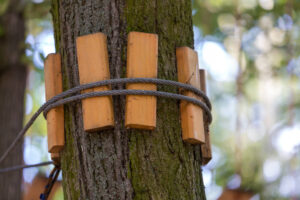
During establishment, irrigation should focus on the root ball, then expand. Mulch the entire planting zone, not just a small ring. Avoid staking unless the site is windy or the root ball is loose. Staking left too long creates weak trunks that rely on supports. If the site often needs support because of prevailing winds or shallow soil, we use flexible ties that allow movement and remove them as soon as new roots anchor.
Pruning in context of soil and water
Tree Pruning and Crown Shaping must respect root capacity. A tree under drought stress cannot compartmentalize large wounds well. On a hydrated, vigorous tree, a mid summer reduction cut to reduce sail area can be a smart risk reduction move. On a heat stressed tree, we might defer structural work until late winter and focus first on soil decompaction, irrigation correction, and mulch. Light canopy thinning, rarely exceeding 15 to 20 percent removal in a season on mature trees, can improve airflow and reduce disease pressure. But over thinning in pursuit of light creates long term problems, including sunscald and epicormic sprouting.
For trees already leaning or with unions showing included bark, Tree Cable and Bracing often pairs with selective pruning. A through bolt and dynamic cable placed at the correct ratio of height and distance can arrest crack propagation. The choice between static and dynamic systems depends on species, defect, and site exposure. Soil and water improvements support recovery, helping a stressed tree respond with stronger wood and new root growth.
Risk, emergency calls, and when removal is the right decision
Sometimes the soil and water story ends with a different chapter. A split codominant stem over a bedroom, a root plate heaved by decay, or a trunk cavity with too little sound wood means the right call is Dangerous Tree Assessment and Removal. No one enjoys that recommendation, but leaving a high target unmitigated is not stewardship. When removal happens, Stump Removal & Grinding finishes the job and opens a chance to fix the soil. I usually ask for the grindings to be hauled off if the goal is to replant. As grindings decay, they tie up nitrogen. We backfill with topsoil blended with compost, then rest the site or plant a species that tolerates the conditions better.
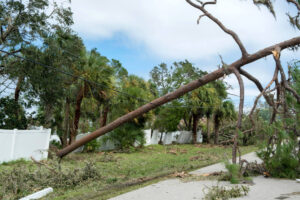
Emergency Tree Services are most common after wind events or early season snow on trees with full leaves. Many of those calls could have been prevented with preseason pruning to reduce end weight, corrective mulching to improve rooting, and irrigation audits. After a storm, do not rush to clean cut everything. An arborist can determine which torn limbs are candidates for proper reduction and which require full removal, preserving structure and energy reserves for recovery.
Root collar excavation and the hidden killers
One of the quickest wins in an arborist’s toolkit is a root collar excavation. Trees buried under fill or piled mulch develop adventitious roots that circle the trunk. Over years, those roots compress the vascular tissue and mimic drought. With an air spade, we expose the flare, trace girdling roots, and make selective cuts. I have seen chlorotic, declining red maples regain vigor within two seasons after freeing the flare and correcting water. Not every tree rebounds, especially if decay has progressed, but it is often worth the effort on high value specimens.
Fertility, amendments, and when to leave soil alone
Fertilizers are tools, not default prescriptions. If a soil test shows deficiency or the site history includes nutrient removal without replenishment, a slow release, low salt fertilizer applied in the root zone can help. In my practice, most gains come from building soil structure and biology rather than chasing numbers with soluble nutrients. Avoid high nitrogen spikes in late summer that push soft growth right before cold snaps. On calcareous soils, iron chelates with stable forms like EDDHA can correct chlorosis, but treatment without addressing pH and compaction is a short term patch.
Gypsum has a role in sodic soils by replacing sodium with calcium and improving structure once salts are leached. In non sodic clays, its benefits are limited. Lime should only be used with a clear reason and a test. Raising pH in already alkaline soils worsens trace element availability.
Water, mulch, and pest pressure
Stressed trees attract pests. Borers seek heat stressed ash and birch. Scales flourish on honeylocusts suffering from drought. Proper mulch and irrigation stabilize conditions, and the tree’s natural defenses recover. If intervention is needed, we time treatments to life cycles and use the least disruptive option to protect beneficials. Spraying a canopy while roots suffocate below is a waste. Conversely, a tree that rebounds after soil correction often fights off minor infestations without chemicals.
Species, site, and smarter choices
The right tree for the site often reduces future inputs. On tight boulevards with reflected heat and narrow soil volumes, small maturing species or structural cells below pavement can prevent future conflicts. In high wind corridors, deeper rooting species with flexible wood fare better, especially if you build a wide mulch zone from day one. In FireSmart design, choose species with higher moisture leaves and lower resin content near structures, maintain separation between shrubs and trees, and prune lower limbs to reduce ladder fuels. Mulch choice and spacing play into that same defense strategy.
Seasonal rhythms and regional nuance
Advice flexes by climate. In Mediterranean regions with dry summers, deep monthly irrigation for native oaks may prevent sudden summer decline but should be done outside the trunk line to avoid crown rot. In humid temperate zones, fungal pressure shapes pruning window and mulch depth. In arid high deserts, wind desiccation can be more damaging than soil dryness. Anti desiccant sprays have limited value; windbreaks and correct watering zones matter more. In cold climates, late fall watering before ground freeze helps evergreens avoid winter burn. Each recommendation carries an unless, which is why on site evaluation beats generic schedules.
How professional services fit into a soil-water-mulch plan
A Certified Arborist Consultation is the entry point, but the execution can involve several service lines:
- Tree Pruning & Crown Shaping to balance canopy with root capacity, reduce wind sail, and set structure for decades.
- Tree Cable and Bracing as an interim or long term measure while soil and water improvements rebuild vigor.
- FireSmart Tree Services to adjust mulch, spacing, and pruning near structures without sacrificing shade and habitat.
- Emergency Tree Services when storms or failures occur despite good care, delivered with an eye to preserving what can be saved.
- Tree Removal Services and Stump Removal & Grinding when risk or decline passes the point of recovery, followed by soil rehabilitation and a replanting plan.
Each action ties back to the fundamentals. Better soil supports better roots. Smart watering keeps gas exchange and microbial life in balance. Mulch bridges the gap between what urban soils are and what trees evolved to use.
A few field notes that changed my practice
A city courtyard with three failing red maples taught me to look past the cans. The irrigation clock showed generous runtimes. A soil probe went in two inches then bounced. The contractor had capped the courtyard with a compacted base for pavers, then cut planting pits that held water like tubs. We air excavated, trenched radial channels with an air tool, backfilled with a sandy loam and compost blend, then added four inches of arborist chips. We shifted water to deeper, less frequent cycles. Two years later, leaf size doubled and dieback stopped. No fertilizer was needed.
On a hillside property, a leaning cedar over a driveway looked like a removal. The trunk flare was buried under eight inches of decorative bark, and the owner watered daily during summer. We excavated the flare, cut three girdling roots, and replaced the bark with a thinner layer of mixed chips. We installed a static cable and reduced the sail on the uphill lead. Water shifted to once per week, but deeper. The tree held through the next winter storm, and root sampling showed new fine root growth on the uphill side the following spring.
A suburban ranch home had a tidy volcano of mulch around every tree because “the landscaper said it looks clean.” The tidy look cost them a mature dogwood. We changed the standard, flared the beds wide, and trained the crew to leave the trunk clear. That single adjustment cut our bark damage calls to near zero.
Bringing it all together
If you do only three things this year, start with a soil probe, adjust your watering to reach 12 to 18 inches deep at a frequency your soil can handle, and lay a wide, two to four inch layer of arborist chips that stops short of the trunk. Those simple moves solve most hidden problems. When a situation looks complicated, bring in a certified arborist who will look at roots as carefully as they look at branches. With the right eyes on site, many trees once slated for removal instead get a second, healthier life.
Ace Tree Services Ltd.
Name: Ace Tree Services Ltd.Address: 4656 Wallace Hill Road, Kelowna, BC
Postal code: V1W 4C2
Phone: 250-212-9593
Website: https://acetree.ca/
Hours:
Monday: 7:00 AM - 5:00 PM
Tuesday: 7:00 AM - 5:00 PM
Wednesday: 7:00 AM - 5:00 PM
Thursday: 7:00 AM - 5:00 PM
Friday: 7:00 AM - 5:00 PM
Saturday: 7:00 AM - 5:00 PM
Sunday: Closed
Open-location code (plus code): RHF8+8G Kelowna, British Columbia, Canada
Map/listing URL: https://www.google.com/maps/place/Ace+Tree+Services+Ltd./@49.8232606,-119.4337283,659m/data=!3m2!1e3!4b1!4m6!3m5!1s0x537d8b1d074815c5:0x450b88afa7a41435!8m2!3d49.8232606!4d-119.4337283!16s%2Fg%2F11ydkpnh22
Embed iframe:
"@context": "https://schema.org", "@type": "HomeAndConstructionBusiness", "name": "Ace Tree Services Ltd.", "url": "https://acetree.ca/", "telephone": "250-212-9593", "address": "@type": "PostalAddress", "streetAddress": "4656 Wallace Hill Road", "addressLocality": "Kelowna", "addressRegion": "BC", "addressCountry": "CA" , "openingHoursSpecification": [ "@type": "OpeningHoursSpecification", "dayOfWeek": "https://schema.org/Monday", "opens": "07:00", "closes": "17:00" , "@type": "OpeningHoursSpecification", "dayOfWeek": "https://schema.org/Tuesday", "opens": "07:00", "closes": "17:00" , "@type": "OpeningHoursSpecification", "dayOfWeek": "https://schema.org/Wednesday", "opens": "07:00", "closes": "17:00" , "@type": "OpeningHoursSpecification", "dayOfWeek": "https://schema.org/Thursday", "opens": "07:00", "closes": "17:00" , "@type": "OpeningHoursSpecification", "dayOfWeek": "https://schema.org/Friday", "opens": "07:00", "closes": "17:00" ], "geo": "@type": "GeoCoordinates", "latitude": 49.8232606, "longitude": -119.4337283 , "hasMap": "https://www.google.com/maps/place/Ace+Tree+Services+Ltd./@49.8232606,-119.4337283,659m/data=!3m2!1e3!4b1!4m6!3m5!1s0x537d8b1d074815c5:0x450b88afa7a41435!8m2!3d49.8232606!4d-119.4337283!16s%2Fg%2F11ydkpnh22"
Ace Tree Services Ltd. provides professional tree removal, pruning, stump grinding, emergency response, and arborist consultations for properties in Kelowna and across the Okanagan Valley.
The company works with homes, commercial properties, and municipal settings where tree work needs to be planned carefully around buildings, fences, driveways, landscaping, and other site constraints.
Based in Kelowna, the team is positioned to help nearby neighbourhoods and surrounding Okanagan communities with routine tree care and time-sensitive storm cleanup.
Customers looking for careful tree work often want a crew with certified arborist training, insurance, and a methodical approach to higher-risk removals.
Services also include dangerous tree assessment, cabling and bracing, and wildfire risk reduction tree work for properties that need longer-term planning.
To request a quote or discuss tree care options, call 250-212-9593 or visit https://acetree.ca/.
A public map listing is available to help customers confirm the business location and get directions before a site visit or estimate.
For Kelowna property owners who need pruning, removals, or emergency tree help, a local tree service can make it easier to schedule site-specific recommendations and cleanup.
Popular Questions About Ace Tree Services Ltd.
What services does Ace Tree Services Ltd. provide?Ace Tree Services Ltd. lists tree removal, stump removal and grinding, tree pruning and crown shaping, emergency tree service, arborist consultation, dangerous tree assessment and removal, cabling and bracing, and wildfire risk reduction tree work.
Who does Ace Tree Services Ltd. serve?
The company describes its work as serving homes, businesses, and municipalities in Kelowna and across the Okanagan Valley.
Is emergency tree help available?
Yes. Emergency service is listed for downed or uprooted trees, dangerous tree assessment, stabilization work, and branch cleanup. If a tree is near power lines, the safest first step is to stay clear and contact the utility provider before any tree work begins.
Do I always need a permit to remove a tree?
Not always. Permit requirements can depend on where the tree is located and whether it is near a creek, lake, steep slope, or another protected area. It is best to check local rules for the specific property before removal work starts.
How deep does stump grinding usually go?
Standard stump grinding is typically described as going about 6 to 12 inches below ground level, which is often enough for grass or surface landscaping. Deeper grinding may be possible when site plans call for it.
How much of a tree can be safely removed at one time?
That depends on the species, age, health, and structure of the tree. In practice, good pruning is usually about removing the right limbs for health, clearance, and structure rather than chasing a fixed percentage.
What are common signs that a tree may be dangerous?
Large dead limbs, visible cracks, a new lean, root damage, canopy dieback, or storm-related damage can all be warning signs. Trees near structures deserve extra attention when any of those issues appear.
What is cabling and bracing in tree care?
Cabling and bracing are support systems used to reduce the risk of failure in trees with structural weaknesses that may still be worth preserving. They are generally used to add support, not to replace good assessment and ongoing maintenance.
How do I contact Ace Tree Services Ltd.?
Call 250-212-9593.Website: https://acetree.ca/.
Landmarks Near Kelowna, BC
Downtown KelownaThe downtown core is a practical reference point for lakefront neighbourhoods, mixed-use streets, and central residential properties. If your property is near downtown, tree pruning, removals, and cleanup can be planned around tighter access and nearby structures.
Knox Mountain Park
This well-known park north of downtown is a recognizable landmark for nearby homes and hillside properties. If you are close to this area, ask about tree assessment, trimming, or removal work suited to sloped sites.
Mission Creek Greenway
The greenway runs through several parts of Kelowna and is a useful landmark for nearby residential areas. If your property borders or sits near this corridor, site-specific tree planning is especially important.
Pandosy Village
Pandosy is one of Kelowna’s most recognizable neighbourhoods and a common reference point for south-central properties. If you are nearby, request help for pruning, removals, or storm cleanup around homes and small commercial sites.
Rutland
Rutland is a major east Kelowna neighbourhood with a mix of residential and local commercial properties. If you are located in or near Rutland, tree work can be scheduled for both routine maintenance and urgent situations.
Landmark District
This central business-focused area is a practical landmark for offices, service properties, and nearby residential streets. If your site is near the district, ask about careful tree work around parking, access lanes, and built-up lots.
Kelowna’s North End
The North End sits on the edge of downtown and is a useful reference for nearby homes, industrial sites, and commercial properties. If you are in this part of the city, request tree care based on the layout and constraints of the lot.
Airport District
The Airport District is a recognizable north Kelowna reference point for surrounding properties and access routes. If you are in this area, ask about tree services for residential acreage, commercial sites, or roadside cleanup needs.
Glenmore & Dilworth
These established Kelowna neighbourhoods are useful landmarks for central and north-central service calls. If your property is nearby, pruning and removal work can be tailored to mature trees and established landscapes.
Highway 97 Corridor
Highway 97 is one of the city’s main travel routes and a common way to describe location within Kelowna. If your home or property is just off the corridor, a clear landmark reference can help speed up quote scheduling and site planning.