Certified Arborist Consultation for Tree Fertility and Nutrition
Walk through a mature neighborhood and you can read the soil by its trees. One yard holds oaks with glossy leaves, even canopies, and strong terminals that set buds early. Across the street, a yellowed maple strains toward the sidewalk, branch tips dying back and new shoots weak. The difference is rarely luck. It is usually a mix of site history, soil chemistry, and how consistently someone paid attention to nutrition and water. A certified arborist connects those dots and translates lab numbers and field observations into practical steps that keep trees resilient.
What fertility means for a tree, not a lawn
Fertility for trees is not a quick hit of nitrogen to green things up. Trees use nutrients to build wood and roots over years, to defend against disease, to compartmentalize wounds, and to set buds for the following season. In turf care you can push rapid growth, then reset every spring. Trees carry the consequences of a single heavy application for seasons. Good nutrition for trees aims for steady, moderate growth, with sturdy cell walls, balanced root to shoot ratios, and foliage that lasts its planned lifespan.
Three variables drive whether a tree can use nutrients at all. First, adequate water at the right time of year. Second, accessible nutrients in the soil solution, which depends on pH, cation exchange capacity, and organic matter. Third, living soil with pore space and oxygen, so fine roots and mycorrhizal fungi can do the work. If any of these fail, fertilizer becomes expensive compost.
How a certified arborist dissects the problem
A Certified Arborist Consultation is part detective work, part soil science. The first visit almost always includes a slow walk. We start outside the dripline, looking at roof runoff, driveway slopes, and where downspouts release. We walk the branching structure with our eyes from trunk to twigs, checking for uniformity. We kneel into the duff and feel the soil. I carry a spade and a core sampler. In urban sites an air spade may follow to open up compacted zones without cutting roots.
A thorough consult links observations to quantified tests. Visual cues tell you where to look, not what to apply. Interveinal chlorosis on pin oak, for instance, usually suggests iron deficiency. That does not mean the soil lacks iron. In alkaline soils, iron is present but not bioavailable, and pouring more iron simply adds to an insoluble pool. We verify with soil pH and a micronutrient panel, and sometimes a leaf tissue analysis in midsummer to see what the tree actually took up. On hard clay sites I check bulk density. Above 1.6 g per cm³ for many loams, fine roots struggle to penetrate.
I also ask about construction timelines. A new patio within two years of decline is a powerful clue. Heavy equipment compresses soil pores and shears roots. Trees often hold a brave face for three to five years after damage, then crash once stored reserves run out. Timing matters when we choose interventions.
Reading symptoms without getting fooled
Leaves tell stories, although some are riddles. Nitrogen deficiency often appears as an overall pale canopy, smaller leaves, and reduced shoot length. Phosphorus issues may show as stunted growth and delayed leaf out, though true P deficiencies are rare in many urban soils. Potassium influences turgor and stress tolerance, so marginal scorch and early leaf drop can hint at K shortages, especially after hot, dry spells.
Micronutrients can be trickier. Iron chlorosis shows light green leaves with darker green veins on new growth, commonly on high pH sites or in compacted soil where roots cannot explore. Manganese deficiency resembles iron, but the pattern can be finer and shows up on species like red maple more often. Magnesium shortage can cause yellowing between veins on older leaves first. Zinc issues twist and reduce leaf size.
Several non-nutritional problems mimic deficiencies. Herbicide drift can bleach leaves or cause cupping and distortion that looks like zinc problems. Overwatering suffocates roots, leading to chlorosis and dieback that resemble nutrient shortage, yet the fix is drainage. A certified arborist will test assumptions in the field, sometimes with a quick pH reading at the root zone, sometimes by trenching to inspect girdling roots. Nutrients operate in a system. We treat the system.
Soil chemistry and texture under the canopy
A healthy urban soil for most temperate trees sits near pH 6.0 to 6.8, carries 3 to 7 percent organic matter, and drains enough to hold both https://remingtonoqrr904.theglensecret.com/wildfire-readiness-firesmart-tree-services-explained water and air. Past that range, exceptions exist. Some oaks tolerate pH near 5.5. A few prairie natives accept slightly higher pH. The number is not a goal so much as a gauge for what will or will not be soluble and how microbes will behave.
Cation exchange capacity, or CEC, measures the soil’s pantry of nutrient holding sites. Sandy soils have a lower CEC, so nutrients wash through quickly. Clay and humus bind nutrients until roots exchange hydrogen ions to pry them loose. When I see a low CEC soil, I think in terms of frequent, low dose fertilizer and organic matter inputs, rather than a big one-time application that moves beyond roots with the next rain.
Bulk density and structure decide whether roots can physically reach anything. Side yards that double as parking pads often have a hard pan within 10 to 20 centimeters, even if the top looks fluffy from mulch. You can test compaction by pushing a screwdriver into moist soil. If it stops abruptly just below the surface, aeration and root collar excavation may be worth considering before any fertilizer hits the ground. The finest roots that take up nutrients live in the top 15 to 30 centimeters. If that layer lacks pores, your money rides off in runoff.
Fine-tuning fertilization without creating problems
Many homeowners ask for a strong fertilizer to “kickstart” a struggling tree. We can do more harm than good if we drive a flush of top growth on a thin root system. The sweet spot for trees is usually modest nitrogen, slow release, and timed when roots are active and soil moisture supports uptake. For established trees, we often target a nitrogen rate around 1 to 2 pounds of actual N per 1,000 square feet of root zone in a year, leaning lower on high pH soils or drought prone sites. Young, vigorously growing trees may accept slightly more.
Application methods matter as much as the product. On compacted sites, subsurface liquid injection can place nutrients into the top 15 to 20 centimeters, where roots can find them, while gently fracturing compacted zones. On sandy soils, light surface applications with irrigation can work fine. I use organic sources, slow release synthetics, or a blend depending on the soil test and client goals. Ureaformaldehyde and polymer coated urea deliver a longer curve. Compost supplies a wide spectrum of nutrients and improves structure, but rarely meets a tree’s nitrogen need in a single pass unless applied in impractically thick layers.
Micronutrients need a precise hand. Iron chelates vary dramatically in effectiveness depending on pH. EDDHA holds iron in solution up to pH 9, while EDTA loses effectiveness above roughly 6.5. For chlorotic pin oaks in alkaline soils, trunk injection with iron, or soil-applied EDDHA chelate, can restore green leaves within weeks, although the structural weakness that built during the deficiency takes seasons to reverse. Foliar sprays can correct transient issues on small trees, but they are a bandage. We look for the root cause beneath.
Timing ties nutrition to climate. In cold regions, fall applications after leaf drop, when soil is still warm, feed root growth without pushing soft shoots that winter will punish. In hot climates with mild winters, late winter or very early spring often works. Summer nitrogen on already stressed trees can invite pests and exacerbate drought stress. I avoid high nitrogen within 6 to 8 weeks of an expected hard freeze.
Water, mulch, and the mycorrhizae economy
The best fertilizer program fails in a dry or waterlogged root zone. Trees move nutrients in the transpiration stream. Without steady moisture, the flow and uptake stall. Drip emitters can serve trees if they cover 50 to 75 percent of the rootable area, not just a pair of wet spots by the trunk. In many yards, a simple soaker hose spiraled under mulch from one third to two thirds of the radius does more good than a new fertilizer regime.
Mulch earns its reputation. A 5 to 8 centimeter layer of coarse wood chips, pulled back from the trunk flare, cools the soil, moderates moisture, reduces competing turf uptake, and feeds soil biology as it breaks down. I have watched iron chlorosis lessen on red maples after two seasons of consistent mulching and proper watering, even before any specific iron correction. The fungi and bacteria you encourage with mulch and compost quietly unlock tied up nutrients by adjusting soil pH at a micro scale around the root.
Urban constraints and structural fixes
Sometimes the limiting factor is root room. Park strips boxed by sidewalk and street heat harden in summer. The soil bakes, pores collapse, and salts creep up from winter deicers. In those spaces, fertility gains last days. Structural fixes add more value. Radial trenching with an air spade, backfilled with a mix of compost, coarse sand, and biochar, can create root corridors that last. Vertical mulching, where narrow columns of soil are replaced with an organic mix, breaks up compaction in tight spaces. In new installations, structural soils or suspended pavements allocate room for roots under pavement without heaving sidewalks.
Nutrition also intersects with structure in the crown. If a fertilized tree surges but carries weak branch attachments, I may recommend Tree Cable and Bracing to reduce the chance of failure while we rebalance growth with careful pruning and a saner feeding plan. Energy allocation inside a tree is finite. If you want thicker reaction wood and better defense chemistry, you cannot simultaneously push constant lush shoot growth.
Case files from the field
A river birch on a south facing lawn presented with upper canopy dieback and pale leaves. The homeowner had been generous with water, maybe too generous. Soil cores smelled slightly sour, gray mottling showed in the subsoil, and pH read 7.8. The lab report put iron and manganese in the normal total range. We diverted two downspouts, opened the lawn with a topdress of coarse compost and sand, and installed a timer to run irrigation early morning only, twice a week, adjusted by rainfall. A low dose EDDHA chelate went into shallow holes near the dripline. The next spring, buds broke evenly. After two seasons, shoot extension doubled from roughly 7 centimeters to 15, and leaf color normalized without further chelate.
A mature sugar maple declined after a driveway replacement. The client had already applied a high nitrogen lawn fertilizer that spring. Leaves were small and chlorotic, the trunk had a clean line where the old grade buried the flare. We performed a root collar excavation with an air spade, cut two girdling roots, and found bulk density high enough to explain the rest. We paused all nitrogen, laid a coarse mulch ring out to 3 meters, and prescribed a light potassium and magnesium blend based on testing. The tree recovered leaf size in year two. Fertilizer rates stayed modest, water scheduling became the focus, and we reinforced one long lateral with a brace while it rebuilt reaction wood.
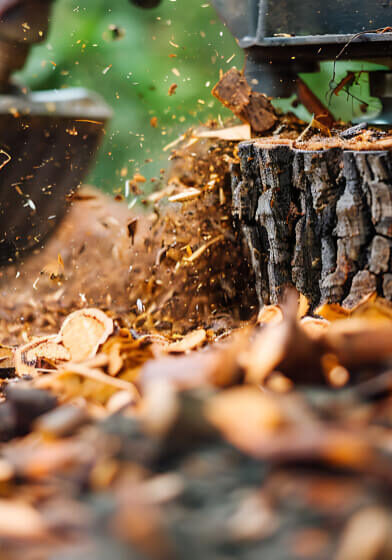
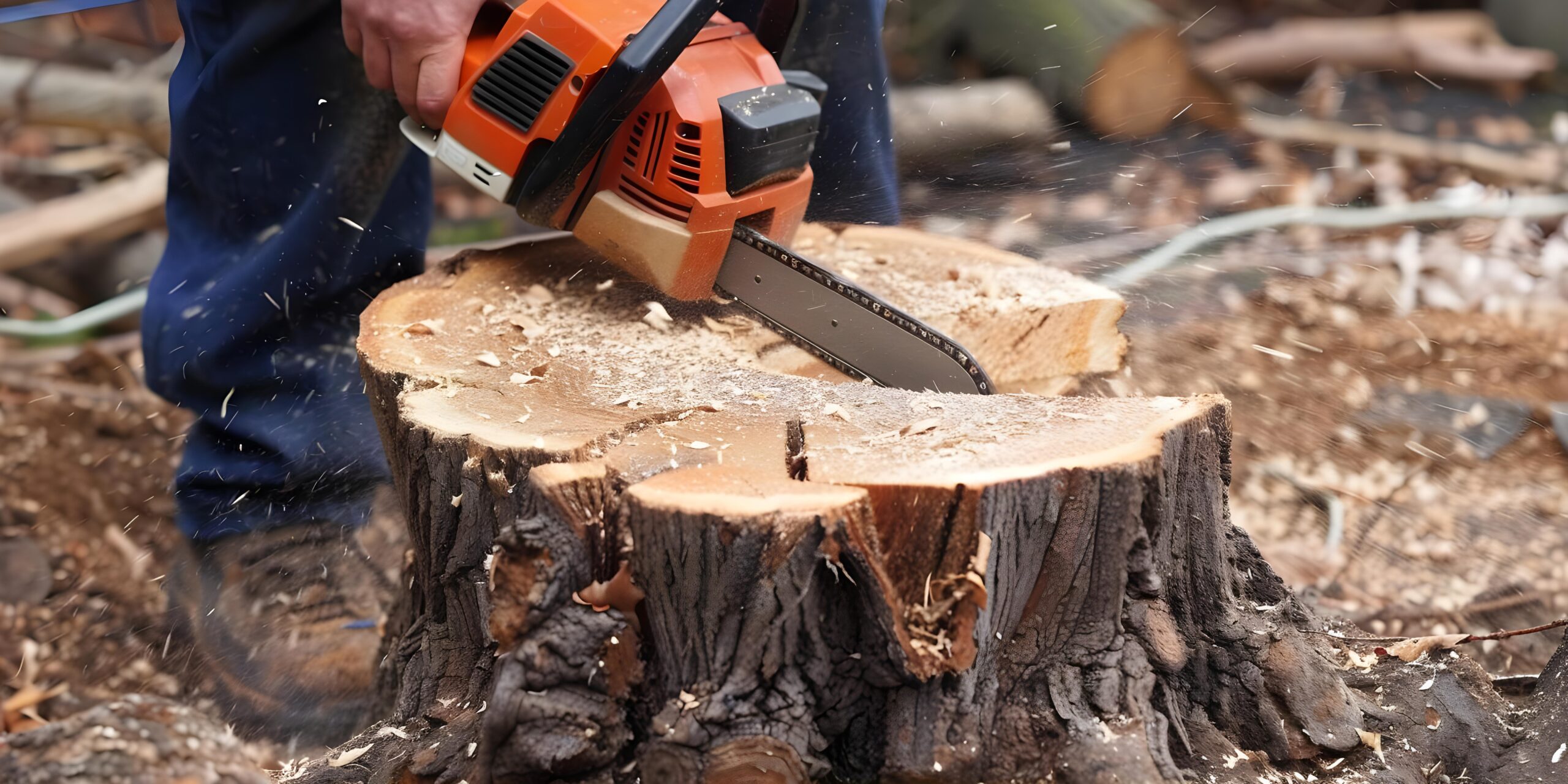
Not every tree responds. A decrepit silver maple, hollowed to a shell with fungal conks at the base, will not regain structural integrity no matter how balanced the diet. In those cases, Dangerous Tree Assessment and Removal is the responsible call. We document targets, defect severity, and wind exposure. When removal happens, Stump Removal & Grinding clears the site for a more suitable replacement. Trying to feed life into a structurally failed tree only delays the inevitable, often into the season of storms.
When fertility is not the answer
Nutrition sits within a web of factors, any of which can dominate. Verticillium wilt on maples produces unilateral dieback that no fertilizer touches. Dutch elm disease sweeps through vascular tissue, starving canopy even in rich soil. Borer damage on stressed ash climbs when we overfertilize and water poorly. In storm season, a limb torn free by wind should trigger Emergency Tree Services, not a feeding plan. A certified arborist triages. We decide where feeding helps, where pruning and cabling reduce risk, and where Tree Removal Services protect people and property.
Pruning, crown shaping, and energy
Tree Pruning & Crown Shaping and nutrition influence each other. After a heavy reduction, a tree needs to rebuild leaf area. Overfeeding invites long, poorly lignified shoots that break. Underfeeding slows recovery. The aim is to prune with restraint, preserve the photosynthetic factory, and feed to support dense, tapered growth. I prefer to correct structural issues over several years rather than all at once, especially on older trees. The cambium only has so much energy to add wood and seal off wounds in a season.
Timing matters. Pruning during late winter in cold climates, or after spring flush hardens, reduces stress. On species prone to bleeding or disease spread, adjustments happen in specific windows. Nutrition plans respect those windows, minimizing nitrogen ahead of pruning that would force soft tissue. Where wind load and asymmetry persist, Tree Cable and Bracing acts like a seatbelt while the tree grows stronger wood, then we reassess each year.
FireSmart thinking reshapes nutrition at the wildland edge
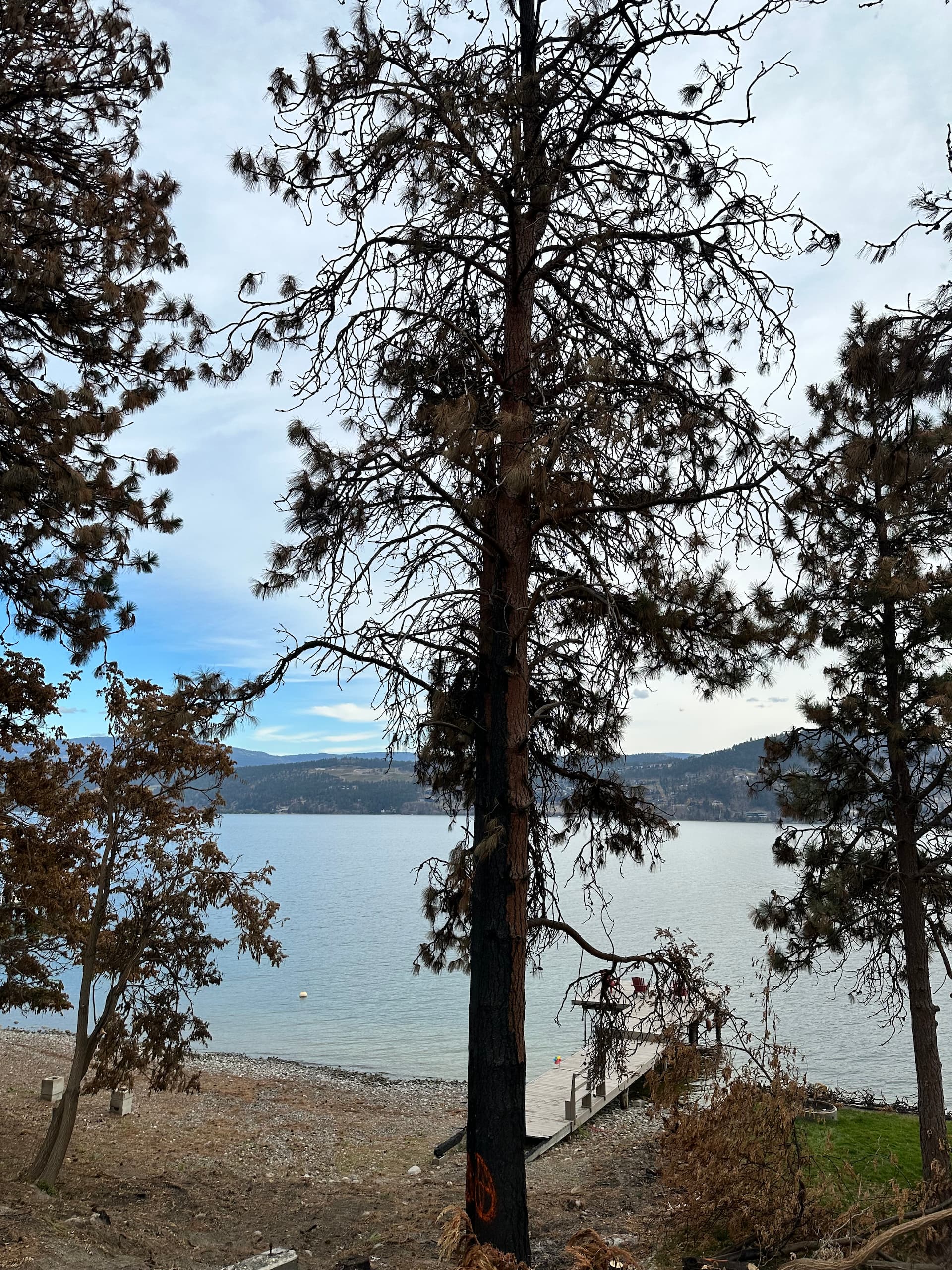
In fire prone areas, FireSmart Tree Services change the way we feed and water. Lush, late season growth can hold higher moisture content, which sounds helpful until the first real heat wave dries it to kindling. We adjust fertilization to the early part of the season, prevent water stress through deep, infrequent irrigation, and avoid pushing succulent shoots as summer peaks. Spacing, crown thinning for ladder fuel reduction, and species choices carry more weight than fertilizer. Nutrition supports vigor, which aids recovery after a smoky summer, but we do not trade fire resilience for fast growth.
Building a plan that lasts longer than a season
A good nutrition plan looks like a health record, not a diet fad. We log soil tests every two to three years, tissue analysis for sensitive species as needed, and canopy metrics like annual shoot extension and leaf size. We track dates of pruning, irrigation adjustments, and odd weather events like late frosts or heat domes. With that context, a future chlorosis episode becomes a pattern we recognize, not a surprise.
Before the first visit, a client can save time and money by sharing simple details.
- Where the water goes, including irrigation zones, runtimes, and downspout exits
- Recent construction, grade changes, or utility work within 10 meters of the tree
- What has been applied and when, including fertilizers, herbicides, or deicers
- Photos from prior seasons that show leaf color, canopy density, or storm damage
- Known constraints, such as pets, access, or HOA rules that limit mulch or pruning
With that information, we can target tests, schedule work at the right time, and set expectations. Some species respond slowly. A pin oak that sat chlorotic for a decade needs more than one spring to rebound. A soil with 1 percent organic matter will not climb to 5 overnight. Yet with steady inputs of mulch, careful water, and calibrated fertilizer, the trajectory improves.
Costs, trade offs, and realistic outcomes
Expect a Certified Arborist Consultation to cost less than a removal, and to pay its way over time. Soil tests in most regions run from modest to a couple hundred dollars depending on the panel, and a half day of air spade work often costs less than the damage a single poor assumption can cause. Slow release products cost more per bag than quick urea, but they outperform on trees when you add in the cost of correcting flushy, weak growth.
There are trade offs. Compost and mulch can attract fungus gnats and occasionally wood roaches, although those mostly stay in the mulch. Iron injections turn foliage fast, but may need repeating every two to four years if the pH remains high. Installing a new irrigation zone around a large tree is a capital expense, yet it stabilizes the single biggest driver of nutrient uptake. We talk budgets up front and prioritize the actions that do the most good for the least disruption.
The edge cases that keep us humble
Trees show us their preferences by thriving where the book says they should not. I care for a burr oak thriving on a street with pH 8 soil. Its secret is a loamy pocket above a relic clay pan and a wide mulch bed that never sees turf fertilizer. Meanwhile, a pair of ornamentals in textbook loam struggle because a neighbor’s overzealous weed control drifts in spring. You learn to read wind patterns in April, to ask about neighbor routines, and to walk the fence line for hints. Nutrition is science, and it is also local knowledge.
Another edge case is new transplants. A ball and burlap tree may carry a root system pruned to a fraction of its former reach. Early fertilization, especially nitrogen heavy blends, can hurt more than help. First year focus belongs on water management and root development, with low dose micronutrients only if tests and species indicate. By year two or three, a gentle feeding plan can ramp up if growth lags.
A seasonal rhythm that keeps you ahead
A simple annual cadence helps most sites keep trees steady.
- Late winter to early spring, update irrigation, apply slow release nutrients if indicated by tests, and complete structural pruning before rapid growth
- Early summer, monitor leaf color and shoot extension, top up mulch, and check emitters or soakers for coverage out to at least half the canopy radius
- Late summer, avoid heavy nitrogen, manage water to prevent drought stress, and schedule soil testing as leaves mature
- Fall, if soils remain warm, consider low dose root zone feeding, add compost and renew mulch, and plan any air spade work for dormant season
The exact months move with climate. The emphasis holds. Feed roots when they are active, watch water like a hawk, and keep mulch consistent.
Where removal and replacement make more sense
Every arborist who loves saving trees also knows when to recommend Tree Removal Services. Severe basal decay, lean with target exposure, repeated limb failures over a driveway, or root systems compromised by trenching often leave no safe path forward. We combine Dangerous Tree Assessment and Removal with a plan to replace with a species that fits the site’s soil chemistry, heat load, and space. After removal, Stump Removal & Grinding clears the field for new roots rather than forcing them to snake around old wood.
A replacement is a chance to reset the nutrition story. Choose a species suited to your native pH and rainfall. Prepare the soil with compost and proper grading. Install irrigation that matches the root ball and planned expansion. Set a mulch ring on day one, and resist the urge to feed heavily until the second year. You start with good soil, you need less intervention later.
Why certified matters
Anyone can spread fertilizer. A certified arborist reads the whole site and writes a plan that serves the tree’s biology, not the bag’s label. Certification signals ongoing education in the sciences and the field skills of diagnosis. It also ties to other services you may need as situations evolve, from Tree Pruning & Crown Shaping to Emergency Tree Services after a storm tears through, to Tree Cable and Bracing if growth outpaces structure.
Good nutrition for trees is quiet work. It feels slow until you look back at rings of growth and a canopy that no longer struggles through summer. The payoff shows up in fewer pest outbreaks, stronger wood, richer fall color, and more forgiving recovery after heat or cold snaps. Each property, each species, and each soil asks for a slightly different recipe. The value of a Certified Arborist Consultation is the judgment that finds that recipe, then checks it against reality season after season.
Ace Tree Services Ltd.
Name: Ace Tree Services Ltd.Address: 4656 Wallace Hill Road, Kelowna, BC
Postal code: V1W 4C2
Phone: 250-212-9593
Website: https://acetree.ca/
Hours:
Monday: 7:00 AM - 5:00 PM
Tuesday: 7:00 AM - 5:00 PM
Wednesday: 7:00 AM - 5:00 PM
Thursday: 7:00 AM - 5:00 PM
Friday: 7:00 AM - 5:00 PM
Saturday: 7:00 AM - 5:00 PM
Sunday: Closed
Open-location code (plus code): RHF8+8G Kelowna, British Columbia, Canada
Map/listing URL: https://www.google.com/maps/place/Ace+Tree+Services+Ltd./@49.8232606,-119.4337283,659m/data=!3m2!1e3!4b1!4m6!3m5!1s0x537d8b1d074815c5:0x450b88afa7a41435!8m2!3d49.8232606!4d-119.4337283!16s%2Fg%2F11ydkpnh22
Embed iframe:
"@context": "https://schema.org", "@type": "HomeAndConstructionBusiness", "name": "Ace Tree Services Ltd.", "url": "https://acetree.ca/", "telephone": "250-212-9593", "address": "@type": "PostalAddress", "streetAddress": "4656 Wallace Hill Road", "addressLocality": "Kelowna", "addressRegion": "BC", "addressCountry": "CA" , "openingHoursSpecification": [ "@type": "OpeningHoursSpecification", "dayOfWeek": "https://schema.org/Monday", "opens": "07:00", "closes": "17:00" , "@type": "OpeningHoursSpecification", "dayOfWeek": "https://schema.org/Tuesday", "opens": "07:00", "closes": "17:00" , "@type": "OpeningHoursSpecification", "dayOfWeek": "https://schema.org/Wednesday", "opens": "07:00", "closes": "17:00" , "@type": "OpeningHoursSpecification", "dayOfWeek": "https://schema.org/Thursday", "opens": "07:00", "closes": "17:00" , "@type": "OpeningHoursSpecification", "dayOfWeek": "https://schema.org/Friday", "opens": "07:00", "closes": "17:00" ], "geo": "@type": "GeoCoordinates", "latitude": 49.8232606, "longitude": -119.4337283 , "hasMap": "https://www.google.com/maps/place/Ace+Tree+Services+Ltd./@49.8232606,-119.4337283,659m/data=!3m2!1e3!4b1!4m6!3m5!1s0x537d8b1d074815c5:0x450b88afa7a41435!8m2!3d49.8232606!4d-119.4337283!16s%2Fg%2F11ydkpnh22"
Ace Tree Services Ltd. provides professional tree removal, pruning, stump grinding, emergency response, and arborist consultations for properties in Kelowna and across the Okanagan Valley.
The company works with homes, commercial properties, and municipal settings where tree work needs to be planned carefully around buildings, fences, driveways, landscaping, and other site constraints.
Based in Kelowna, the team is positioned to help nearby neighbourhoods and surrounding Okanagan communities with routine tree care and time-sensitive storm cleanup.
Customers looking for careful tree work often want a crew with certified arborist training, insurance, and a methodical approach to higher-risk removals.
Services also include dangerous tree assessment, cabling and bracing, and wildfire risk reduction tree work for properties that need longer-term planning.
To request a quote or discuss tree care options, call 250-212-9593 or visit https://acetree.ca/.
A public map listing is available to help customers confirm the business location and get directions before a site visit or estimate.
For Kelowna property owners who need pruning, removals, or emergency tree help, a local tree service can make it easier to schedule site-specific recommendations and cleanup.
Popular Questions About Ace Tree Services Ltd.
What services does Ace Tree Services Ltd. provide?Ace Tree Services Ltd. lists tree removal, stump removal and grinding, tree pruning and crown shaping, emergency tree service, arborist consultation, dangerous tree assessment and removal, cabling and bracing, and wildfire risk reduction tree work.
Who does Ace Tree Services Ltd. serve?
The company describes its work as serving homes, businesses, and municipalities in Kelowna and across the Okanagan Valley.
Is emergency tree help available?
Yes. Emergency service is listed for downed or uprooted trees, dangerous tree assessment, stabilization work, and branch cleanup. If a tree is near power lines, the safest first step is to stay clear and contact the utility provider before any tree work begins.
Do I always need a permit to remove a tree?
Not always. Permit requirements can depend on where the tree is located and whether it is near a creek, lake, steep slope, or another protected area. It is best to check local rules for the specific property before removal work starts.
How deep does stump grinding usually go?
Standard stump grinding is typically described as going about 6 to 12 inches below ground level, which is often enough for grass or surface landscaping. Deeper grinding may be possible when site plans call for it.
How much of a tree can be safely removed at one time?
That depends on the species, age, health, and structure of the tree. In practice, good pruning is usually about removing the right limbs for health, clearance, and structure rather than chasing a fixed percentage.
What are common signs that a tree may be dangerous?
Large dead limbs, visible cracks, a new lean, root damage, canopy dieback, or storm-related damage can all be warning signs. Trees near structures deserve extra attention when any of those issues appear.
What is cabling and bracing in tree care?
Cabling and bracing are support systems used to reduce the risk of failure in trees with structural weaknesses that may still be worth preserving. They are generally used to add support, not to replace good assessment and ongoing maintenance.
How do I contact Ace Tree Services Ltd.?
Call 250-212-9593.Website: https://acetree.ca/.
Landmarks Near Kelowna, BC
Downtown KelownaThe downtown core is a practical reference point for lakefront neighbourhoods, mixed-use streets, and central residential properties. If your property is near downtown, tree pruning, removals, and cleanup can be planned around tighter access and nearby structures.
Knox Mountain Park
This well-known park north of downtown is a recognizable landmark for nearby homes and hillside properties. If you are close to this area, ask about tree assessment, trimming, or removal work suited to sloped sites.
Mission Creek Greenway
The greenway runs through several parts of Kelowna and is a useful landmark for nearby residential areas. If your property borders or sits near this corridor, site-specific tree planning is especially important.
Pandosy Village
Pandosy is one of Kelowna’s most recognizable neighbourhoods and a common reference point for south-central properties. If you are nearby, request help for pruning, removals, or storm cleanup around homes and small commercial sites.
Rutland
Rutland is a major east Kelowna neighbourhood with a mix of residential and local commercial properties. If you are located in or near Rutland, tree work can be scheduled for both routine maintenance and urgent situations.
Landmark District
This central business-focused area is a practical landmark for offices, service properties, and nearby residential streets. If your site is near the district, ask about careful tree work around parking, access lanes, and built-up lots.
Kelowna’s North End
The North End sits on the edge of downtown and is a useful reference for nearby homes, industrial sites, and commercial properties. If you are in this part of the city, request tree care based on the layout and constraints of the lot.
Airport District
The Airport District is a recognizable north Kelowna reference point for surrounding properties and access routes. If you are in this area, ask about tree services for residential acreage, commercial sites, or roadside cleanup needs.
Glenmore & Dilworth
These established Kelowna neighbourhoods are useful landmarks for central and north-central service calls. If your property is nearby, pruning and removal work can be tailored to mature trees and established landscapes.
Highway 97 Corridor
Highway 97 is one of the city’s main travel routes and a common way to describe location within Kelowna. If your home or property is just off the corridor, a clear landmark reference can help speed up quote scheduling and site planning.