Affordable Tree Removal Services with Minimal Impact
Removing a tree should not feel like a demolition job. The goal is a controlled, thoughtful operation that protects people, property, and the landscape you plan to keep. Affordability does not have to conflict with care. The companies that consistently deliver good value share a few habits: they assess risk with discipline, they stage the site to avoid rutting and compaction, they choose equipment to fit the space rather than to show off horsepower, and they communicate in plain language about cost, timing, and what you can expect after the truck pulls away.
What “minimal impact” really means on a residential job
Minimal impact begins long before the first cut. It starts with a site walk that considers access, soil moisture, utilities, neighbors, and traffic. On a small lot, a sloppy approach can leave a lawn crosshatched with ruts, beds smashed, and fences leaning. A careful approach looks different. Crews arrive with ground protection mats instead of hoping the turf holds. Slings and rigging keep sections under control, and lowering devices avoid shock loads that could crack masonry or deck joists. Where a limb swings too freely or a trunk overhangs a roof, a climber or lift operator balances speed against the hassle of repairing a torn shingle or a scuffed gutter.
Minimal impact also extends to ecology. In many regions, songbird nesting peaks from spring into early summer. A certified arborist will check cavities and nests and delay non-urgent removals when required by local ordinances. Chips can be hauled away or left neatly in a ring to mulch garden beds. Stumps can be cut low and ground later to protect deep roots of adjacent trees. Even the choice of fuel containers and spill kits matters when you work near streams and permeable patios.
The price drivers you can actually control
Tree Removal Services are rarely priced from a single formula. Costs vary with tree size, species density, lean, structural defects, proximity to targets, and access. That said, there are levers you can pull.
Access is the biggest. If a mini skid steer can reach the work zone on mats, labor hours drop. If everything must be carried by hand through a gate and a set of stairs, plan on more time and a higher bid. Crane access may sound expensive, but on a constrained lot a crane often saves money by turning a two-day hand-rigging job into a half-day pick, especially for a dead or fractured tree that would be hazardous to climb.
Expect common residential removals to land somewhere in the range of 600 to 2,500 dollars per tree. A small ornamental with clear drop zones might be 300 to 600 dollars. A mature oak leaning over a home can easily hit 3,000 to 7,000 dollars, particularly if a weekend Emergency Tree Services call is necessary. Crane days often bill 250 to 350 dollars per hour with a minimum, and you will see line items for traffic control, utility coordination, or specialty rigging where needed.
If a bid seems strangely low, look for what is missing: stump grinding, brush hauling, cleanup depth, or the cost of paving and lawn protection. If a bid seems high, ask which constraints are driving it. Good contractors will show you how to reduce scope safely, such as sequencing removal with a fence replacement or deferring stump grinding until the ground dries.
From first look to final rake: how a low-impact job is built
A thorough Certified Arborist Consultation sets the tone. A qualified pro starts with the tree and the targets, not with the chipper. They look at root flare integrity, included bark, deadwood percentage, signs of root plate heave, fungal fruiting bodies, and canker lines. They will tap with a mallet, probe cavities, and in higher risk cases recommend a resistograph or sonic tomography to map internal decay. They will also ask about your goals beyond the removal, such as sunlight for a vegetable bed, privacy lines, or FireSmart Tree Services priorities along the house perimeter.
The work plan follows. On a tight urban site, that might mean staged disassembly from the crown down, with controlled lowers into a clear landing zone. On a rural lot with space, it could be felling in a single pull, provided you can control lean, hinge quality, and escape routes. The crew agrees on hand signals, work zones, and spotter roles. Mats go down while the ground is still clean. Gutters and AC condensers get moving blankets or plywood shields. The climber checks tie-in points twice before loading them, and a ground operator watches that no line creates a trip hazard. It sounds like a lot, but most of this becomes muscle memory for an experienced team. Attention up front averts damage that costs more to fix than the crew saved by hurrying.
Dangerous Tree Assessment and Removal, when timing matters
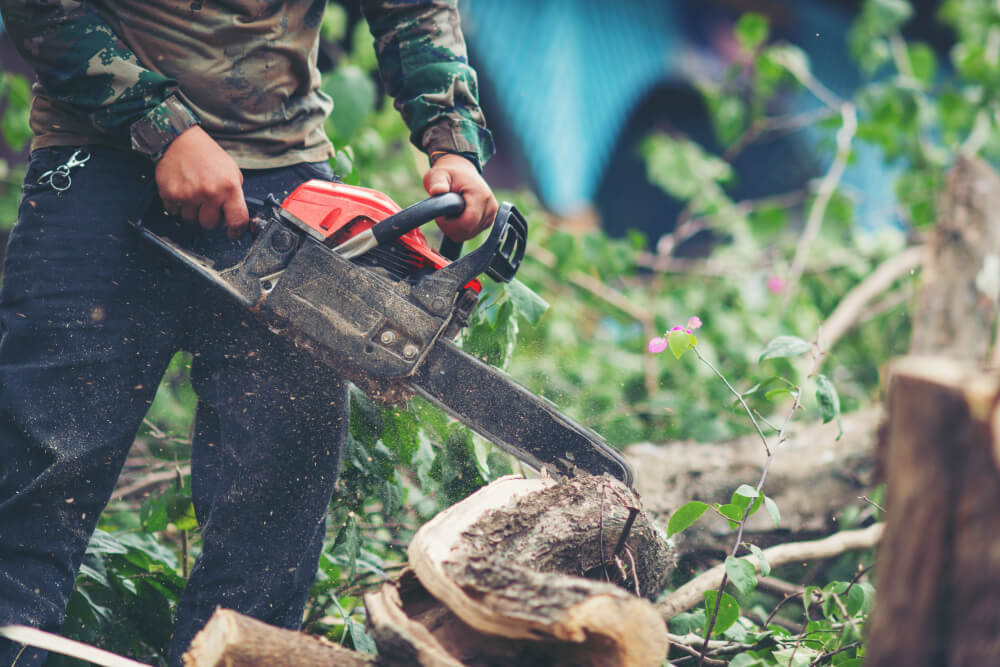
Not every tree can wait for a perfect weather window. After an ice storm or a lightning strike, a trunk can be partially split and ready to let go. Dangerous Tree Assessment and Removal relies on conservative decisions. If a leader has a longitudinal crack and the back lean puts weight over a bedroom, a crane pick may be the only responsible option. If basal decay reaches more than one third of the diameter and the tree moves in the wind independent of canopy sway, climbing may be off the table. In those cases, we stage from outside the drop zone with a lift or crane, rig to avoid shock loading, and maintain redundant lines.
You will see different pricing for hazard work, and for good reason. Crews carry higher risk, slower pace, and more specialized gear. Even then, there are ways to make it affordable. Combine multiple hazard removals in a single crane mobilization, or coordinate with neighbors who share access so you split mobilization costs. If the utility needs to drop a service line temporarily, plan the date early and align it with the crane window. Contractors who handle a lot of emergency work have contacts in dispatch, which can shave days off the wait when half a neighborhood is on hold.
When removal is not the smartest move
Many homeowners ask for removal when another path would solve the actual problem, and for less money. Tree Pruning & Crown Shaping can mitigate risk and improve light without losing the benefits of shade and curb appeal. A maple that overhangs a roof might only need selective end-weight reduction on the longer limbs and a modest crown raise over the driveway. A pine that rubs a second-story dormer may be pruned back to an appropriate lateral, reducing sail without butchering the form. The standard https://fernandoodxi092.lucialpiazzale.com/municipal-dangerous-tree-assessment-and-removal-services is not guesswork. ANSI A300 guidelines define proper pruning cuts, targets, and dose limits per cycle. A practical rule is to avoid removing more than 20 to 25 percent of live crown in a single season for a healthy tree.
Tree Cable and Bracing also belongs in the conversation. A mature cedar with a co-dominant union and included bark can often be stabilized with through-bolts and static or dynamic cabling installed high in the canopy. Cables do not make a weak union strong, they limit movement and redistribute forces during storms. Prices for a standard cable installation often range from 400 to 1,200 dollars, typically below a full removal and replanting. A Certified Arborist Consultation should include this option when the structure supports it.
FireSmart Tree Services add another lens. In wildland urban interface zones, removal targets often begin with ladder fuels and dense conifer stands close to the home, not the solitary mature oak that shades the deck. Thinning, pruning to lift crowns, and breaking up contiguous fuel beds can deliver a large reduction in wildfire risk without clear-cutting. A focused treatment zone within the first 5 meters of the structure creates the highest return per dollar.
Stump Removal & Grinding without wrecking the yard
Leaving a stump tall can be the right short-term choice if you plan a fence, deck, or landscape redesign. For a final finish, Stump Removal & Grinding handles the rest. A standard grind is usually 6 to 10 inches below grade, enough for topsoil and turf. If you will plant a new tree, ask for 16 to 18 inches and a larger grind diameter to remove most of the larger lateral roots. Marking utilities is non-negotiable. Reputable companies call in locates and probe irrigation before a tooth ever spins. Chips from grinding are high in carbon and low in nitrogen. They are fine as path mulch, but if you plan turf, remove most chips and backfill with screened topsoil to prevent nitrogen drawdown and spongy soil.
Grinding in wet conditions is messy and can press fines into surrounding turf. If timing allows, wait for a drier window. For large stumps, some crews use a narrow access grinder that can pass through a 36 inch gate. Others disassemble a fence panel and protect posts to bring a larger machine in, which can be cheaper than a long day with a small grinder. Ask about both options. It is normal for a contractor to return a week later after chips settle, top up the hole, and rake smooth. Good ones do.
Equipment choices and how they influence both cost and impact
Right-sized equipment is a hallmark of efficient, low-impact Tree Removal Services. A tracked lift can float over lawns with mats while keeping the climber off a brittle or decayed trunk. A compact loader with turf tires or a wide track distributes weight so you do not inherit a bumpy yard. On fragile pavers, crews stage plywood with beveled edges to avoid crushing edges. In a confined side yard, the best tool is often a climber with a porter wrap and a throwline. A chainsaw is not the expensive part of the operation. Time and mistakes are.
Cranes deserve a specific note. Homeowners sometimes flinch at the idea of a crane, imagining huge expense and street closures. In practice, a modest 30 to 60 ton crane set up for four hours can be cheaper and gentler than manhandling large sections over a garden. Picks swing up and over a roof and set into a chipper zone by the street. The mats that protect the curb are less invasive than running brush carts back and forth all day over your lawn. The crucial piece is a pre-lift meeting that covers pick weights, swing path, and tag lines. You do not want improvisation under a loaded boom above a slate roof.
Permits, neighbors, and the rules under your feet
Municipalities have strong opinions about trees. Some protect heritage species by diameter, others by species, and some only regulate street trees. A Dangerous Tree Assessment and Removal letter from a certified arborist often accelerates permit approvals when a failing tree threatens public or private safety. Plan for application windows of one to four weeks in most towns. If a sidewalk or lane closure is required for safe crane setup or chipper placement, that needs coordination too.
Neighbors appreciate notice. A short conversation about potential noise, parking, and how long the chipper will run can prevent friction. In narrow lanes, offer to help your neighbor out with a quick brush pickup while the chipper is on site. It costs you little and builds goodwill that matters the next time you need access through their side yard.
Wildlife, soil, and water: the quiet parts of minimal impact
Birds, bats, and beneficial insects use the same trees you plan to remove. Before cutting a cavity-bearing snag, check for current use. In many regions, active nests of migratory birds are protected by law. If timing is flexible, shift to a dormant season. Where a hollow section can remain as a shorter wildlife snag away from targets, consider preserving it at 12 to 15 feet with a clean top cut and a slight crown reduction to minimize splitting.
Soil compaction can linger for years after a heavy truck runs over it, especially when soils are wet. That is why matting matters. After a job, a knowledgeable crew will decompact with a garden fork or an air spade in the most stressed zones, then topdress with compost and reseed. Washing sawdust out of storm drains, controlling fuel, and keeping hydraulic hoses in good repair are not glamorous tasks. They are the difference between a tidy exit and a problem that shows up in the next rain.
Two brief stories, and the numbers behind them
A storm broke the top third of a 26 inch diameter silver maple over a century-old foursquare. The homeowner called at 7 a.m. After a limb punched a hole above a stair landing. We set a crane by noon, worked with the utility to drop the service line for two hours, and completed the removal by 4 p.m. Mobilization and crane time were the largest costs. The bill landed just under 5,800 dollars, including Emergency Tree Services premium and patching the roof opening with plywood so a roofer could follow. If we had attempted a hand removal, we would have spent two days in a hazardous canopy for roughly the same cost and greater risk to the structure.
Another client wanted a full removal of a twin-trunk cedar that shaded a vegetable bed. On inspection, the union was tight with only minor included bark. We proposed Tree Cable and Bracing with a modest crown thin on the south side and a targeted Tree Pruning & Crown Shaping to open the garden. Total came to 950 dollars. The client kept the privacy screen, gained an extra hour of sun in the summer shoulder hours, and avoided the 2,800 dollar removal plus stump grinding and new plantings. Three years later, the cable inspection showed sound wood and low movement, which validated the call.
FireSmart Tree Services where forest meets fence
Working in the wildland urban interface forces you to think in zones. Inside 1.5 meters of a structure, keep landscape free of combustible mulch, dense shrubs, or stacked firewood. From there to 10 meters, prune conifers to lift lower branches, remove ladder fuels, and thin crowded stems to break crown continuity. Beyond 10 meters, spacing and species selection matter more than raw removal counts. You can implement most of this with careful pruning and occasional removals, rather than wiping the lot clean.
When budgets are tight, prioritize by potential flame contact and ember exposure. Replace conifer hedges next to siding with broadleaf species that retain moisture into the dry season. Chip and remove slash the same week, do not leave it piled to cure. If you plan to keep a large tree close to the house, eliminate direct pathways like wood trellises that can transmit flame to the eaves. An arborist familiar with FireSmart principles can stage the work over a couple of seasons to spread cost and give replantings time to establish.
How to compare quotes without missing the small print
- Proof of insurance and credentials: ask for liability and worker’s compensation certificates and verify a Certified Arborist Consultation is part of the service, not a sales pitch.
- Scope clarity: confirm what is included, from brush hauling and log bucking to Stump Removal & Grinding depth and soil restoration.
- Access plan: ask how they will protect paving and turf, whether they will use mats, and what equipment they plan to bring through your gate.
- Risk approach: for diseased or compromised trees, ask how they will manage Dangerous Tree Assessment and Removal, and whether climbing, a lift, or a crane is planned.
- Cleanup standard: define what “clean” means. Some crews leave chips, others haul everything and rake, blow, and magnet sweep for nails from pallet mats.
Your prep steps that cut cost and prevent damage
- Confirm utility locates are complete and visible, and flag irrigation heads and shallow lighting wires.
- Move vehicles, planters, grills, and patio furniture to a safe zone before the crew arrives.
- Reserve street parking if needed so trucks and a chipper can stage close to the work.
- Walk the site with the crew leader, share concerns, and mark plants to protect with tape or small plywood guards.
- Keep pets and children inside or off site, and notify neighbors about noise and access windows.
Safety is not an add-on line item
Look for helmets with chin straps, eye and ear protection, chainsaw protective pants, and proper rigging hardware rated for arboricultural loads. Spotters should watch live lanes when a chipper sits curbside. Ropes should be clean and sized for the loads in play. No part of the crew should stand in the bight of a loaded line. It sounds obvious, but these habits separate pros from dabblers. If you see someone tying into a dead top over a decayed stem, you are not getting a bargain. You are inheriting risk.
What a Certified Arborist Consultation should feel like
A real consultation is a conversation, not a upsell. Expect the arborist to ask how you use your yard, which views matter, what bothers you about the tree, and what you like about it. They will explain options in plain terms: remove, retain with pruning, retain with Tree Cable and Bracing, or monitor. They will talk about timing, such as avoiding heavy pruning during peak heat or deferring removals until after nesting. They will give you a sense of the probable lifespan and maintenance cycle so you can budget. A one page sketch or photo markup goes a long way. If you leave the meeting with new understanding and more than one path forward, you are in good hands.
Cleanup that sets you up for the next season
A tidy site at 5 p.m. Is not the end of the story. Good crews rake and blow fine debris off beds, roofs, and gutters. Where brush dragged over turf, they fluff with a rake to lift crushed blades. If heavy mats sat for hours, they aerate the worst spots with a fork, add a topdressing of compost and a sprinkle of seed, and water. Chips can be left in a neat pile, but an even better practice is to place them where they help you, not where they rot a fence post or block a gate. If you plan to replant, a quick soil test can guide your choice of amendments so the new installation takes off rather than languishing in compacted, wood-heavy backfill.
The bottom line on affordability without the collateral damage
You do not have to choose between a battered yard and a battered wallet. With a plan anchored in assessment, a willingness to use the right tool for the site, and a crew that respects both safety and soil, Tree Removal Services can be both cost conscious and careful. Ask for options. Consider Tree Pruning & Crown Shaping where it meets your goals. Use Tree Cable and Bracing to buy time for a valuable specimen. When the situation calls for it, do not hesitate to schedule Emergency Tree Services, but coordinate to keep the premiums in check. Include FireSmart Tree Services if you live where embers fly in August.
When you look back a month after the work, the test of minimal impact is simple. Your lawn should not remind you of tank tracks. Your beds should still look like beds. The only visible change should be the absence of a hazard and the presence of sun or space where you wanted it. That level of finish is achievable, and it is usually cheaper than fixing the problems that a rushed job leaves behind.
Ace Tree Services Ltd.
Name: Ace Tree Services Ltd.Address: 4656 Wallace Hill Road, Kelowna, BC
Postal code: V1W 4C2
Phone: 250-212-9593
Website: https://acetree.ca/
Hours:
Monday: 7:00 AM - 5:00 PM
Tuesday: 7:00 AM - 5:00 PM
Wednesday: 7:00 AM - 5:00 PM
Thursday: 7:00 AM - 5:00 PM
Friday: 7:00 AM - 5:00 PM
Saturday: 7:00 AM - 5:00 PM
Sunday: Closed
Open-location code (plus code): RHF8+8G Kelowna, British Columbia, Canada
Map/listing URL: https://www.google.com/maps/place/Ace+Tree+Services+Ltd./@49.8232606,-119.4337283,659m/data=!3m2!1e3!4b1!4m6!3m5!1s0x537d8b1d074815c5:0x450b88afa7a41435!8m2!3d49.8232606!4d-119.4337283!16s%2Fg%2F11ydkpnh22
Embed iframe:
Ace Tree Services Ltd. provides professional tree removal, pruning, stump grinding, emergency response, and arborist consultations for properties in Kelowna and across the Okanagan Valley.
The company works with homes, commercial properties, and municipal settings where tree work needs to be planned carefully around buildings, fences, driveways, landscaping, and other site constraints.
Based in Kelowna, the team is positioned to help nearby neighbourhoods and surrounding Okanagan communities with routine tree care and time-sensitive storm cleanup.
Customers looking for careful tree work often want a crew with certified arborist training, insurance, and a methodical approach to higher-risk removals.
Services also include dangerous tree assessment, cabling and bracing, and wildfire risk reduction tree work for properties that need longer-term planning.
To request a quote or discuss tree care options, call 250-212-9593 or visit https://acetree.ca/.
A public map listing is available to help customers confirm the business location and get directions before a site visit or estimate.
For Kelowna property owners who need pruning, removals, or emergency tree help, a local tree service can make it easier to schedule site-specific recommendations and cleanup.
Popular Questions About Ace Tree Services Ltd.
What services does Ace Tree Services Ltd. provide?Ace Tree Services Ltd. lists tree removal, stump removal and grinding, tree pruning and crown shaping, emergency tree service, arborist consultation, dangerous tree assessment and removal, cabling and bracing, and wildfire risk reduction tree work.
Who does Ace Tree Services Ltd. serve?
The company describes its work as serving homes, businesses, and municipalities in Kelowna and across the Okanagan Valley.
Is emergency tree help available?
Yes. Emergency service is listed for downed or uprooted trees, dangerous tree assessment, stabilization work, and branch cleanup. If a tree is near power lines, the safest first step is to stay clear and contact the utility provider before any tree work begins.
Do I always need a permit to remove a tree?
Not always. Permit requirements can depend on where the tree is located and whether it is near a creek, lake, steep slope, or another protected area. It is best to check local rules for the specific property before removal work starts.
How deep does stump grinding usually go?
Standard stump grinding is typically described as going about 6 to 12 inches below ground level, which is often enough for grass or surface landscaping. Deeper grinding may be possible when site plans call for it.
How much of a tree can be safely removed at one time?
That depends on the species, age, health, and structure of the tree. In practice, good pruning is usually about removing the right limbs for health, clearance, and structure rather than chasing a fixed percentage.
What are common signs that a tree may be dangerous?
Large dead limbs, visible cracks, a new lean, root damage, canopy dieback, or storm-related damage can all be warning signs. Trees near structures deserve extra attention when any of those issues appear.
What is cabling and bracing in tree care?
Cabling and bracing are support systems used to reduce the risk of failure in trees with structural weaknesses that may still be worth preserving. They are generally used to add support, not to replace good assessment and ongoing maintenance.
How do I contact Ace Tree Services Ltd.?
Call 250-212-9593.Website: https://acetree.ca/.
Landmarks Near Kelowna, BC
Downtown KelownaThe downtown core is a practical reference point for lakefront neighbourhoods, mixed-use streets, and central residential properties. If your property is near downtown, tree pruning, removals, and cleanup can be planned around tighter access and nearby structures.
Knox Mountain Park
This well-known park north of downtown is a recognizable landmark for nearby homes and hillside properties. If you are close to this area, ask about tree assessment, trimming, or removal work suited to sloped sites.
Mission Creek Greenway
The greenway runs through several parts of Kelowna and is a useful landmark for nearby residential areas. If your property borders or sits near this corridor, site-specific tree planning is especially important.
Pandosy Village
Pandosy is one of Kelowna’s most recognizable neighbourhoods and a common reference point for south-central properties. If you are nearby, request help for pruning, removals, or storm cleanup around homes and small commercial sites.
Rutland
Rutland is a major east Kelowna neighbourhood with a mix of residential and local commercial properties. If you are located in or near Rutland, tree work can be scheduled for both routine maintenance and urgent situations.
Landmark District
This central business-focused area is a practical landmark for offices, service properties, and nearby residential streets. If your site is near the district, ask about careful tree work around parking, access lanes, and built-up lots.
Kelowna’s North End
The North End sits on the edge of downtown and is a useful reference for nearby homes, industrial sites, and commercial properties. If you are in this part of the city, request tree care based on the layout and constraints of the lot.
Airport District
The Airport District is a recognizable north Kelowna reference point for surrounding properties and access routes. If you are in this area, ask about tree services for residential acreage, commercial sites, or roadside cleanup needs.
Glenmore & Dilworth
These established Kelowna neighbourhoods are useful landmarks for central and north-central service calls. If your property is nearby, pruning and removal work can be tailored to mature trees and established landscapes.
Highway 97 Corridor
Highway 97 is one of the city’s main travel routes and a common way to describe location within Kelowna. If your home or property is just off the corridor, a clear landmark reference can help speed up quote scheduling and site planning.