Aesthetic Tree Pruning & Crown Shaping for Shade and Light
The most satisfying trees I care for are not the biggest or rarest. They are the ones that feel placed with intent, that cast a cool, dappled pattern across a patio at noon and lift high enough to catch the evening breeze. That balance does not happen by accident. It comes from years of measured cuts, from reading where a limb wants to grow, and from choosing how much sun to invite onto the garden floor. Aesthetic pruning and crown shaping aim to choreograph that interplay, without compromising the tree’s long term health or the safety of the site.
What aesthetic pruning really means
Aesthetic pruning is not sculpting a lollipop or shaving a hedge tight every month. It is the art of revealing a tree’s natural character while guiding its structure for practical goals. On ornamental maples, it might mean thinning clutter in the interior so you can see the sinuous branching. On a mature oak above a deck, it might mean lifting the lower limbs so people can move freely, while keeping enough lateral spread to hold shade.
You are shaping light as much as wood. Sun loves edges, so a small change in the crown can transform the garden below. A light raise on the north side may encourage turf that has struggled for years. A modest crown reduction away from a south facing window can reduce afternoon heat build up indoors by several degrees. The key is restraint. Most trees respond well when no more than 10 to 20 percent of live foliage is removed in a given cycle. Exceed that, and the tree compensates with weak, fast sprouts that undo your hard work and invite pests.
The biology behind beautiful crowns
A tree is not a static ornament. Growth hormones, stored carbohydrates, and environmental stress all influence how it fills space. Two concepts matter most when pruning for light and shade.
First, apical dominance. The tips of shoots produce hormones that suppress lateral buds below. If you make a heading cut on a vigorous leader, several buds below may activate, creating a tuft of shoots. That can be useful on a young tree where you want denser foliage for screening, but on a mature tree it often creates clutter and weak attachments.
Second, branch collar integrity. The swollen ring where a branch meets the trunk, or a larger limb, contains cells that wall off wounds. Prune just outside the collar, neither flush nor leaving a stub, and the tree can seal the cut faster. On most species, cuts under about 5 centimeters in diameter callus more predictably than larger wounds. Those small, accurate cuts, repeated over seasons, are what give you a refined crown without harm.
Light, shade, and the ground beneath
Most calls I get about crown shaping begin with a problem under the canopy. The lawn looks tired, perennials lean, or a vegetable patch has faded since the neighbor’s cedar filled in. Aesthetic pruning guides light where you want it at the times that matter. Not all shade is equal. Morning shade is gentle, afternoon shade is protective in hot summers, and winter sun feels warmer indoors if evergreens are trimmed out of its path.
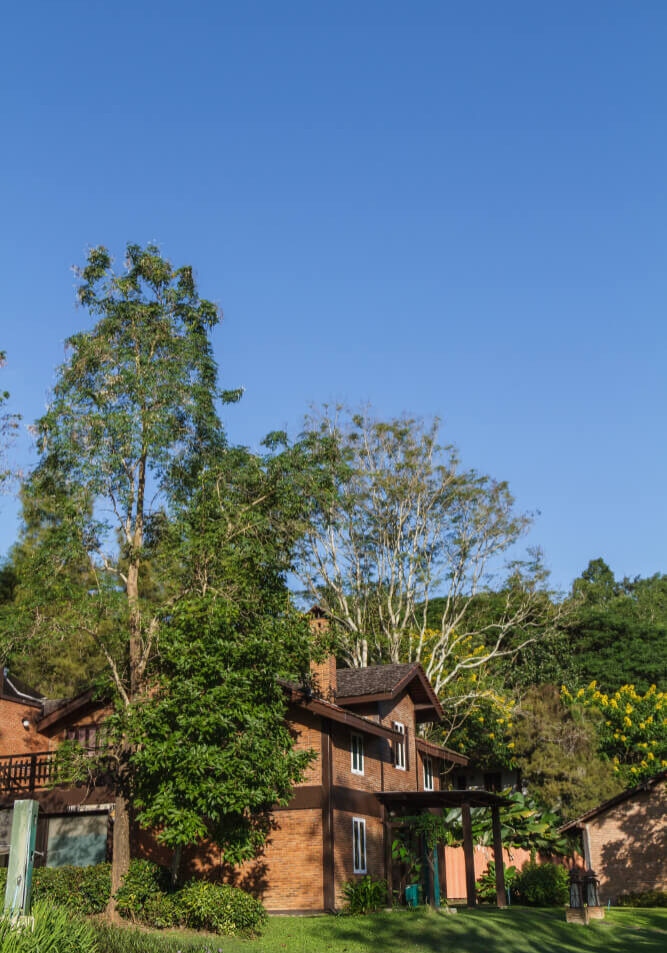
Walk the site and track the sun in your mind. If you need to favor tomatoes, you seek two outcomes: more midday and mid afternoon light onto the bed, and less root competition. A selective thin on the southwest quadrant of a deciduous tree can push sun into the garden during fruiting months, especially if you focus on small interior laterals that create the most shade per ounce of wood. Never gut a canopy. Removing a web of small shade makers while preserving the scaffold and exterior shell keeps the tree stable and graceful.
Over patios and play areas, I often retain a continuous but fine textured canopy. Leaves spaced like fingertips break up radiation better than a blocky mass. Think lace, not blanket. Trees that carry natural fine texture, like honeylocust or certain birches, are cooperative. Heavy leafed species can still perform well if you distribute reductions evenly and avoid concentrating weight on a few big laterals.
Crown shaping methods that respect the tree
Terms matter because they reflect intent.
Crown cleaning is the quiet hero. It removes dead, dying, broken, and rubbing branches. Do this first and the tree often looks better without touching live tips. It also improves airflow and reduces the chance of branch bark damage where limbs abrade.
Crown thinning focuses on selective interior cuts, taking out small, redundant laterals while preserving the main structure. Done well, it lets in speckled light and reduces wind sail. Done poorly, it creates a lion tail effect, where the branch is stripped near the trunk and heavy at the tip. That invites breakage. Keep live foliage distributed along the length of each limb.
Crown reduction lowers height or spread by cutting back to laterals that are at least one third the diameter of the removed parent. Reduction is a tool for clearance and proportion, not a shortcut to shearing. Species tolerance varies. Hawthorn, elm, plane, and many maples accept careful reductions. Mature oaks, spruces, and conifers in general respond poorly to heavy reduction because they lack dormant buds on old wood.
Crown raising lifts the canopy over walkways, roofs, and sight lines. It is tempting to clear out a swath at once. Resist that. Remove a few lower branches each cycle, and shorten retained ones to stage the lift. Trees acclimate better, and trunks do not sunscald as easily.
Directional pruning uses nearby laterals to steer growth away from roofs, lights, or views. It is quieter than bracing or repeated removals. This is where a small cut in the right place can save you thousands in future maintenance.
Seasonal timing and species nuance
The best time for Tree Pruning & Crown Shaping depends on species, site stress, and the type of cut. Most trees tolerate light cleaning any month, especially when removing dead or hazardous wood. For live cuts, I favor late winter into early spring for many deciduous species, when energy reserves are high and the tree can seal wounds promptly as growth begins. Spring bloomers like cherry and plum prefer a post flowering window to reduce disease risk and preserve next year’s buds. Oaks in regions with oak wilt are safer to prune during cold seasons when vectors are inactive. Maples tend to bleed in late winter; the flow is mostly cosmetic, but if clients dislike the sight, we schedule after leaf out.
Conifers demand a different approach. Pines respond to candle pinching in late spring to limit length without creating stubs. Never cut into old, bare wood on most conifers. They do not resprout there, and the gap can be permanent. Yew and some firs are more forgiving, but still prefer reduction to living laterals.
Tools, cut quality, and sanitation
Sharp, clean tools make smaller wounds and better results. Hand pruners for twig work, bypass loppers for small limbs, handsaws for precise cuts, and chainsaws for larger work. Keep chains at full sharp, and finish important cuts with a handsaw to avoid torn fibers. On the ground, I wipe blades with alcohol between trees, and in disease sensitive contexts I use a light bleach solution at 10 percent.
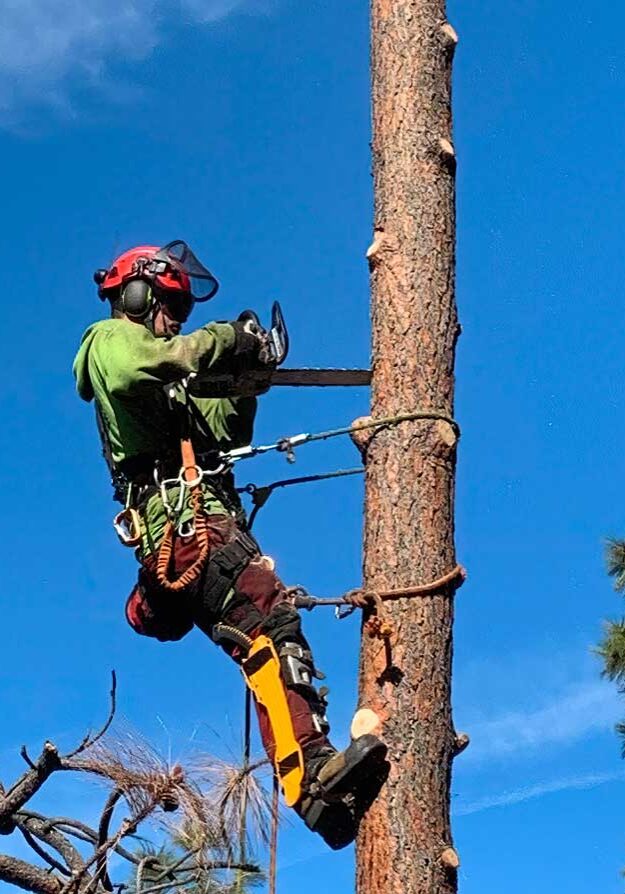
The three cut method is not optional on larger limbs. Undercut a short distance from the collar, overcut beyond it to release weight, then finish clean just outside the collar. Rushing this step is how bark peels down the trunk. When working aloft, stable positioning means safer cuts. Climbing spurs never belong on live trees you intend to keep. They puncture tissue along the trunk, and every wound is a potential entry for decay.
Shaping for architecture, views, and neighbors
Urban trees live with constraints. You want clearance over a walkway, daylight for solar panels, and a clean sight line to the street, all while keeping a canopy that suits the house. I use the building as a visual anchor. Large, solid forms dominate small spaces. Reductions toward the house, combined with a light outward arc to the street, can keep the tree balanced and prevent a boxy profile. Avoid lining up finished cuts in a plane. That reads as sheared, even from a distance.
Between neighbors, tread carefully. A reduction on your side that heavily weights the crown toward the other property may create risk and tension. If the tree straddles a fence, consider a shared plan that includes Tree Cable and Bracing where appropriate. Support systems, installed after a Certified Arborist Consultation and load assessment, can mitigate the chance of failure in a codominant canopy while you improve structure with pruning.
Safety is not separate from aesthetics
Beautiful trees are safe trees. Cracks, included bark, decayed unions, and past topping cuts leave signs if you know where to look. A Dangerous Tree Assessment and Removal is not https://telegra.ph/Advanced-Hardware-for-Tree-Cable-and-Bracing-05-10 a phrase anyone wants to hear about a favorite shade tree, yet sometimes removal is the responsible choice. A limb with advanced decay at the base of a leader, or a trunk with fruiting bodies at soil level, can present high risk even if the foliage still looks fine. If wind exposure has changed, such as after a neighbor clears a lot, recalibrate. Trees adapt to shared wind loads. When one sheltering tree disappears, the survivor may experience loads it has not faced for decades.
For clients who live with wildfire pressure, FireSmart Tree Services complement aesthetic work. Ladder fuels under canopies, tight spacing between crowns, and heavy deadwood are hazards. You can maintain a graceful canopy while reducing ember catch points and creating safer separation. In practice, that means lifting lower limbs over roofs and decks to a prudent height, thinning the inner crown of small, dead twigs, and on multi tree properties, staggering heights and species so crowns do not interlock. The goal is not to strip character, it is to break up continuity that carries flame.
When the weather calls the shots
Storms rewrite plans. After heavy snow or wind, I get calls that cannot wait for the calendar. Emergency Tree Services prioritize life safety and property protection. If a limb tears and dangles over a driveway, the cut quality you were saving for spring becomes today’s job. Triaging after a storm, we first secure the site, then address hanging or split limbs under load. Decorative shaping waits until the tree stabilizes and recovers.
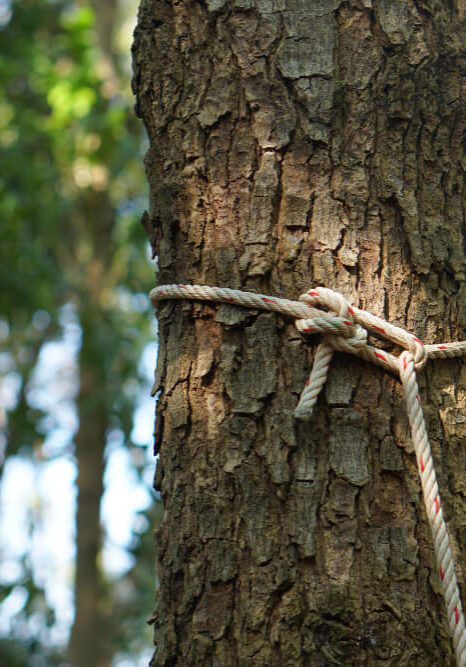
Homeowners often want to help in the moment. If you can do so safely from the ground, removing small broken branches that you can reach without a ladder can prevent bark tearing as they swing in wind. Anything aloft or under tension should wait for a trained crew with rigging knowledge. Wood under load can spring violently.
Two quick checklists for smoother outcomes
- Before a Certified Arborist Consultation, gather information: past pruning or topping history, irrigation patterns, recent construction, and any changes in sun exposure or soil grade. Take photos from four sides at midday to show shade patterns.
- Signs you need Emergency Tree Services: a limb or whole tree leaning suddenly after wind, fresh cracks with bright wood exposed, roots lifting soil on one side of the trunk, conductors or service lines touched by branches, or a split union audible as creaking under calm conditions.
Case notes from the field
A mature red maple over a brick patio in a temperate neighborhood had crept down over the years. The client loved the shade but hated the constant brushing of leaves on guests. The previous service had taken off big chunks every few years, so the branch ends were clubbed and heavy. We spent two seasons reversing that story.
Year one, we cleaned and thinned lightly, concentrating on interior shoots that shaded the same area twice. We reduced two dominant laterals by cutting back to strong side branches at about one third diameter. No single cut exceeded 6 centimeters. We staged a crown raise by shortening two low limbs rather than removing them. The tree kept its soft dome, the patio gained a foot of clearance, and the light felt livelier through lunch.
Year two, we returned to complete the lift and made several small reductions to rebalance the lean toward the house. The client reported a 3 to 4 degree drop in afternoon indoor temperature after we opened a south facing window lane, and the hostas under the canopy that had been reaching finally grew upright. Because we had avoided lion tailing and distributed foliage evenly along limbs, the tree handled a late summer storm without damage.
Another site involved a split leader in a young zelkova planted as a street tree. The nursery had topped it years earlier, then two leaders competed. A year after occupancy, the client noticed bark pushed inward between them. We set a low profile cable at about two thirds of the height after a structural prune favored a single leader. Tree Cable and Bracing is never a substitute for good pruning, but in transitional years it protects developing structure. We removed deadwood, lifted lightly over the sidewalk, and set a five year reassessment to remove the cable once the subordinate leader regressed and the dominant one thickened.
Knowing when removal is the right answer
No arborist who loves trees enjoys saying it is time to let one go. Yet Tree Removal Services exist for a reason. A sweetgum planted two feet from a foundation, now 60 feet tall and dropping spiky balls onto a play area, can be a daily hazard and a source of structural risk. A poplar with a hollow trunk the size of a basketball at chest height can fail without much warning. In those cases, the safest, most aesthetic decision is a staged removal that preserves the feel of the space while you plan replacements.
When removing a tree, plan for what remains underground. Stump Removal & Grinding clears the way for new plantings, reduces trip hazards, and deters pests that like to colonize rotting wood. If you intend to replant close by, ask to grind wider than the trunk by at least 8 to 12 inches and to remove major lateral roots. Backfill with a soil blend matched to the site, and let it settle before installing a new tree with different habit and mature size aligned to your shade goals.
Costs, cadence, and setting expectations
Budget and timing shape outcomes as much as tools. Most ornamental trees benefit from a structural revisit every 2 to 4 years. Fast growers might need annual touch ups at first, tapering as they settle into their role. Costs vary by access, size, species, and risk. A single day for a two person crew on a medium maple, focused on Tree Pruning & Crown Shaping, might fall in a mid three figure to low four figure range depending on region. Adding cabling, traffic control, or complex rigging increases time and price.
One way to stretch value is to bundle work sensibly. If a cherry and a magnolia flank the same walk, lift them together to create a continuous, comfortable corridor. If you know a removal is coming in back, coordinate with the pruning so green waste runs in one trip. Clients who plan on a multi year horizon get better trees at lower lifetime cost.
Common mistakes homeowners make, and how to avoid them
The first is topping. Cutting flat across a crown to a target height is a shortcut that weakens the tree, ruins its lines, and invites decay. Where clearance is non negotiable, use reduction cuts to laterals and consider removing, then replanting a species that fits. The second is over thinning interior wood because it looks busy. That is the living lung of the tree. Keep foliage along the length of limbs, and let complexity remain where it does no harm. The third is pruning late in a drought without irrigation. Trees under water stress already mobilize reserves to survive. Pile on pruning, and they can decline. Water deeply before and after significant work, mulch with a clean organic layer 2 to 3 inches thick, and keep mulch off the trunk.
The last mistake is forgetting that your goals change with life. A young family needs open sight lines to watch kids. A retired couple wants deep shade over a reading chair. Aesthetic pruning is not one shape forever. It is a conversation over decades, adjusting the tree as your needs evolve.
Working with a professional
A Certified Arborist Consultation is not a formality. It is where you translate taste into a plan that a living organism will accept. Bring photos of the light you love in other yards. Tell your arborist what time of day you use the patio, which rooms overheat by late afternoon, and where you want to see the sky. The best outcomes come from shared intent, clear constraints, and a willingness to proceed in measured steps.
If risk emerges, rely on professionals trained in Dangerous Tree Assessment and Removal, and when a storm takes choice out of your hands, call for Emergency Tree Services before touching anything under tension. For properties in the wildland urban interface, integrate FireSmart Tree Services with your shaping work so beauty and resilience grow together.
A well pruned tree does not call attention to the cuts. It looks inevitable, as if it had always been exactly that height and spread, exactly that transparent and full. Years later, when summer light scatters across your table and the ground stays cool for bare feet at noon, you will feel the quiet craft in every branch.
Ace Tree Services Ltd.
Name: Ace Tree Services Ltd.Address: 4656 Wallace Hill Road, Kelowna, BC
Postal code: V1W 4C2
Phone: 250-212-9593
Website: https://acetree.ca/
Hours:
Monday: 7:00 AM - 5:00 PM
Tuesday: 7:00 AM - 5:00 PM
Wednesday: 7:00 AM - 5:00 PM
Thursday: 7:00 AM - 5:00 PM
Friday: 7:00 AM - 5:00 PM
Saturday: 7:00 AM - 5:00 PM
Sunday: Closed
Open-location code (plus code): RHF8+8G Kelowna, British Columbia, Canada
Map/listing URL: https://www.google.com/maps/place/Ace+Tree+Services+Ltd./@49.8232606,-119.4337283,659m/data=!3m2!1e3!4b1!4m6!3m5!1s0x537d8b1d074815c5:0x450b88afa7a41435!8m2!3d49.8232606!4d-119.4337283!16s%2Fg%2F11ydkpnh22
Embed iframe:
"@context": "https://schema.org", "@type": "HomeAndConstructionBusiness", "name": "Ace Tree Services Ltd.", "url": "https://acetree.ca/", "telephone": "250-212-9593", "address": "@type": "PostalAddress", "streetAddress": "4656 Wallace Hill Road", "addressLocality": "Kelowna", "addressRegion": "BC", "addressCountry": "CA" , "openingHoursSpecification": [ "@type": "OpeningHoursSpecification", "dayOfWeek": "https://schema.org/Monday", "opens": "07:00", "closes": "17:00" , "@type": "OpeningHoursSpecification", "dayOfWeek": "https://schema.org/Tuesday", "opens": "07:00", "closes": "17:00" , "@type": "OpeningHoursSpecification", "dayOfWeek": "https://schema.org/Wednesday", "opens": "07:00", "closes": "17:00" , "@type": "OpeningHoursSpecification", "dayOfWeek": "https://schema.org/Thursday", "opens": "07:00", "closes": "17:00" , "@type": "OpeningHoursSpecification", "dayOfWeek": "https://schema.org/Friday", "opens": "07:00", "closes": "17:00" ], "geo": "@type": "GeoCoordinates", "latitude": 49.8232606, "longitude": -119.4337283 , "hasMap": "https://www.google.com/maps/place/Ace+Tree+Services+Ltd./@49.8232606,-119.4337283,659m/data=!3m2!1e3!4b1!4m6!3m5!1s0x537d8b1d074815c5:0x450b88afa7a41435!8m2!3d49.8232606!4d-119.4337283!16s%2Fg%2F11ydkpnh22"
Ace Tree Services Ltd. provides professional tree removal, pruning, stump grinding, emergency response, and arborist consultations for properties in Kelowna and across the Okanagan Valley.
The company works with homes, commercial properties, and municipal settings where tree work needs to be planned carefully around buildings, fences, driveways, landscaping, and other site constraints.
Based in Kelowna, the team is positioned to help nearby neighbourhoods and surrounding Okanagan communities with routine tree care and time-sensitive storm cleanup.
Customers looking for careful tree work often want a crew with certified arborist training, insurance, and a methodical approach to higher-risk removals.
Services also include dangerous tree assessment, cabling and bracing, and wildfire risk reduction tree work for properties that need longer-term planning.
To request a quote or discuss tree care options, call 250-212-9593 or visit https://acetree.ca/.
A public map listing is available to help customers confirm the business location and get directions before a site visit or estimate.
For Kelowna property owners who need pruning, removals, or emergency tree help, a local tree service can make it easier to schedule site-specific recommendations and cleanup.
Popular Questions About Ace Tree Services Ltd.
What services does Ace Tree Services Ltd. provide?Ace Tree Services Ltd. lists tree removal, stump removal and grinding, tree pruning and crown shaping, emergency tree service, arborist consultation, dangerous tree assessment and removal, cabling and bracing, and wildfire risk reduction tree work.
Who does Ace Tree Services Ltd. serve?
The company describes its work as serving homes, businesses, and municipalities in Kelowna and across the Okanagan Valley.
Is emergency tree help available?
Yes. Emergency service is listed for downed or uprooted trees, dangerous tree assessment, stabilization work, and branch cleanup. If a tree is near power lines, the safest first step is to stay clear and contact the utility provider before any tree work begins.
Do I always need a permit to remove a tree?
Not always. Permit requirements can depend on where the tree is located and whether it is near a creek, lake, steep slope, or another protected area. It is best to check local rules for the specific property before removal work starts.
How deep does stump grinding usually go?
Standard stump grinding is typically described as going about 6 to 12 inches below ground level, which is often enough for grass or surface landscaping. Deeper grinding may be possible when site plans call for it.
How much of a tree can be safely removed at one time?
That depends on the species, age, health, and structure of the tree. In practice, good pruning is usually about removing the right limbs for health, clearance, and structure rather than chasing a fixed percentage.
What are common signs that a tree may be dangerous?
Large dead limbs, visible cracks, a new lean, root damage, canopy dieback, or storm-related damage can all be warning signs. Trees near structures deserve extra attention when any of those issues appear.
What is cabling and bracing in tree care?
Cabling and bracing are support systems used to reduce the risk of failure in trees with structural weaknesses that may still be worth preserving. They are generally used to add support, not to replace good assessment and ongoing maintenance.
How do I contact Ace Tree Services Ltd.?
Call 250-212-9593.Website: https://acetree.ca/.
Landmarks Near Kelowna, BC
Downtown KelownaThe downtown core is a practical reference point for lakefront neighbourhoods, mixed-use streets, and central residential properties. If your property is near downtown, tree pruning, removals, and cleanup can be planned around tighter access and nearby structures.
Knox Mountain Park
This well-known park north of downtown is a recognizable landmark for nearby homes and hillside properties. If you are close to this area, ask about tree assessment, trimming, or removal work suited to sloped sites.
Mission Creek Greenway
The greenway runs through several parts of Kelowna and is a useful landmark for nearby residential areas. If your property borders or sits near this corridor, site-specific tree planning is especially important.
Pandosy Village
Pandosy is one of Kelowna’s most recognizable neighbourhoods and a common reference point for south-central properties. If you are nearby, request help for pruning, removals, or storm cleanup around homes and small commercial sites.
Rutland
Rutland is a major east Kelowna neighbourhood with a mix of residential and local commercial properties. If you are located in or near Rutland, tree work can be scheduled for both routine maintenance and urgent situations.
Landmark District
This central business-focused area is a practical landmark for offices, service properties, and nearby residential streets. If your site is near the district, ask about careful tree work around parking, access lanes, and built-up lots.
Kelowna’s North End
The North End sits on the edge of downtown and is a useful reference for nearby homes, industrial sites, and commercial properties. If you are in this part of the city, request tree care based on the layout and constraints of the lot.
Airport District
The Airport District is a recognizable north Kelowna reference point for surrounding properties and access routes. If you are in this area, ask about tree services for residential acreage, commercial sites, or roadside cleanup needs.
Glenmore & Dilworth
These established Kelowna neighbourhoods are useful landmarks for central and north-central service calls. If your property is nearby, pruning and removal work can be tailored to mature trees and established landscapes.
Highway 97 Corridor
Highway 97 is one of the city’s main travel routes and a common way to describe location within Kelowna. If your home or property is just off the corridor, a clear landmark reference can help speed up quote scheduling and site planning.